



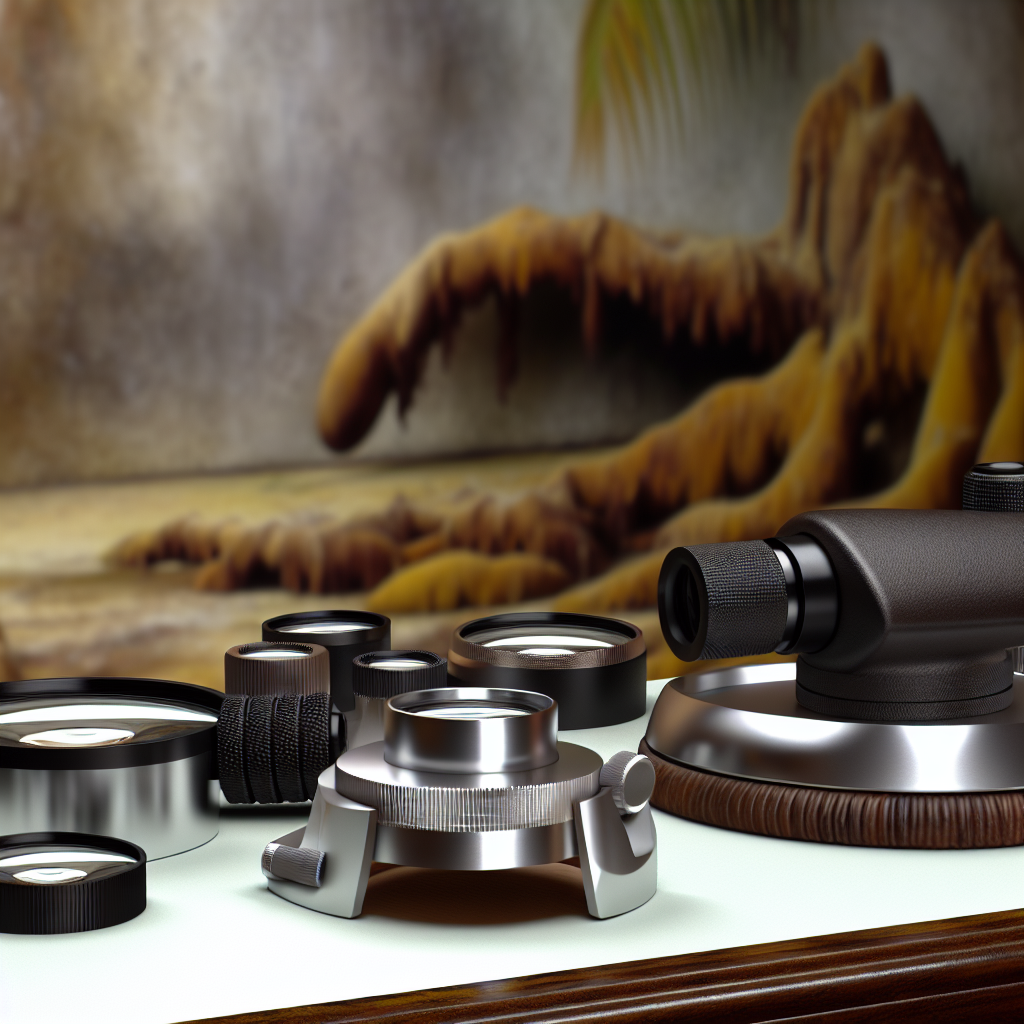
📌 The Fundamentals of the Jeweler's Loupe
🔍 What is a Jeweler's Loupe?
The jeweler's loupe is an essential optical tool for all professionals working with jewelry, precious, or semi-precious stones. It is a precision instrument used to closely examine small objects, in order to detect every detail. Traditionally designed for jewelers, it is also used by watchmakers, numismatists, and even philatelists. The quality of a loupe is primarily measured by its sharpness, comfort of use, and the color fidelity reproduced under observation.
In practice, a jeweler's loupe allows for inspecting inclusions in a precious stone, spotting setting defects, or analyzing the authenticity of antique jewelry. It is also the basic accessory for estimating the value of an object or identifying possible repairs on a piece of jewelry. Its compactness and ease of use make the loupe indispensable for any professional in the sector.
🔍 History and Evolution of Jeweler's Loupes
The history of jeweler's loupes dates back several centuries, long before the microscope appeared in scientific laboratories. In ancient times, the first loupes used were simple magnifying glasses, sometimes mounted on a stand or integrated into metal frames. The industrial revolution of the 19th century saw the rise of optical instruments, making loupes more precise and accessible.
Over time, the arrival of new lens polishing techniques and the use of innovative materials (such as optical glass or synthetic sapphire) significantly improved the quality of the models offered. Since the 2000s, jeweler's loupes have also benefited from accessories such as integrated LED lighting and reinforced protection.
The design, once simple and rustic, has also been modernized. Today, there are models adapted to every need: compact for travel, ergonomic for intensive use, or equipped with interchangeable magnification systems for greater versatility. This constant evolution allows modern jewelers to have exceptional tools, adapted to the demands of their profession.
🔍 The Importance of Precise Magnification
In the field of jewelry, the smallest detail can change everything. This is why choosing a jeweler's loupe with precise magnification is crucial. Precious stones, for example, often have inclusions invisible to the naked eye. Moreover, the quality of the setting or the presence of micro-scratches can only be evaluated with perfectly adapted magnification.
Generally, standard magnifications range from 5x to 30x, but 10x is particularly popular as it offers an excellent compromise between comfort and analytical capability. Too high a magnification reduces the field of view and increases the difficulty of focusing, while too low a magnification does not allow for observing the necessary details.
- Authentication: Verifying tiny hallmarks or signatures.
- Evaluation: Examining the actual condition of a setting or the cleanliness of a stone.
- Precision: Appreciating the fineness of an engraving or detecting possible defects.
Precise magnification also facilitates daily work by reducing eye strain. It is a key to efficiency, speed, and reliability of expert appraisals.
📌 Different Types of Jeweler's Loupes
🔍 Monocular Jeweler's Loupe
The monocular loupe, or simple loupe, is undoubtedly the most classic and widespread tool among jewelers. It consists of a single lens (or sometimes several superimposed lenses), mounted in a small casing usually made of metal or resistant plastic. This type of loupe is often held between the fingers or placed against the eye socket, leaving both hands free to manipulate the objects being studied.
Its major advantages are its portability, robustness, and great ease of use. Thanks to its compact size, it can be taken anywhere, making it ideal for travel, fairs, or client appraisals.
Another asset of the monocular loupe lies in its diversity: it is found in a wide variety of magnifications and shapes (round crystal, triplet loupe, etc.), allowing each professional to choose the model that best suits their needs.
| Model | Magnification | Lens Type | Material |
|---|---|---|---|
| Singlet | 5x to 8x | Simple | Glass/Mineral |
| Triplet | 10x to 30x | Three combined lenses | Optical glass/sapphire |
The quality of the lens and the care taken in manufacturing make all the difference for the daily user.
🔍 Montagny Loupe
Particularly appreciated by French jewelers, the Montagny loupe stands out for its ergonomic shape and ingenious attachment system. Invented in the 19th century, it is today a true symbol of elegance and precision. It is generally attached to the forehead or around the ear, leaving the hands completely free, which is ideal for long observation sessions.
This model is characterized by great comfort of use and a lens diameter often larger than average, offering an extended field of view and excellent luminosity. Robust and easily adjustable, the Montagny loupe is designed to last. It is often preferred in the workshop for precision work on sophisticated settings or during stone setting.
Some models offer interchangeable lenses and personalized adjustment systems, allowing the magnification to be adapted according to the task at hand. Its reputation as a professional tool makes it a sure investment for any demanding jeweler.
🔍 Binocular Loupe
The binocular, or stereoscopic, loupe is generally for professionals who need to spend long hours observing very fine details, particularly during the creation or restoration of highly elaborate jewelry. Unlike the monocular loupe, it has two objectives for each eye, offering depth perception and three-dimensional vision.
This type of loupe often comes as an instrument placed on a stand or integrated into a visor. It allows for observing a piece as a whole while appreciating its depth, which is essential for certain advanced analyses. Visual comfort is enhanced by the ability to adjust the interpupillary distance and regulate magnification.
- Ideal for long and meticulous tasks (setting, micro-soldering, restoration).
- Allows for better appreciation of volumes and reliefs.
- Perfect for working on unique and complex pieces.
For jewelers wishing to diversify their expertise, this category of loupes is an excellent choice.
📌 Features to Consider When Buying
🔍 Lens Materials
The choice of lens material directly influences quality, durability, and color rendition. Optical glass lenses are prized for their clarity and scratch resistance. Mineral glass remains affordable, while offering good sharpness for most applications.
Acrylic or plastic lenses, meanwhile, can appeal with their lightness and lower cost, but they are generally less transparent and more prone to scratches. High-end models sometimes use synthetic sapphire, offering exceptional durability and superior light transmission.
Anti-reflective coating technology, surface polishing, and hermetic mounting are additional criteria to consider to ensure clear vision, without distortion or loss of detail.
🔍 Construction and Design
The overall quality of the loupe also depends on its construction and ergonomics. A good jeweler's loupe should rest comfortably against the eye or easily attach to the head, without causing discomfort or fatigue. Weight balance, casing resistance, and ease of use are major criteria to evaluate when purchasing.
In terms of design, there are foldable models or those with integrated cases, frontal attachment systems, and stand-mounted supports. The sealing of mechanical parts is also an asset to prevent dust and moisture, while a non-slip surface improves grip.
- Simplicity of the rotation or folding mechanism
- Shockproof design and robust materials
- Quality finishes and absence of play when opening/closing
The user experience often hinges on these small ergonomic details, which make all the difference in the long run.
🔍 Magnification Factors
Magnification is undoubtedly the most important criterion when choosing a jeweler's loupe. It indicates the lens's ability to enlarge an object's image. A 10x magnification means the object appears 10 times larger than to the naked eye. However, several factors need to be considered to determine the ideal power:
- Nature of objects to be observed (precious stone, engraving, setting...)
- Duration and frequency of use
- Desired field of view
The magnification recommended by many experts for jewelers is 10x, as it offers the optimal balance between detail level and ease of work. Higher magnifications like 20x or 30x are reserved for very specific expert work, while weaker magnifications (5x-8x) are useful for an overall view or when evaluating large pieces.
It is not uncommon for professionals to own several loupes with different magnifications depending on the identified use cases.
📌 Additional Accessories and Options
🔍 Integrated LED Lighting
The introduction of integrated LED lighting has revolutionized the use of the jeweler's loupe. Traditional models required an auxiliary light source, but today, most contemporary loupes offer a miniaturized LED system placed around the lens.
This addition allows:
- Significantly improved visibility of minute details, even in a dark room.
- Uniform lighting, limiting parasitic shadows and reflections.
- Additional comfort of use during prolonged sessions.
Preferably choose an LED whose color temperature approaches natural light (around 5500K), to avoid color distortion when examining gems and metals. Some models integrate light intensity management, which improves ocular comfort.
🔍 Cases and Lens Protectors
Because it is precious, the loupe deserves careful protection. Rigid or semi-rigid cases protect the lenses from shocks during transport, while soft lens protectors prevent scratches and dust.
Commonly used materials are leather, reinforced ABS, neoprene, or technical textiles. Some case models are equipped with zippers, quick-release systems, or compartments for accessories (microfiber cloth, spare battery for LED, etc.).
- Protect from shocks and scratches during travel
- Extend the lifespan of your investment
- Store the loupe in a clean and safe place after each use
Good maintenance also includes choosing a suitable case, ideally supplied with the purchase or available as an option from specialized retailers.
📌 Usage and Maintenance Tips
🔍 Techniques for Optimal Use
Using a jeweler's loupe correctly requires a minimum of technique. The lens should be held between the eye and the object, bringing the loupe very close to the eye socket. The object being examined should then be brought as close as possible to the loupe until the image appears clear.
- Positioning the loupe: Place the lens about 2-3 centimeters from the eye.
- Lighting: Always use an adequate light source to reveal all details, preferably integrated LED lighting or a cold lamp.
- Stability: To avoid fatigue, rest your arm on a stable surface during long observations.
- Alternation: Remember to alternate the observing eye, especially with repeated use.
It is advisable to take regular breaks to limit visual fatigue. Good positioning and a relaxed posture are essential to maintain your comfort throughout the day.
🔍 Cleaning and Maintenance
A high-performing jeweler's loupe must always remain clean and in good condition. Dirt or fingerprints on the lens significantly reduce visibility and sharpness. For cleaning:
- Use a microfiber cloth specifically designed for optics, slightly dampened if necessary.
- Avoid rough or abrasive fabrics that could scratch the lens.
- For ingrained residues, there are gentle cleaning sprays suitable for optics.
- Regularly check the condition of the casing and seals to prevent dust or moisture infiltration.
Careful maintenance extends the life of your loupe and ensures the best possible vision quality in the long term.
📌 Recommendations for Beginners
🔍 Common Mistakes to Avoid
Starting with a jeweler's loupe can be intimidating for novices. Here are some common mistakes, and tips to avoid them:
- Wrong choice of magnification: Opting too quickly for a very powerful model without mastering focus can hinder observation.
- Neglecting lighting: Working without sufficient light sources distorts colors and limits detail detection.
- Lack of stability: Moving your hand or the loupe during observation causes annoying blurring.
- Lack of maintenance: Forgetting to clean the lens significantly diminishes the instrument's performance.
- Investing in a low-end model: A poor quality tool risks quickly becoming unusable.
To start serenely, it is advisable to train in loupe manipulation, experiment with different settings, and seek advice from a professional.
📌 Advantages of Buying on a Specialized eCommerce Site
🔍 Warranty and After-Sales Service
Purchasing a jeweler's loupe on a specialized eCommerce site guarantees you authentic and certified products. You generally benefit from a manufacturer's warranty of at least two years, covering both manufacturing defects and any issues related to normal wear and tear. The after-sales service, in turn, is particularly responsive and attentive to the needs of professionals.
This expertise also covers quick exchange or repair in case of failure, as well as personalized advice for choosing or using accessories. By choosing a specialized online store, you also have the ability to differentiate models according to your specific criteria, while accessing an expanded catalog whose products are always at the forefront of innovation.
Discover a complete selection of models and accessories on our dedicated jeweler's loupes page.
🔍 Product Comparison and Customer Reviews
Another major advantage lies in the ability to easily compare product sheets, features, and prices on the same platform. Reviews and feedback from existing users of a jeweler's loupe are invaluable in guiding your choice and avoiding unpleasant surprises.
Thanks to integrated comparators, search filters, and detailed descriptions, you save time and are assured of investing in the tool best suited to your current and future needs. The user community also shares many tips and solutions, which fosters an enriched experience.
For even more personalized advice based on your visual impairments or reading needs, also consult our article on reading magnifiers and low vision.
📌 FAQ: Your Questions about Jeweler's Loupes
🔍 What is the difference between a jeweler's loupe and a reading magnifier?
A jeweler's loupe is designed to offer higher magnification and increased precision, suitable for examining minute details such as inclusions in precious stones or metal hallmarks. A reading magnifier, on the other hand, is designed to enlarge text, with a broader field of vision but often lower magnification.
🔍 What magnification should I choose for professional use?
10x magnification is the most recommended standard for jewelry, as it allows most details to be observed without loss of comfort. Higher magnification can be used for specific expert appraisals, but it reduces ease of use.
🔍 Do all magnifiers work for examining diamonds?
No, it is preferable to opt for a triplet loupe with an apochromatic lens, which offers a clear vision without distortion or color aberration. This design best reveals the internal characteristics of the diamond.
🔍 Is integrated LED lighting essential?
It is not essential but highly recommended. Integrated lighting significantly improves detail rendering and reduces visual fatigue, especially in low-light environments.
🔍 What is the best method for cleaning a jeweler's loupe?
Use exclusively a clean microfiber cloth, possibly with a specific optical product. Never use paper, tissues, or abrasive chemical products.
🔍 Can a jeweler's loupe be used for other applications?
Yes, a jeweler's loupe can be used to inspect stamps, coins, miniature works of art, or for any activity requiring the meticulous examination of small objects.
📌 Conclusion
An emblematic tool of the trade, the jeweler's loupe is an everyday essential for all professionals who require precise control of their work. Whether you are a beginner or an expert, choosing the right model requires a careful analysis of criteria (magnification, lens material, accessories, ergonomics). To maximize your chances of finding the right loupe, seek expert advice and purchase from specialized sites where quality and safety are guaranteed. By incorporating good usage and maintenance practices into your routine, you will benefit from optimal and lasting vision, serving the beauty and value of each piece of jewelry examined.