



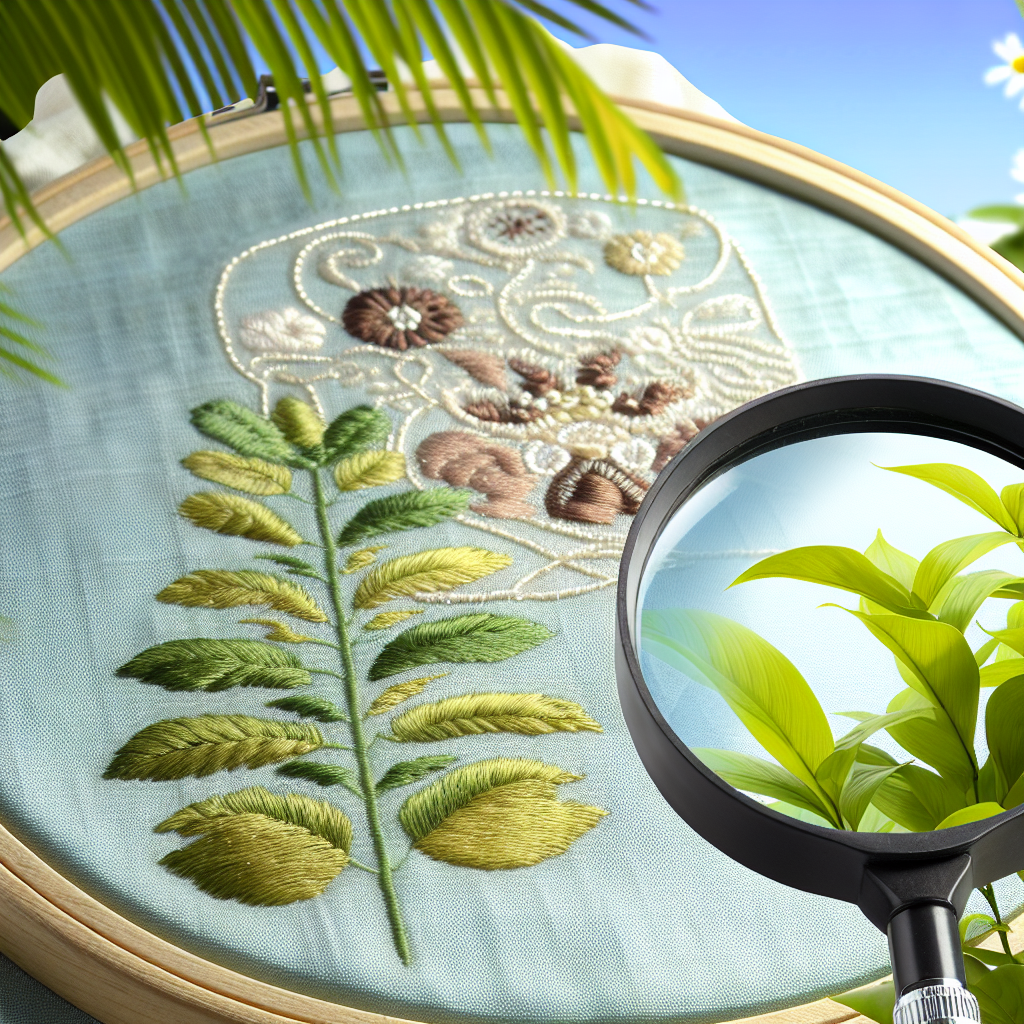
📌 Introduction to Magnifying Glasses: A Guide to Choosing the Best Option
When visual precision is paramount, it is essential to equip yourself with the right tool. Whether you are passionate about embroidery, an amateur botanist, or a detail-oriented professional, selecting a precision magnifying glass tailored to your practice greatly influences your experience. Many models exist: handheld, stand, head-mounted, or binocular magnifiers, each meeting specific needs. Through this guide, we will help you understand the criteria to consider when choosing the magnifying glass best suited to your activity, taking into account comfort, optical quality, and ergonomics. Discover also how to take advantage of recent innovations, such as integrated LED lighting or electronic versions, to assist you in all your meticulous explorations.
We will delve into the different families of magnifying glasses, their advantages and limitations, to guide you towards the ideal model for embroidery, nature observation, or tasks requiring increased precision. Throughout the article, you will benefit from practical advice, comparisons, and tips for maintaining your favorite optical tool for a long time.
📌 Magnifying Glasses for Embroidery: Requirements and Recommendations
🔹 Types of Magnifying Glasses Suitable for Embroidery
Embroidery is a delicate art where every stitch counts. It requires perfect vision of threads and stitches, making the use of a suitable magnifying glass essential. Here are the main types of magnifiers to consider:
- Stand magnifiers: These are placed next to the workspace and often have an articulated arm. This format frees up the hands and allows for long embroidery sessions without fatigue.
- Handheld magnifiers: Compact, these models are practical for quick checks while creating fine details. Some include an ergonomic handle for added comfort.
- Headband magnifiers (or head-mounted): Renowned for their practicality, they are worn directly on the head. The user benefits from precise magnification while having their hands completely free. Ideal for experienced embroiderers working on complex patterns.
Each type of magnifying glass has its advantages. For embroidery, stability, image clarity, and maneuverability are priorities. Many magnifiers also offer a dedicated collection for creative manual activities.
🔹 Factors to Consider When Choosing a Magnifying Glass for Embroidery
To select the ideal magnifying glass, several criteria come into play:
- Depth of field: A good embroidery magnifier must offer a sharp image over several centimeters of depth, allowing you to work without constantly adjusting the distance to the fabric.
- Magnification: Depending on the size of the patterns and the fineness of the threads used, a magnification of 2.5x to 4x is frequently recommended. A too high level reduces the field of view and can strain the eyes.
- Integrated lighting: Many magnifiers are now equipped with LEDs, a real revolution for working even in low light. This reduces visual fatigue and improves the detection of colors and patterns.
An amateur embroiderer greatly benefits from a lightweight and stable magnifier, adjustable in height and orientation. For prolonged sessions, stand or head-mounted models offer superior comfort. If you want to delve deeper into the subject of visual aids for manual activities, also consult this article comparing reading magnifiers and magnifying glasses.
📌 Magnifying Glasses for Plant Observation: Which Criteria to Prioritize?
🔹 Pocket Magnifiers for Amateur Botanists
Plant observation requires the ability to examine very small details, both in the field and in the laboratory. Amateur botanists particularly appreciate pocket magnifiers: they are compact, lightweight, and quick to use.
- Simplified transport: Their mini format allows them to be carried in a pocket or bag during nature excursions.
- Ready to use: The simple design of pocket magnifiers ensures instant setup, no complex assembly or adjustment needed.
- Resistant: Often made of robust materials, they withstand repeated handling and outdoor conditions (shocks, dust, humidity).
In the field, a pocket magnifier with 10x magnification is a good compromise for identifying leaf tissues, observing veins, or examining floral elements.
🔹 Professional Magnifying Glasses for Researchers
Professionals or enthusiasts wishing to go further generally invest in specific magnifiers, combining magnification power and optical precision:
- Double-lens magnifiers: Offer better aberration correction for a faithful image, even at high magnification.
- Variable magnification systems: Allow adjusting the magnification according to the observed detail, which is crucial during morphological studies.
- Robust mechanisms and high-quality optics: Anti-scratch treated optical glass for observations over many years.
| Model | Magnification | Specifics |
|---|---|---|
| Botanist's Magnifier 10x | 10x | Metal frame, mineral glass optics |
| Triple Lens Magnifier 15x | 15x | Advanced correction, distortion-free image |
| Zoom Magnifier 7x-21x | 7x to 21x | Variable magnification, laboratory use |
In summary, the casual observer will prioritize simplicity, while the researcher will demand impeccable optics and maximum modularity.
📌 Magnifying Glasses for Detail Work: Towards Increased Precision
🔹 Magnifying Glasses with Integrated LED Lighting
Visual precision is crucial for all detailed work: jewelry making, watch repair, electronic circuit assembly, or model making. Magnifying glasses with integrated LED lighting have become essential for these uses.
- Cool and homogeneous light: LED lighting provides white, stable, and direct light, eliminating shadows and revealing the finest irregularities.
- Reduced eye strain: Additional light significantly reduces the strain on eye muscles, especially during prolonged observations or in low ambient light.
- Often adjustable: Some magnifiers allow modulating the light intensity to adapt to the needs of each task, thus offering better visibility while avoiding glare.
Precision magnifying glass models with LEDs are now favored by professionals and amateurs seeking efficiency and comfort in their daily work. Power is generally supplied by batteries, rechargeable batteries, or directly via mains, depending on the model (stand or desk magnifiers).
🔹 Binocular Magnifying Glasses: For Extended Use Comfort
Certain activities require long hours of concentration and meticulous manipulation. Binocular magnifiers then represent the ultimate solution:
- Stereoscopic vision: Allows for depth perception, essential for precision work, microsurgery, jewelry making, or artistic restorations.
- Comfort of use: The ergonomics of these magnifiers (interpupillary distance adjustment, viewing angle) limits neck and visual fatigue even after several hours of use.
- Hands-free: With an adjustable support or head-mounted wear, hands remain free to manipulate tools and materials.
These models are to be preferred for any task that requires, beyond magnification, impeccable optical quality over time. Furthermore, many binocular magnifiers now include dual lighting (lateral and central), further enhancing the detection of micro-details.
📌 General Selection Criteria for Choosing a Magnifying Glass
🔹 Magnification: Finding the Right Balance
The choice of magnification depends entirely on the nature of the task to be performed:
- Low to medium power (2x to 5x): Sufficient for reading, embroidery, or general examination of small objects. A wide field of view is maintained, which facilitates overall observation.
- High power (8x to 20x and more): Essential for inspecting minute details: minerals, plants, circuits, stamps, coins, etc. Be aware that the field of view decreases with magnification, sometimes requiring a support or a very steady hand.
- Variable magnification: For those who alternate between various precise tasks, some magnifiers allow adjusting the magnification factor on the fly.
Keep in mind that a very powerful magnifying glass is only useful for specific tasks and, paradoxically, reduces viewing comfort in the long run. The secret is to find the optimal balance between magnification, clarity, and field of view for your uses.
🔹 Weight and Maneuverability
Another essential criterion for daily use is the lightness of the magnifying glass. A model that is too heavy or bulky discourages its use, especially during prolonged sessions:
- Handheld magnifiers: A weight between 100g and 250g remains comfortable for most users. They should fit easily in the palm or slip into a bag.
- Stand or desk magnifiers: These can be heavier, with stability replacing maneuverability. Check the flexibility of the joints and the ease of adjusting the axes and heights.
- Head-mounted magnifiers: Their weight varies from 50g to 200g depending on the presence of lighting or accessories. It is advisable to opt for a comfortable structure if worn for extended periods.
The grip, balance, and storage/attachment options should also be evaluated to ensure an optimal user experience.
🔹 Manufacturing Materials
The quality of materials directly impacts optics and robustness:
- Optical glass: Offers a sharp, undistorted image and is more scratch-resistant. This is the preferred choice for professionals and demanding users.
- Acrylic: Lightweight, economical, appreciated for occasional models or large format magnifiers. However, it scratches more easily and color rendition is slightly inferior to glass.
- Composites and metals: Alloy or aluminum frames guarantee longevity and rigidity.
For regular or intensive use, prioritize models combining high-quality optical glass with a robust and ergonomic finish. This requirement improves both the lifespan and visual comfort of the product.
📌 Comparison: Traditional Magnifiers vs. Electronic Magnifiers
Today's market offers two main families of magnifying devices: traditional (optical) magnifiers and electronic magnifiers. Each has specific features to be aware of before purchase.
-
Traditional magnifiers:
- Ease of use
- Do not require electrical power
- Excellent for quick observation and portability
-
Electronic magnifiers:
- Possibility of very high magnification (up to 100x and more depending on the model)
- Display on large screens (TV, tablet, computer) facilitating observation with multiple people or image sharing during collaborative or educational work
- Options for image capture and recording, contrast adjustments, and color inversion, ideal for visually impaired individuals
Disadvantages: Electronic magnifiers can be more expensive and require battery or mains power. Their manipulation generally requires getting used to using a screen, which may deter some "purist" users. Optical magnifiers, on the other hand, do not allow images to be archived and are limited in terms of magnification or advanced options.
In short, traditional magnifiers remain unbeatable in simplicity and value for money for everyday use, while electronics are essential when extreme precision, image sharing, or specific visual aid needs arise.
📌 Tips for Maintaining Your Magnifying Glass
Regardless of the type of magnifying glass you choose, regular maintenance ensures longevity and optimal performance:
- Lens cleaning: Use a microfiber cloth or a special optical wipe. Avoid tissues or rough cloths that may scratch the surfaces.
- Dusting: A small bellows or a can of compressed air (specialized for optics) allows particles to be removed without damaging the frame or optics.
- Stand maintenance: For stand models, check and grease the joints if necessary to prevent mechanisms from seizing.
- Protection: Always store your magnifying glass in a case or hard shell after use, especially when traveling.
- Avoid extreme variations: Optics (and especially electronic models) do not like significant temperature variations, humidity, or shocks.
- Batteries and power: For LED or electronic models, recharge regularly and remove the battery during long storage to prevent contact oxidation.
By taking care of your magnifying glass, you ensure consistently clear observations and avoid premature wear, even with professional use.
📌 FAQ: Answers to Frequently Asked Questions
🔹 What is the best magnifying glass for general use?
For versatile use, a handheld magnifying glass with 3x to 5x magnification and an optical glass lens is an excellent choice. It combines lightness, a satisfactory field of view, and adaptability to most domestic or professional tasks. Some models include LED lighting and a second mini-lens for examining micro-details.
🔹 Is it possible to buy a single magnifying glass for multiple uses?
Yes, today some magnifiers come with interchangeable heads or lenses of different magnifications. This allows adapting the magnifier according to needs: embroidery, inspection, botany, reading, etc. A hybrid model including an adjustable headband or an articulated arm facilitates the transition between several types of use.
🔹 How to choose the right level of magnification?
The level of magnification depends on the activity:
- Reading, embroidery, light DIY: 2x to 5x
- Botanical observation, insect identification: 7x to 15x
- Professional meticulous inspection: 10x to 25x or variable zoom model
🔹 Are electronic magnifiers worth the investment?
Electronic magnifiers are interesting for professionals, micro-detail enthusiasts, or visually impaired individuals. They allow for high magnification, large screen display, image capture, and various contrast filters. However, their price and different ergonomics require a clear understanding of your needs before taking the plunge.
🔹 How to recognize a quality magnifying glass?
A quality magnifying glass has optical glass, little or no chromatic aberration, a uniform image up to the edge of the field, and a solid frame. Prefer recognized or specialized brands, and check for certifications or user reviews, particularly for professional or intensive use.
🔹 What is the difference between a magnifying glass and magnifying spectacles?
Magnifying glasses are used to observe an object with one hand (or placed on a surface), while magnifying spectacles are worn like regular glasses. The latter are especially suitable for prolonged manual tasks (dentistry, electronics, etc.) because they leave the hands completely free and offer a wide field of vision. For more information, refer to our dedicated guide on reading magnifiers or magnifying spectacles.
📌 Conclusion: Investing in the Right Magnifier for Your Passions
Choosing the right magnifier is more than just a purchase: it's an investment in the enjoyment, precision, and efficiency of your practice. Whether you're a passionate embroiderer, a plant lover, or someone who enjoys detailed work, selecting an appropriate magnifier takes into account the type of use, optical quality, comfort, and durability. Technological advancements have led to the emergence of increasingly precise, versatile, and ergonomic magnifiers to meet all needs: compact models for travel, stand-alone versions for comfort, or even binocular and electronic models for an immersive and professional experience.
By applying the advice shared in this guide, you are sure to find a refined and suitable magnifier, ready to reveal details invisible to the naked eye and enhance your passions. Regular maintenance and a wise choice will guarantee your future tool a long life and consistent performance over time.
To explore all possibilities and refine your selection, consult our selection of specific magnifiers, ideal for each application area.