



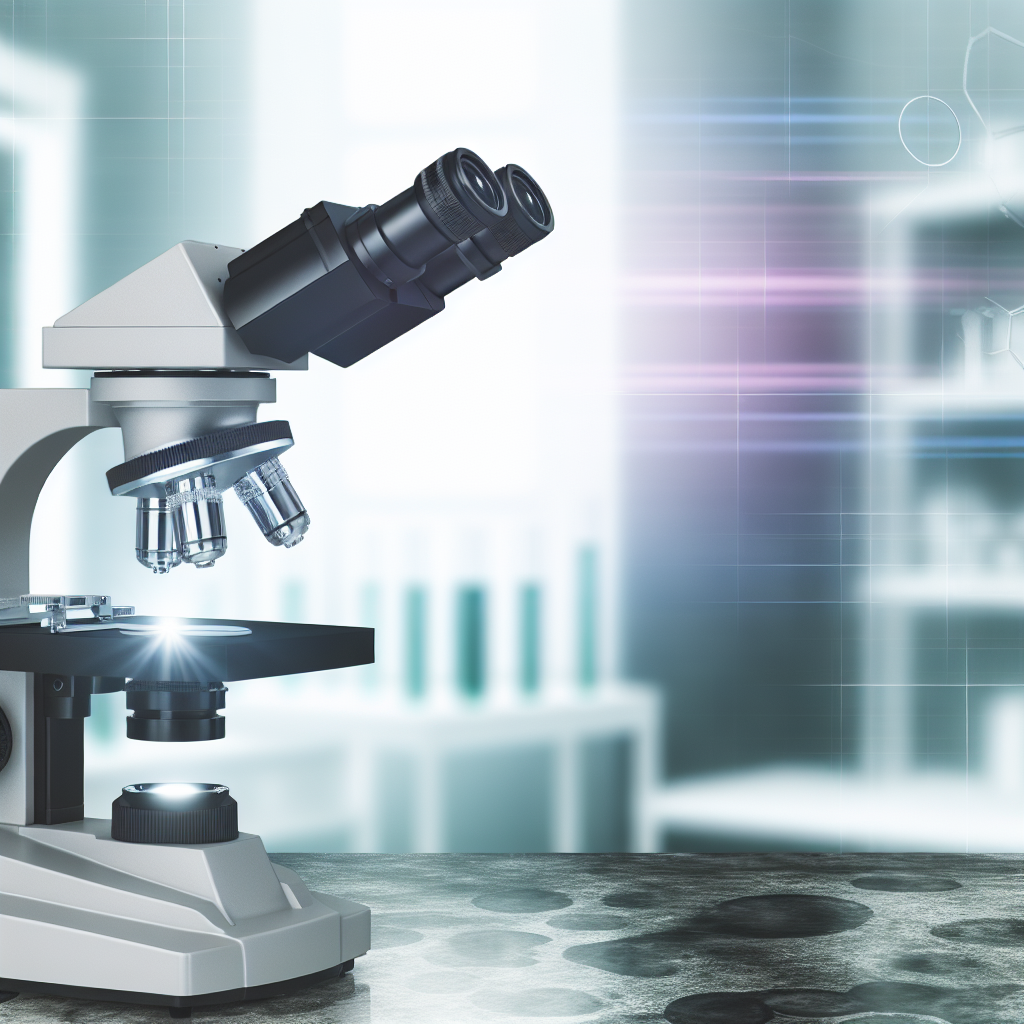
📌 Understanding the Foundations of an Optical Microscope
🔍 What is an optical microscope?
An optical microscope is an optical instrument used to observe very small objects, invisible to the naked eye. It uses visible light, as well as a system of lenses, to magnify and reveal precise details of a sample. Since its invention, it has become one of the essential pillars of scientific, medical, and industrial research.
In concrete terms, the operating principle of an optical microscope is based on the refraction of light through converging lenses. The object being studied, often placed on a glass slide, is illuminated so that its finest details become visible. By adjusting different lenses and modulating the light, it is possible to adjust the magnification and image quality to suit the complexity of each observation.
There are several fundamental types of optical microscopes: the bright-field microscope (the most common), phase contrast, fluorescence, and polarizing microscopes. All have evolved to address specific scientific needs, but the basic principle remains the same: using light and lenses to allow the observer to access a fascinating microscopic world.
The major advantage lies in its ease of use and the ability to combine different magnification objectives on the same instrument. Furthermore, most allow for direct observation, either with the naked eye or via a digital camera. These assets make it a preferred tool in education, research, biology, and medicine.
Thus, choosing a high-performance optical microscope ensures reliable, precise, and enriching exploration of the invisible world around us, while remaining accessible and manageable for everyday use.
🌿 The Historical Evolution of Optical Microscopes
The history of the optical microscope dates back to the late 16th century in Europe. The first magnifying lenses were used by jewelers or watchmakers to examine tiny mechanical parts. But it was the invention of the compound microscope by Zacharias Janssen that revolutionized the scientific approach. This innovation allowed for a deeper exploration of living organisms, paving the way for countless discoveries.
In the 17th century, Antoni van Leeuwenhoek perfected lenses and was thus able to perceive the first bacteria and protozoa. Leeuwenhoek, often considered the father of microbiology, dedicated his life to improving the resolution of optical microscopes. His diligent work allowed for precise observation of blood, the structure of plants, and animal tissues.
Over the following centuries, optical microscope technology continued to evolve. In the 19th century, major advancements in the manufacture of achromatic lenses, which limit chromatic aberrations, significantly improved the clarity of observations. The emergence of specialized microscopes, such as the integration of micro-photography, polarized light, or fluorescence, opened new perspectives for researchers.
The optical microscope also became more widespread, notably thanks to mass production and the dissemination of scientific education. Today, there is a wide range of models adapted for various uses, from primary education to advanced laboratory analysis. Each historical step testifies to a continuous quest for improving vision, precision, and understanding of living organisms.
Thus, investing in a modern microscope means benefiting from centuries of innovation, the fruit of which is now a reliable, precise technology adapted to contemporary requirements.
⚙️ The Different Parts of an Optical Microscope
To understand how an optical microscope works, it is essential to know the structure of its main components. Each plays a crucial role in the quality and precision of observation. Here is a summary table:
| Component | Function |
|---|---|
| Eyepieces | The lenses through which the user observes. Magnify the image created by the objectives. |
| Objectives | Different magnification powers, mounted on a rotating revolving nosepiece, allowing for various levels of detail. |
| Stage | Movable platform where slides are placed. It can be moved horizontally or vertically to position the sample. |
| Light source | Can be a mirror or an LED lamp, this source illuminates the sample to reveal its details. |
| Focus adjustments | Fine and coarse adjustment knobs that allow for precise focusing of the image. |
| Microscope arm and base | Ensure the stability of the device and facilitate its handling. |
| Condenser and diaphragm | Adjust the quantity, concentration, and intensity of light passing through the sample. |
The harmony between these elements guarantees detailed and comfortable observation. This modular architecture also allows the device to be adapted to many specific uses, from the research laboratory to the classroom.
The quality of each component, especially the lenses and lighting, has a direct impact on the performance and longevity of the optical microscope. Choosing a quality model therefore ensures the reliability of each part and the overall effectiveness of the instrument.
📌 Advantages of a Quality Optical Microscope
🔬 Superior Precision and Resolution
Choosing a high-quality optical microscope first and foremost translates into unparalleled observational precision. The fineness of the lenses, advanced light control, and precise focus adjustment allow for the observation of the smallest details of a cell, tissue, or mineral.
Increased resolution means that tiny cellular structures become distinctly perceptible. This is essential in many fields: in cell biology to visualize organelles, in histology to explore thin sections of tissues, or in bacteriology to detect certain microorganisms.
- Clear observation of cell membranes
- Detection of parasites or anomalies in blood samples
- Identification of defects in industrial materials
The difference between an entry-level model and a high-performance optical microscope is especially noticeable during complex observations. Where a basic instrument quickly reaches its limits, high-quality equipment pushes the boundaries of discovery, bringing rigor and reliability to diagnostic and analytical processes.
📏 Increased Longevity and Durability
A quality optical microscope, if well maintained, can last for several decades. This longevity factor depends on the robustness of the materials used – often metal or reinforced alloys – and the care taken in manufacturing the movable parts (screws, revolving nosepiece, hinges).
This durability gives the device great resistance to intensive use, common in educational institutions, laboratories, or technical expertise workshops. A higher initial investment is often quickly amortized by the absence of premature repairs or replacements.
Over the years, a quality optical microscope maintains its performance and the stability of its settings, without drift or loss of sharpness, even with frequent objective changes.
- Robust and wear-resistant components
- Lens protection against scratches and dust
- Increased stability of the arm and base to prevent any vibration
Choosing a reliable microscope also means prioritizing reuse, improvement, and updating of the instrument according to technical advancements. Some manufacturers, for example, offer modernization kits to extend the lifespan of devices purchased several years ago.
🔧 Ease of Use and Reduced Maintenance
Quality optical microscopes are designed to offer maximum user comfort, even during prolonged sessions. The controls are fluid: ergonomic focus adjustments, easily manipulable revolving nosepiece, smooth movable stage… These details simplify handling and limit fatigue.
Moreover, modern design aims to limit maintenance. Lenses benefit from anti-reflective and anti-dust coatings. LED lighting circuits are designed for durability, while reducing overheating. Some models even offer a self-powering system or automatic brightness regulation.
- Simple stage height adjustment for quick slide manipulation
- Easy cleaning thanks to removable and protected lenses
- Maintenance guide included and technical assistance offered by manufacturers
For more tips on handling optical instruments, consult our specific guide on how to correctly use a jeweler's loupe.
In summary, opting for a high-end optical microscope means gaining comfort of use, minimizing the risks of failure, and ensuring long-lasting use without recurring technical constraints.
📌 Criteria for Choosing a Quality Optical Microscope
🛠️ Lens Quality and Material
The quality of the lenses determines the sharpness, color fidelity, and ability to distinguish fine structures in a sample. High-end models generally incorporate achromatic, or even apochromatic, lenses, which compensate for light dispersion and limit chromatic aberrations.
The material of the components is also decisive: pure optical glass lenses offer less distortion than a plastic equivalent. As for the microscope structure, preferring a metal frame ensures a stable device insensitive to vibrations.
- Multi-coated lenses for optimal light transmission
- Metal or high-resistance alloy barrel
- Tempered glass or ceramic stage slides to prevent scratches
Never settle for compromises: opt for excellence from the start, to ensure years of use without loss of performance.
🔎 Ergonomic Settings and Adjustability
A quality microscope incorporates adjustment elements designed for user ergonomics. Focusing must be fluid, without jerks, even at high magnification. The eyepieces, often adjustable in interpupillary distance, allow every user, adult or child, to observe comfortably.
The adjustment of the stage, diaphragm, or condenser must be done with great precision. Some models offer electronic micrometric adjustments, ideal for laboratory measurements or advanced analyses.
- Adaptable eyepieces for spectacle wearers (adjustable height and spacing)
- Large, non-slip controls, usable even with gloves
- Easy interchangeability of objectives thanks to a smooth rotating nosepiece
Ergonomics guarantees a comfortable experience, even during prolonged observations or by different users.
✅ Compliance Certificates and Quality Standards
The acquisition of a quality optical microscope must be guided by strict requirements regarding compliance and safety. High-end devices are certified according to international standards: CE, ISO, and sometimes additional labels specific to each sector (education, medical research, industry).
Manufacturers must provide documentation attesting to product conformity, electrical safety (if the device is equipped with a powered lighting system), as well as the traceability of the origin of the lenses and the treatments applied.
- Check for certifications mentioned on technical sheets and product packaging
- Demand a complete manual, in French, for use and maintenance
- Favor recognized brands with after-sales service in France
To explore our selection meeting all these requirements, consult our collection dedicated to optical microscopes.
📌 Varied Applications of Optical Microscopes
🧪 Use in Educational and Academic Fields
The optical microscope revolutionizes science education, particularly in biology, physics, and geology. From middle school, it allows students to concretely observe the cellular structure of a leaf, the composition of a hair, or the diversity of aquatic microorganisms.
In higher education, it becomes an indispensable research instrument: analysis of histological preparations, identification of germs responsible for infections, observation of chemical reactions at the microscopic scale... Universities and Grandes Écoles invest in high-performance devices to guarantee their students a realistic and immersive field experience.
- Practical work in life and earth sciences and cell biology
- Observation of plant and animal tissues
- Introduction to slide preparation and microbiology
In all these situations, a high-performance optical microscope makes learning more interactive, stimulates curiosity, and develops the scientific analytical mind in young people.
⚗️ Industrial Applications and Specialized Techniques
Beyond education, the optical microscope is widely used in industrial and technical sectors. It is involved in quality control tasks, material analysis, or verifying the integrity of electronic components.
In the textile industry, it allows for checking the fineness of fibers. In metallurgy, it detects potential microcracks in alloys. In watchmaking and jewelry, it aids in the meticulous examination of precious stones or complex mechanisms, which is why knowing the art of handling magnifiers and microscopes is invaluable.
- Control of welds on printed circuits
- Identification of defects in injection-molded plastics
- Verification of the quality of engravings or micro-assemblies
The optical microscope thus offers a reliable and precise solution, ensuring compliance with industrial standards while facilitating the detection of anomalies.
🔬 Crucial Role in Research Laboratories
In research institutes, the optical microscope has become indispensable. It is used to examine cell morphology, observe the dynamics of living organisms, and perform precise morphometric analyses.
Medical research uses the optical microscope to explore thin tissue sections, analyze blood, or monitor the evolution of pathogens. Biotechnology laboratories, for their part, use it to manipulate and characterize genetically modified cells.
- Observation of cell division in real time
- Comparative analysis of embryos or in vitro cultures
- Fundamental research on the structure of organelles
Thanks to the possibility of adapting digital cameras or fluorescence modules, modern optical microscopes ensure the collection of precise data, the sharing of results, and the reliable reproduction of scientific experiments.
📌 Comparison with Other Microscopy Technologies
💡 Electron Microscopes Versus Optical Microscopes
Electron microscopes represent a major technological advance, capable of achieving magnifications and resolutions far superior to traditional optical microscopes. However, each technology has its specificities:
| Criterion | Optical Microscope | Electron Microscope |
|---|---|---|
| Light Source | Visible light | Electron beam |
| Maximum Magnification | 1000 to 2000x | Up to 1,000,000x |
| Observation of living samples | Yes | No (complex preparation required) |
| Cost/maintenance | Moderate | Very high |
| Ease of use | High, from middle school onwards | Requires a high level of skill |
Thus, the optical microscope remains essential for routine observation, learning, and any analysis involving living organisms. It complements, without replacing, the electron microscope, which is reserved for surface analysis or the ultra-fine study of inert materials.
🔍 Digital microscopes and their advantages
Digital microscopes are modern versions that integrate a high-definition camera and allow images to be displayed on a screen (computer, tablet, smartphone). They do not always use a conventional optical system but may incorporate lenses similar to those of optical microscopes.
Their main advantage lies in the simplicity of sharing observations, video recording, or automated measurement. Digital microscopes are popular for distance learning, documenting practical work, or archiving scientific images.
- Quick export of images for reports or publications
- Ability to work with multiple people around the same screen
- Educational use adapted to interactive teaching
However, the quality depends on the camera's resolution and the optical quality of the sensor. For precise analyses, nothing yet replaces the classic optical microscope, often used in parallel for verifying structural details.
📌 Maintenance and care to extend the life of your microscope
🧼 Tips for lens care
An optical microscope will function optimally provided that particular attention is paid to the maintenance of its lenses. Indeed, even a fine dust particle or a fingerprint can alter image clarity and impair resolution.
- Always use a dry air blower to remove dust before any wet cleaning.
- Prefer microfiber cloths or optical paper, suitable for delicate cleaning of glass surfaces.
- Apply a special solution (diluted isopropyl alcohol) to the cloth, not directly to the lens.
- Avoid all abrasive products and clean with small circular movements without pressing.
Storing the lenses with a protective cap and avoiding exposure to direct light or significant temperature variations are also essential precautions to prolong the optical performance of your instrument.
🔧 Tips for effective protection and storage
Protecting your microscope from dust, shocks, and humidity is crucial to ensure its durability. Adopt a structured storage routine:
- Always replace the protective cover after use.
- Store the device in a dry place, away from magnetic fields and heat sources.
- Ensure the cleanliness of the stages, avoiding the stagnation of organic or chemical residues.
- Handle with care and use the provided handles when moving it.
Dedicated transport cases can also secure the device during travel, particularly in an educational or professional setting.
🔄 Preventive maintenance routine to follow
Establishing a preventive maintenance routine reduces the risk of failure and extends the life of the optical microscope:
- Perform a visual inspection of all components before each use.
- Test the stability of the arms and turrets and tighten screws if necessary.
- Check the condition of the light source, replace faulty bulbs or LED adapters.
- Regularly clean the stage, lenses, and focusing mechanisms.
- Have a complete overhaul carried out once a year by an approved technician to ensure the alignment and calibration of the optics.
Thanks to these simple steps, you maximize the lifespan and optimal performance of your optical microscope.
📌 FAQ - Frequently Asked Questions about Optical Microscopes
💬 1. What is the main difference between an optical and an electron microscope?
An optical microscope uses visible light and lenses to magnify objects, allowing the observation of living cells and biological tissues. An electron microscope, on the other hand, uses electron beams to visualize even smaller structures, but requires special preparation and is not suitable for living samples.
💬 2. Can viruses be observed with an optical microscope?
No, most viruses are too small (20-300 nm) to be observed with a traditional optical microscope, whose resolution limit is around 200 nm. To see viruses, electron microscopy is generally required.
💬 3. How do you choose the right magnification for observation?
The choice of magnification depends on the type of sample. For cells or tissues, a 40x to 100x objective is often sufficient. For fine details (bacteria, organelles), 400x to 1000x objectives are chosen. It is also important to use the correct lighting and condenser settings to optimize image quality.
💬 4. From what age can a child use an optical microscope?
D