


📌 What is a Jeweler's Loupe?
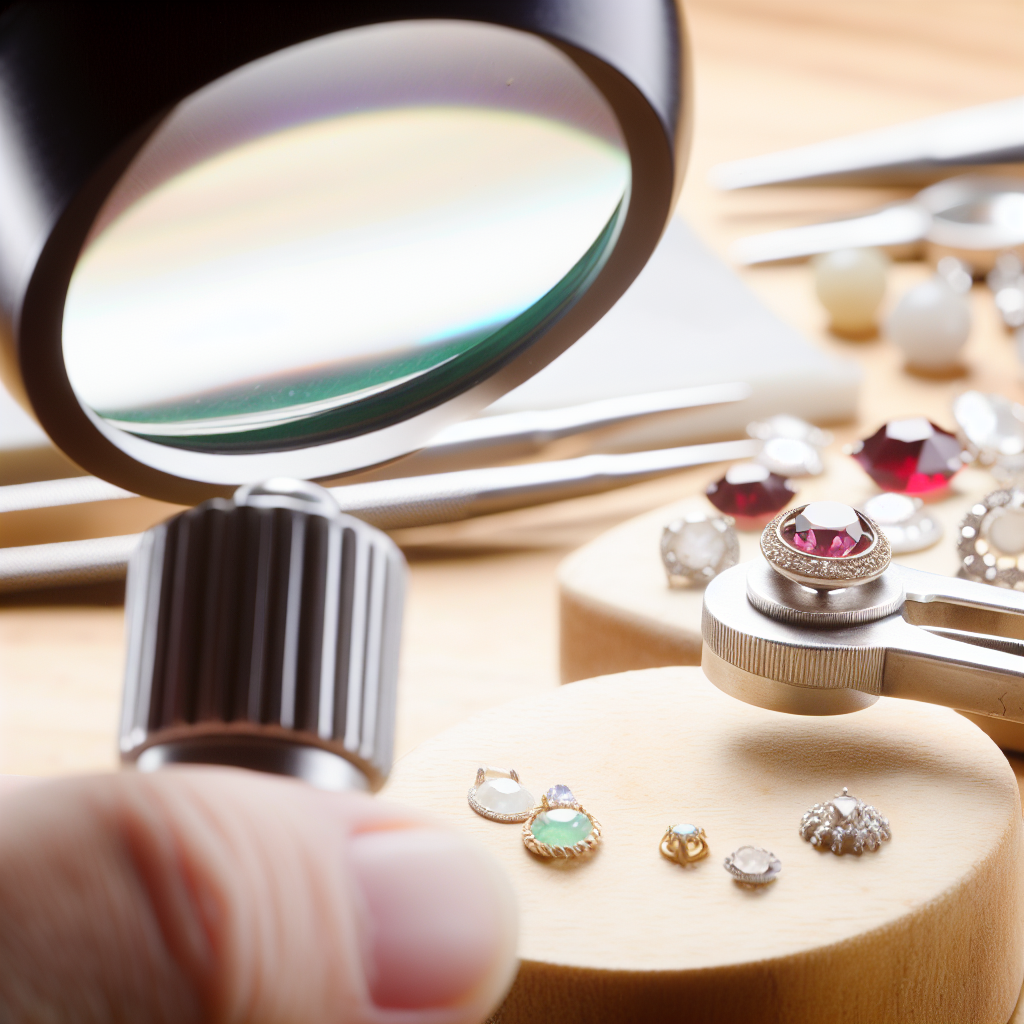
A jeweler's loupe is a compact optical instrument specifically designed to allow for very precise examination of gemstones, jewelry, watches, and other small, delicate objects. It plays an essential role in jewelry and gemology, where every detail, every inclusion, and every imperfection can influence the value of a piece. Jewelers, stone experts, and informed amateurs use it to observe the clarity, cut, color, and internal structure of gems. Its small size and ergonomic design make it an indispensable tool for anyone seeking precision in the observation of delicate objects.
Originally, the jeweler's loupe emerged to meet the needs of experts who wished to magnify an image to a level of detail impossible to distinguish with the naked eye. It differs from classic magnifiers by its high magnification (generally 10x to 30x), suited to the meticulousness required in the jewelry sector. It comes in several forms, but always remains compact, lightweight, and portable, so it can be used with one hand and easily transported.
Over the years, the jeweler's loupe has evolved with technology. Now, some versions offer integrated lighting to better appreciate the color and purity of stones in all circumstances. Its importance in evaluating jewelry has never waned: whether it's to verify the authenticity of a diamond, spot a scratch on the setting of a ring, or inspect a watchmaker's signature, it remains the faithful ally of professionals and enthusiasts alike.
Thanks to their precise design and ease of use, jeweler's loupes are now a recognized accessory for any gemstone enthusiast, collector, or professional jeweler. Adopting one guarantees you'll observe every facet of your jewelry from the best angle and adjust your evaluations with complete confidence.
📍 Types of Jeweler's Loupes Available
There is a wide variety of loupes adapted to the requirements of craft trades and gemology. Here are the main types you will encounter on the market:
- Classic Monocular Loupes: These are traditional models consisting of a single lens, very compact and easy to use daily.
- Triplet Loupes: Composed of three lenses glued together, they offer an image without distortion or chromatic aberration. They are highly favored for their faithful rendering and superior performance in examining precious stones or goldsmith's work.
- Doublet Loupes: Equipped with two associated lenses, they limit certain aberrations and offer a good compromise between image quality and lightness.
- Aspheric Lens Loupes: Less common, they minimize distortion at the edges of the image.
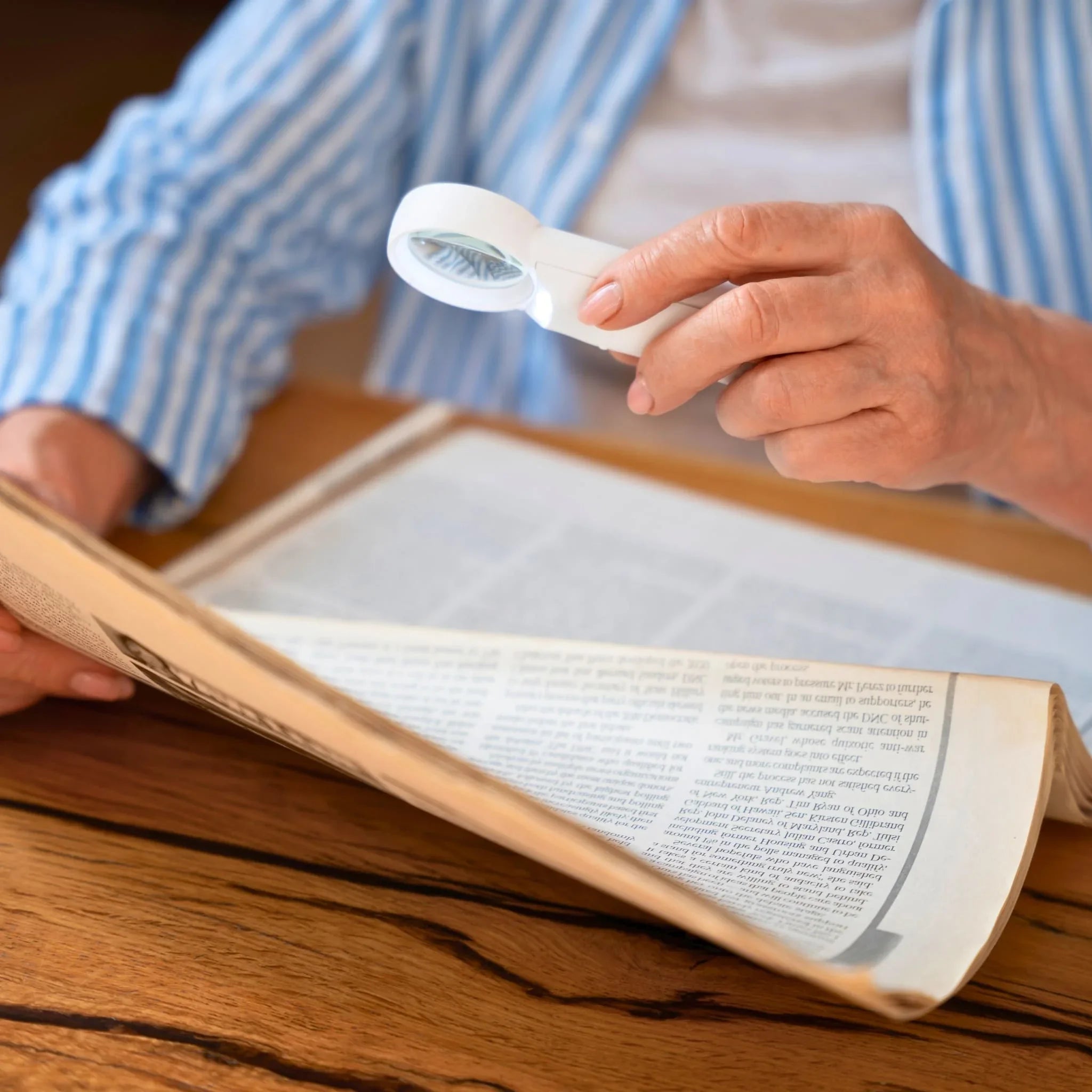
- Loupes with Integrated LED Lighting: This modern range integrates one or more small LED lights around the lens, allowing for precise control of the light projected onto the examined jewelry.
- Folding and Miniature Loupes: Practical for nomadic use, they fit in a pocket or on a keychain and are often used at fairs or specialized exhibitions.
Each type of jeweler's loupe has its advantages and specificities depending on the intended use and the level of requirement. While triplet loupes guarantee perfect observation for certifying the value of a diamond, LED versions facilitate work in poorly lit environments. The choice will therefore depend as much on your professional needs as on your personal preferences.
📍 Why Use a Jeweler's Loupe?
Acquiring a jeweler's loupe is not a simple luxury but a necessity in the evaluation and analysis of jewelry. With it, it becomes possible to:
- Examine the clarity of a gemstone: Highlight microscopic inclusions, air bubbles, or fissures that are completely imperceptible to the naked eye without magnification.
- Identify cutting imperfections: Check the facets, symmetry, and finish of the cut to estimate the value and quality of a piece of jewelry.
- Authenticate signatures or engravings: Identify a hallmark, a manufacturer's mark, or a fine engraving, for example, on an antique ring or a collector's watch.
- Secure buying or selling: Guarantee that the examined object matches its description, which limits the risks of counterfeiting or unpleasant surprises upon resale.
- Ensure maintenance and repair: Quickly spot a loose setting, a missing prong, or a mechanical imperfection on a watch mechanism.
For a professional, it's about adhering to industry standards and providing reliable diagnoses to clients. For enthusiasts and collectors, the loupe allows for a better appreciation of objects' beauty, learning to recognize them, and uncovering their best-hidden secrets. Regular use of the jeweler's loupe also contributes to training the eye and acquiring an experienced gaze, an essential step for progressing in the fascinating world of gems and jewelry.
📌 Choosing the Right Loupe for Your Needs
Selecting the ideal loupe requires a careful analysis of your expectations and conditions of use. The main criteria to consider are the level of magnification, the quality of the lenses, the size, the weight, the possible presence of lighting, and the desired level of ergonomics.
Magnification remains the fundamental criterion. A loupe that is too powerful will significantly shrink your field of vision, while a loupe that is too weak will not reveal the desired details. Most professionals opt for 10x magnification, a standard recognized by gemologists, but other levels (7x, 20x, 30x) exist for specific tasks.
Optical quality depends on the type of lens used. Triplets are renowned for their distortion-free images, even at the edges, and an almost complete absence of chromatic aberrations. Doublets are an intermediate alternative, while single lenses will be more suitable for brief observation or for beginners.
Do not neglect handling comfort. Loupes vary in diameter (generally 18-21 mm) and shape (round, folding, ergonomic). The weight will also affect grip during prolonged use.
Finally, consider additional options, such as LED lighting or the ability to fold the loupe to improve portability. Some loupes include filters, useful for enhancing contrast or analyzing fluorescent diamonds.
To find our complete selection and models adapted to every need, you can consult our dedicated collection.
📍 Recommended Magnification for Professionals and Amateurs
The choice of magnification level depends directly on the intended use and the user's level of expertise:
| Use | User | Recommended Magnification | Advantages |
|---|---|---|---|
| Standard gem evaluation | Professional/Advanced Amateur | 10x (standard) | Standard compliance, comfortable field of view |
| Identification of fine defects, inclusions | Expert | 20x to 30x | Display of microscopic details, in-depth research |
| First approach, discovery | Beginner/Curious | 5x to 7x | Wide field of view, easy handling |
| Jewelry work, soldering | Artisan/Workshop | 10x to 14x | Good balance, sufficient details |
Note that too much magnification can make the image dark and quickly tire the eye. For most cases, the 10x jeweler's loupe is the recommended standard by international gemological institutions.
📍 Comparison between Triplet and Doublet Lenses
The quality of the lens greatly influences the accuracy of observations and the precision of analyses performed:
- Triplet lenses: composed of three layers (generally two convex and one concave, all made of superior optical glass), they almost completely eliminate chromatic aberrations and provide a faithful reproduction of colors and shapes. They offer a clear image from the center to the edges and are perfectly suited for certification and professional analysis.
- Doublet lenses: composed of two glasses, they reduce optical distortions but less effectively than a triplet. They offer a good compromise between lightness, cost, and performance, more suitable for less demanding observations or for learning.
The choice will therefore depend on your level of requirement. If you are looking for an uncompromising image to judge a precious stone or a valuable object, opt for a triplet. For occasional use or for beginners, a doublet may be largely sufficient.
To deepen your choice, do not hesitate to consult our detailed comparison of the best jeweler's loupes on the market in this specialized article.
📌 Techniques for Effectively Using a Jeweler's Loupe
Precision observation requires specific technique and a few tips to make the most of your loupe's capabilities. Whether you are a beginner or experienced, it is important to follow certain steps to ensure a rigorous and comfortable examination.
Here is a proven method for properly handling your jeweler's loupe:
- Stabilize the loupe: Hold the loupe between your thumb and index finger, close to your dominant eye (about 2 cm away).
- Bring the object to be examined: Gently place the jewelry or stone in the palm of your other hand, then slowly bring it closer until the image is perfectly sharp.
- Keep the loupe in light contact with your face: Some professionals rest it against the bridge of their nose to stabilize the setup, which prevents any shaking.
- Control your breathing and ambient light: Calm breathing limits involuntary movements, while well-directed light will reveal every detail.
- Rotate the object: Gently pivot the jewelry to observe each facet from different angles and in the light.
Good posture and a clear environment are essential to avoid fatigue and maximize the precision of observations.
📍 Preparing the Work Environment
A well-designed work environment directly contributes to the quality of your observations. Here are the essential elements to consider:
- Clean and flat surface: Use a clear workspace with a non-slip mat. Avoid reflective surfaces that could hinder visibility.
- White and diffused light: Use a natural light source when possible, otherwise, prefer LED or full-spectrum lamps. Avoid yellow lights that distort the perception of gem colors.
- Comfortable height: Position yourself facing your workspace at table height to avoid muscle tension.
- Dedicated storage: Keep a stand for your loupe, observation tools, and jewelry to be examined within reach, to limit unnecessary handling and the risk of dropping.
- Calm atmosphere: Work in a space free from distractions and vibrations to ensure optimal observation stability.
A suitable environment will not only help you avoid errors due to inattention but also protect your eye health and promote concentration during long examination sessions.
📍 Adjusting Focus and Viewing Distance
To obtain a perfectly sharp image, adjust the distance between your eye, the loupe, and the object:
- Place the loupe almost against your dominant eye to benefit from the full field of vision offered by the instrument.
- Slowly bring the object closer to the lens until the contours become sharp and precise. Generally, the ideal distance is only a few centimeters from the lens.
- Keep your hand steady; if necessary, rest your elbows on the table or on a non-slip surface.
- Do not hesitate to slightly adjust the angle and rotation of the jewelry to highlight different details depending on their exposure to light.
- If visual fatigue sets in, take short breaks: the sharpness of your observations will be all the greater.
Always use the same technique to develop your reflexes and improve the speed of your evaluations. With practice, adjusting the focus will become a natural and precise gesture.
📌 Precautions and Maintenance for Your Jeweler's Loupe
Regular maintenance extends the lifespan of your jeweler's loupe and ensures consistent observation quality. Here's how to keep your tool performing well:
- Clean the lenses gently after each use.
- Avoid contact with abrasive or corrosive products.
- Always store your loupe in a protective case.
- Check for dust or residue on the optics.
- Be careful not to expose the loupe to high temperatures or excessive humidity.
Taking care of your loupe means investing in the precision and reliability of all your future examinations.
📍 Cleaning and Storing Lenses
To maintain the optical performance of your jeweler's loupe, adopt good cleaning practices:
- Use a microfiber cloth specifically for optics or a soft, slightly dampened wipe. Avoid paper or rough clothes that could scratch the surface.
- To remove grease marks, opt for a solution suitable for optical glass (never pure alcohol or corrosive solvents).
- Always dry the lens in the air or with a clean spectacle cloth to avoid any residual marks.
- Immediately store your loupe in a pouch or rigid case after cleaning, to protect it from dust and accidental splashes.
Properly maintained, a lens will remain transparent and true to reality for many years, even with intensive use.
📍 Tips for Secure Storage
Storage plays a key role in preserving your loupe:
- Always store the loupe in a dedicated case after use, away from direct light and shocks.
- Never leave it at the bottom of a bag without protection: keys or other metal objects could irreparably scratch it.
- Avoid humid environments (bathroom, unventilated workshop) to preserve the optical coatings of the lenses.
- If your loupe has screwed or folding elements, regularly check their good condition and replace loose elastic bands or screws if necessary.
- Store it in a stable, dry place, ideally on a shelf protected from dust and at a constant temperature.
Your daily actions will determine the longevity and reliability of your observation equipment. Prioritize enclosed storage and designate a specific area for your instruments in your workshop or home.
📌 Common Mistakes to Avoid
Even experienced users can make mistakes. To get the most out of your jeweler's loupe, keep these common pitfalls in mind:
📍 Incorrect Magnification Use
A common mistake is choosing magnification that is too high or too low for the intended objective. High magnification (30x or more) can quickly make the image difficult to stabilize, drastically reduce the field of view, and lead to blurred vision at the edges. Conversely, too low magnification will not reveal critical defects on a gem or piece of jewelry.
The impacts of a poor choice are numerous: erroneous diagnoses, wasted time, increased eye strain, and client dissatisfaction in a professional context. To avoid this problem, remember that 10x remains the benchmark for almost all precious stone appraisals.
Always adapt your loupe to the context of use and do not hesitate to own several if you perform different activities (appraisal, repair, learning).
📍 Neglecting Adequate Lighting
Light directly influences the accuracy of your observations. A poorly lit piece of jewelry or stone can hide an inclusion, distort the perceived color, or conceal a cutting defect.
- Using light that is too bright: Risk of glare and parasitic reflections obscuring delicate details.
- Insufficient lighting: Creates shadows conducive to observation errors and strains the eyes.
- Poor light spectrum: Yellow or colored light distorts the natural hue of stones, altering the accuracy of the analysis.
Therefore, prefer a white, homogeneous, and adjustable lighting, such as that offered by some modern LED loupes or neutral spectrum desk lamps. Always test the light on different objects before examination to ensure its suitability.
📌 Advantages of jewelry loupes with integrated lighting
Jeweler's loupes with integrated LED lighting represent a major evolution for improving both the visibility of details and the analysis of the color and transparency of stones. They have become indispensable for professionals working in varied, sometimes poorly lit environments or when traveling.
- LED lighting reproduces white light, close to daylight, guaranteeing faithful rendering of colors and inclusions.
- It eliminates unwanted shadows, removes annoying reflections, and allows observation in optimal conditions even at nightfall or in an exposed display case.
- For the identification of translucent stones, concentrated LED light can reveal cracks, inclusions, or indicate the presence of treatments.
- An integrated system avoids handling an external lamp: everything is controlled with one hand, facilitating movements and preserving concentration.
Thanks to their compactness and performance, these innovative loupes are becoming essential in the new generation of expert instruments.
📍 Facilitating observation in low light conditions
The number one advantage of illuminated loupes is to offer optimal visibility regardless of the time or place. Observing jewelry at a fair, in a market, or in a poorly lit shop becomes possible and precise.
Modern LEDs consume very little energy and offer intense but soft light, easily directed according to the object to be analyzed. They also minimize eye strain during long sessions of use.
- Can be used day or night, indoors or outdoors.
- Perfect for quick verification of batches of stones or jewelry on the go.
- Useful for collectors or watchmakers who often visit their clients.
This advantage brings comfort, productivity, and peace of mind, especially to professionals who must guarantee the reliability of their expertise in all circumstances.
📍 Comparison of different lighting options
Not all lighting solutions are equal! Here is a quick comparison of the most common options:
| Type of lighting | Advantages | Disadvantages |
|---|---|---|
| Integrated LED | White, intense and directional light Minimal energy consumption Long lifespan |
Sometimes requires button batteries Can heat up with prolonged use |
| Natural light | Accurate colorimetry, No overheating No additional cost |
Not available at all times Intensity cannot be controlled |
| External lamp (desk) | Adjustable position, variable intensity Wide range of use |
Less portable Requires mains power supply |
| Incandescent/halogen light | Good rendering on certain stones | Heats up, consumes a lot Yellowish tint distorting perception |
It is generally recommended to prefer integrated LED for its versatility and natural light whenever possible, for the most honest and nuanced expertise.