


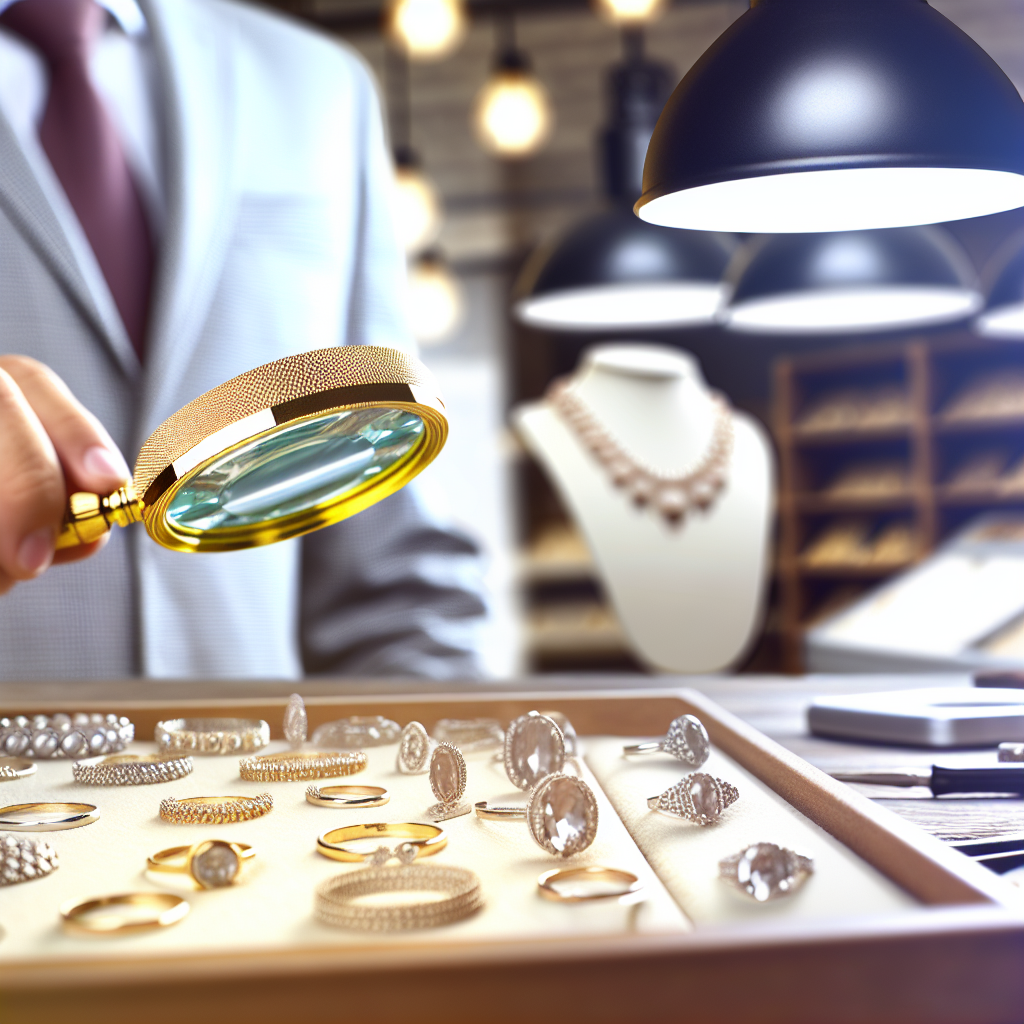
📌 The History of the Jeweler's Loupe
🔍 Origins and Evolution
The jeweler's loupe holds a very special place in the history of jewelry. From the earliest rudimentary forms of magnification to today's high precision, this tool has established itself as an indispensable ally for jewelers, watchmakers, and gemstone collectors worldwide. The origins of the loupe date back to antiquity, when polished crystals already allowed for closer observation of material details. It was in the Middle Ages, as craftsmanship developed trades requiring meticulousness and expertise, that the first specialized loupes appeared. With the industrial revolution, needs and techniques accelerated: the demand for specific optical tools increased, leading to the development of convex lenses and adjustable frames, the initial basis of the modern jeweler's loupe.
Over the centuries, the loupe has evolved both in its materials and in the quality of its optics. During the Renaissance, certain precision pieces already required meticulous control: stones to be cut, goldsmithing, fitting mountings. As technology progressed, blown glass gave way to more noble alloys and optical treatments aimed at minimizing distortion. The zenith of the 19th century saw the emergence of models with superior lens quality, allowing the jeweler to adapt to the ever-increasing miniaturization of mechanisms and the growing value of artifacts to be examined.
In modern workshops, the loupe is synonymous with rigor. Its use quickly spread to many related professions: watchmaking, gemology, engraving, and even certain branches of medicine or archaeology. In short, the evolution of the jeweler's loupe reflects the perpetual quest for precision in art trades. It illustrates the encounter between technical progress and human requirements. Today, investing in a quality loupe means continuing this tradition of excellence in detailed work.
🔍 Innovations in Design
Innovation has always punctuated the history of the jeweler's loupe. The transition was major from simple convex magnifiers to achromatic lenses, capable of effectively correcting optical aberrations. This technological leap was accompanied by advances in user comfort: introduction of a wide eyepiece, multiple magnifications, dual-lens devices, and adjustable interval settings to adapt to all morphologies.
But innovation doesn't stop at optics. Frame materials, such as anodized aluminum, stainless steel, or technical resins, give loupes their robustness and lightness. The arrival of lighting, with integrated LED for a white and shadow-free light, revolutionized practice. Now, even dimly lit areas can be inspected effortlessly and without risk of error. Some models benefit from anti-scratch treatments on the glass, anti-reflective coatings, inclinable eyepieces, ergonomic adjustments, and even attachments for glasses or headbands.
All these innovations make the jeweler's loupe more precise, more reliable, and even more comfortable to use. Professionals gain autonomy, speed of execution, and quality of optical analysis. Ultimately, the loupe is the perfect example of a tool that has adapted to the increasing complexity of jewelry craftsmanship: every technical evolution has been designed to support artisans, as closely as possible to their requirements and their health.
📌 What makes a quality jeweler's loupe?
🌟 Essential Characteristics
A quality jeweler's loupe is not limited to simply offering magnification. It must meet demanding criteria to allow for accurate and precise observation of every detail. The primary advantage lies in the quality of the optics: the lenses must be achromatic, meaning capable of rendering colors without distortion or chromatic aberration. A high-end optical system also eliminates peripheral distortion, providing a sharp image from the center to the edges.
The second essential criterion is magnification. In jewelry, standards generally recommend magnifications of 10x to 20x. Too low a magnification would make the examination useless; too high, it would be difficult to use and cause rapid visual fatigue. The balance is therefore crucial.
Ease of handling and comfort of use are also fundamental criteria. A good loupe must adapt to all hand morphologies. Its format must be compact enough to fit easily between the thumb and forefinger, while offering optimal stability. Lightness is a real plus for prolonged sessions without fatigue.
Finally, clarity and brightness of observation are decisive. Models equipped with white LEDs or directional lighting significantly improve the quality of work in difficult conditions. Some models even offer the possibility of choosing the light temperature according to the nature of the stone being observed. In all cases, optical quality goes hand in hand with an overall design focused on user ergonomics and productivity.
🌟 Materials and Construction
The durability of a jeweler's loupe largely depends on the choice of materials and the care taken in its manufacture. The best loupes use treated optical glass lenses, which are far superior to plastic alternatives that wear out and scratch more quickly. A multi-layer coating ensures maximum light transmission, simultaneously reducing distracting reflections and the risk of eye fatigue.
For the frame, robust alloys such as anodized aluminum are preferred, particularly for their lightness combined with good corrosion resistance. Stainless steel is also sometimes used for mechanical parts (hinges, screws, support arms) given its longevity. The choice of a smooth and precise adjustment ring, or even anti-slip protection, guarantees comfort and safety even during the most delicate manipulations.
| Materials | Properties | Impact on performance |
|---|---|---|
| Optical glass | High transparency, scratch resistance, superior image quality | Clear observation, faithful colors |
| Acrylic plastic | Light, economical, but susceptible to scratches | Less recommended for professional use |
| Anodized aluminum | Light, corrosion resistant | Good grip, increased longevity |
| Stainless steel | Very robust, durable | Strength of joints and supports |
Care in assembly is also crucial. A good loupe has polished edges, a perfect junction of mechanical elements, and a finish without roughness to avoid any risk of injury or damage during transport. Finally, remember that any savings on manufacturing quality quickly cost more in use: a mediocre loupe distorts the diagnosis, fatigues the craftsman, and shortens the life of the tool.
📌 The Importance of a Good Loupe in Precision Work
🔧 Preserving Ocular Health
In a profession where visual acuity is paramount, preserving one's vision in the long term is just as important as the quality of the final product. A quality jeweler's loupe significantly reduces eye strain. Thanks to its distortion-free lenses and adapted magnifications, it prevents the user from adopting poor postures or straining to focus. The adequate light emitted by LED-equipped models allows for better color perception and increased contrast, thus limiting squinting and overworking the eye muscles.
Conversely, regular use of a low-end loupe quickly leads to weariness, even headaches in the forehead or temples. Visual disturbances, such as blurriness, dry eyes, or irritation, can occur from prolonged examinations without suitable equipment. In the long term, this can affect the quality of work and precipitate more serious problems for the professional.
Investing in a high-end jeweler's loupe is therefore a health choice. It protects the eye, preserves concentration over hours, and indirectly contributes to the prevention of pathologies related to visual stress.
- Reduced fatigue: Calibrated and aberration-free lens = less visual effort.
- Prevention of headaches: Correct lighting and adapted field of vision.
- Posture support: Ergonomic use and easy handling.
Taking the time to choose a quality tool today means preserving one's expertise for a long time.
🔧 Improving Efficiency
Beyond health, the quality of a loupe directly impacts productivity and work precision. A clear, constant, distortion-free magnification allows for the analysis of the smallest detail: a stone inclusion, a micro-fissure in gold, the precision of a setting. By minimizing assessment errors or approximations, the artisan reduces the risk of costly rework and improves their yields.
The lightness of a good loupe, its natural grip, and its accessories (fixed supports, articulated arms, integrated LEDs) also make work smoother. The time saved on each manipulation is precious; over a day, it can represent several minutes of economical concentration. Over a year, it's a real difference in the ability to process more orders or meticulously care for each piece.
The psychological aspect should not be overlooked: a professional who works with appropriate tools feels valued, serene, and confident. This state of mind is reflected in the quality of their welcome, their productivity, and the loyalty of their workshop.
- Fewer errors = less waste or repairs;
- Quick and reliable analysis of complex parts;
- Time saved on routine operations;
- Improved customer confidence through precise diagnostics.
Find a selection of models perfectly suited to each profession on our dedicated jeweler's loupe page.
📌 Different Types of Jeweler's Loupes
🔍 Handheld Loupes
The handheld loupe, the most recognized by all generations of artisans, retains an appealing advantage: mobility and flexibility. Simple to manipulate, it slips into a pocket or workshop case, ready to be drawn at the slightest doubt. It exists in various formats: single convex lens, double or triple lens for filtered and distortion-free observation. Some models even include a mini-light to illuminate the piece under examination.
The major advantage of the handheld loupe lies in its versatility. It allows for 360° observation, facilitates access to all angles, and lends itself to quick comparison between different stones or settings. However, this mobility requires a certain mastery: the stability of the gesture determines the sharpness of the observation. For the novice user, it will be useful to practice holding the loupe perfectly parallel to the eye and the studied jewel to limit tremors.
Another advantage: the handheld loupe allows for quick switching from one magnification to another (by changing models) depending on the stages of work. This tool naturally finds its place in situations of itinerant control, customer service, or in uncluttered workshops.
- Advantages: Mobility, versatility, quick grip.
- Disadvantages: Sometimes reduced stability, risk of fatigue during intensive use.
🔍 Loupes with Stands
When stability and precision are paramount, stand-mounted models are the way to go. These loupes are mounted on a base, an articulated arm, or even integrated into a basic adapted microscope, thus offering a perfect and constant view effortlessly. The user keeps both hands free: manipulating jewelry, adjusting a setting, placing micro-parts. This is a significant asset for any complex or prolonged work.
These models are distinguished by their robustness and their evolutionary nature. Some stands allow for height and angle adjustment, or even the addition of accessories such as a ring light or optical correction filters. A good stand-mounted loupe is essential for meticulous watch repair, fine engraving, or setting. It limits the risk of errors due to involuntary movements and prevents excessive muscle fatigue.
Again, everything depends on context and use. The stand-mounted loupe will find its place in a fixed workshop where stability and precision are paramount, without the constant need for mobility offered by the handheld loupe.
📌 Comparison between Standard Loupes and Headband Loupes
🕶 Advantages of Headband Loupes
The headband loupe, also known as a head-mounted magnifier, is an increasingly popular piece of equipment for jewelers concerned about their comfort. It offers a clear ergonomic advantage: worn on the head like a band, it leaves both hands free and guarantees a perfectly clear view. This solution is ideal for long work sessions requiring precision and concentration, as it eliminates the constraint of holding a lens in the hand or in front of the eye.
Another advantage: the ability to adjust the working distance by simply tilting the head, without interrupting the work in progress. Some models are equipped with interchangeable lenses or bifocal lenses, allowing magnification to be adjusted according to the task at hand. The integration of a light source (front or side LED) provides suitable illumination without casting shadows, which is crucial when handling tiny components or precious stones.
The lightness and comfortable fit of headband loupes make them pleasant to use, even for people wearing prescription glasses. They also prevent finger or hand pain, which is common during repeated manipulations of a traditional handheld loupe.
- Comfortable for extended use
- Quick magnification change
- Hands-free for manipulation
- Possible integrated lighting
🕶 Specific Use Cases
The headband loupe proves indispensable in many tasks where extreme precision and stable gaze are required. For example: setting very fine grains, engraving tiny letters, or delicate watch restoration. In these contexts, every micro-movement can impact the final result; the freedom of vision offered by the headband translates into a tangible improvement in the regularity of the gesture.
In the rapid evaluation of several consecutive pieces, the headband loupe proves its worth: no need to take out a pocket loupe, magnified vision is accessible with a simple head movement. It also appeals to mineral or coin collectors, as well as certain micro-technical professions (electronics, meticulous modeling).
In summary, the choice between a standard loupe and a headband loupe depends on the suitability between the gesture, the duration of work, and the desired comfort. Demanding workshops readily adopt a combination of both to cover all professional needs. For a complete overview, read our article on this year's top 5 recommended models.
📌 Tips for Choosing a Jeweler's Loupe
🎯 Factors to Consider
Choosing a jeweler's loupe adapted to your needs requires considering several essential parameters. First, it is important to identify the optimal magnification level for most of your tasks. In jewelry, 10x magnification is often standard, but needs can vary: analysis of precious stones, inspection of micro-parts, quality control of soldering.
Optical clarity remains the major criterion: favor achromatic glass, multi-coated lenses for faithful color reproduction and every detail. A wide field of view facilitates rapid localization of defects, while distortion-free rendering avoids any erroneous interpretation of the final result.
- Magnification adapted to primary tasks;
- Lens type: single, double or triple (for extreme details);
- Body and lens material;
- Presence of integrated lighting (for dark workshops);
- Weight and ergonomics of the loupe;
- Compatibility with wearing glasses (headband, head strap);
- Budget and manufacturer's reputation.
Testing the grip before purchasing, when possible, provides valuable indications on the comfort experienced during prolonged use. Some workshops even offer comparative trials depending on the type of task.
🎯 Recommended Brands
Some brands particularly stand out in the field of jeweler's loupes, recognized for the reliability and precision of their models. Among the most reputable are:
- Eschenbach Optik: A German manufacturer known for its optical excellence and robust components, especially the series with integrated LEDs.
- Zeiss: An iconic brand, often cited as the ultimate reference among professional watchmakers and jewelers.
- Belomo: Originating from Belarus, praised for its triple-lens loupes that are both economical and impressively sharp.
- Triplet Swiss: Swiss giants, specializing in triplets, offering clear and distortion-free magnification right to the lens edges.
Other brands regularly emerge, offering innovations such as adjustable stands, new-generation lighting systems, or ultralight designs. Before purchasing, it's a good idea to consult feedback from other professionals or read updated comparative reviews.
📌 Caring for your jeweler's loupe
🛡 Regular maintenance
It's a fact: even the best loupe loses effectiveness if not regularly maintained. Here are the best practices for keeping your tools up to your standards:
-
Lens cleaning:
- Use a soft microfiber cloth (avoid rough fabric or tissue paper).
- Avoid harsh products; prefer specific optical solutions or, failing that, distilled water.
- Always air dry or dab gently; never rub.
-
Frame dusting:
- Remember to check the condition of hinges, support arms, and adjustment screws.
- Lubricate mechanical parts as needed to ensure smooth operation.
- Regularly change batteries or check the charge of rechargeable batteries on LED models.
- Check for loose connections or short circuits.
Careful maintenance guarantees the performance and longevity of the loupe. It also contributes to its hygiene, especially in workshops where several colleagues may handle the same tool.
🛡 Storage and protection
The fragility of a loupe primarily lies in its lenses and frame. To protect it, it is recommended to store it in a padded case or an airtight box away from dust and humidity. Avoid prolonged exposure to direct light or strong temperature variations that could alter the optical structure.
When traveling, opt for rigid cases, compartmentalized bags, or reinforced hard cases. For loupes with stands, folding, locking, or removing movable parts before transport is advisable. Accessories (wipes, spare batteries, mini-lamp) can be stored in separate pockets.
Protecting your loupe not only extends its lifespan but also ensures consistent observation quality, essential for the success of your daily work.
📌 FAQ: Jeweler's Loupe
- What is a jeweler's loupe and what is it used for?
It is an optical instrument used to meticulously examine jewelry, precious stones, watch mechanisms, and art objects. It offers accurately calibrated magnification to reveal flaws, inclusions, or characteristics invisible to the naked eye.
- What magnification is recommended for a jeweler's loupe?
The standard magnification is usually 10x, but some professionals use 15x or 20x magnification for detailed inspection of tiny components or inclusions.
- What is the difference between a hand loupe and a headband loupe?
A hand loupe is portable, versatile, and practical for quick observation, while a headband loupe attaches to the head, leaves hands free, and is suitable for long precision work or wearing glasses.
- How do you maintain your jeweler's loupe?
Regularly clean the lenses with a microfiber cloth, avoid abrasive products, store the loupe in a padded case, and check the condition of hinges and light sources.