


📌 Introduction to Jeweler's Loupes
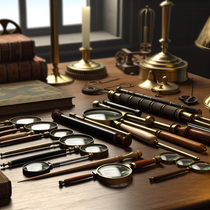
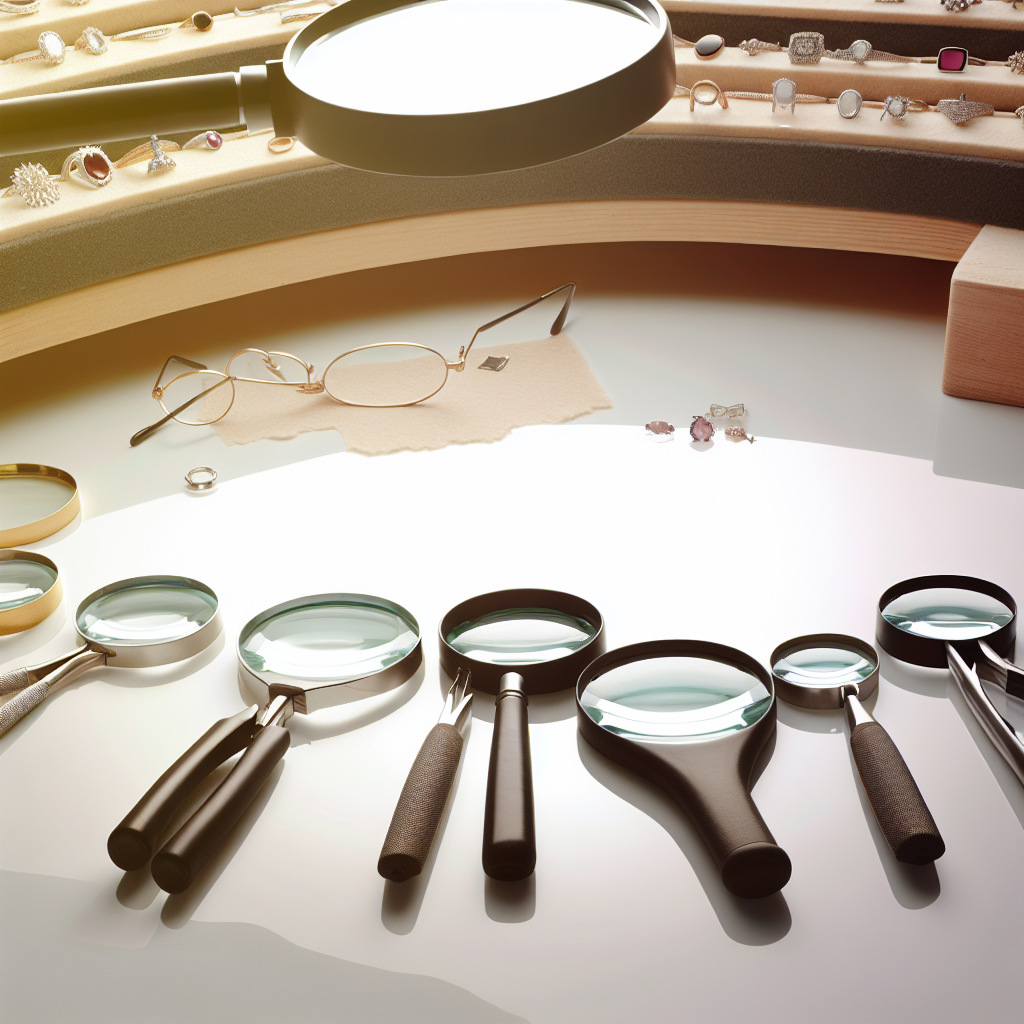
Jeweler's loupes are now an essential tool in the world of jewelry, watchmaking, and collecting. They allow for precise observation of the smallest details, revealing sublime stones, tiny engravings, or flaws invisible to the naked eye. Using a jeweler's loupe means accessing a new world of finesse, indispensable for demanding professionals and passionate enthusiasts alike. This article will guide you through the different facets of this tool, its selection criteria, and present an updated ranking of the best loupes available this year. Whether you are a master jeweler, a mineralogy amateur, or simply curious and wishing to sharpen your eye, discover how a jeweler's loupe can transform your daily life.
📌 Why Use a Jeweler's Loupe?
The jeweler's loupe holds an essential place in the professional and amateur world of jewelry. Whether it's to check the quality of a precious stone, inspect a setting, or authenticate a metal, it allows for the observation of details invisible to the naked eye. For this reason, its use is highly valued in the field of fine craftsmanship, as well as among collectors and experts of rare pieces. Using a jeweler's loupe provides:
- Better detection of inclusions, cracks, or bubbles in precious stones,
- Optimal control of hallmarks and signatures on antique jewelry,
- Increased precision during repair and setting,
- The ability to authenticate the origin of a piece of jewelry based on distinctive marks,
- Reliable verification of the conservation status of valuable objects.
The added value of a jeweler's loupe is well-established, both economically (avoiding costly errors) and technically (performing meticulous work). In short, it is a guarantee of trust and professionalism in the practice of jewelry.
📌 Selection Criteria for a Jeweler's Loupe
Buying a jeweler's loupe is not something to be taken lightly. Every detail counts to ensure its effectiveness and comfort of use. It is essential to focus on several key features to maximize satisfaction in use:
- Magnification adapted to the intended activity,
- Optical quality of the lens for clear vision without error,
- Field of view to cover a larger or smaller observation area,
- Ergonomics and comfort to avoid fatigue during long periods of use,
- Ease of transport and storage.
Let's look at these criteria in more detail:
📌 Optimal Magnification for Jewelers
Magnification is the first criterion to check when purchasing a jeweler's loupe. Generally, professional models offer 10x magnification, ideal for most checks, such as meticulous examination of precious stones or metals. For work requiring even greater precision, such as inspecting micro-engravings or deep inclusions, some may prefer loupes up to 20x or even 30x. However, be aware that higher magnification often reduces the field of view and therefore requires more stability during use.
Here is a correspondence table to help you:
| Magnification | Recommended Use |
|---|---|
| 10x | General expertise, gemstones, quality control |
| 15x | Fine details, engravings, small inclusions |
| 20x | Advanced inspection, micro-engravings, wear |
| 30x | In-depth analysis, specialists |
In summary, choose a magnification suited to your practice, without overestimating your needs if you are a beginner.
📌 Lens Quality and Materials Used
Optical quality is paramount to avoid any distortion or visual fatigue. Prioritize optical glass lenses treated against reflections, which provide sharp and faithful images. Some loupes are also equipped with specific coatings (anti-scratch, anti-smudge) to ensure their durability through repeated handling. The body of the loupe, meanwhile, can be made of metal or reinforced plastic. Metal models are more robust but also heavier, while plastic versions combine lightness and maneuverability. Finally, the finish also influences user comfort: presence or absence of a stand, a hanging ring, etc.
For users seeking excellence, some jeweler's loupes are equipped with three fused lenses (triplets), allowing observation without distortion or chromatic aberration.
📌 Comfort of Use and Ergonomics
The choice of a jeweler's loupe must also consider ergonomics. A well-designed loupe fits the shape of the fingers or palm, offers a good grip, and remains light during prolonged use. An often underestimated criterion is adjustability: some loupes allow simple focus adjustment or come with a head-mounted support leaving hands free. Others are foldable and easily fit into a pocket or tool kit.
A professional's tip: if you frequently work under different types of light (cold or warm lamps), opt for a lens with an anti-reflective coating. This significantly reduces visual discomfort, even during examination under powerful lighting. Finally, the lens diameter influences the field of view and should be chosen based on the surface you wish to inspect in a single observation.
📌 Top 5 Recommended Jeweler's Loupes This Year
We have selected and compared the five best jeweler's loupes for the current French market. Our ranking is based on optical quality, comfort, technical characteristics, and value for money. This top 5 ensures you will find the loupe that precisely matches your needs.
- XYZ 10x Loupe: clarity and reliability, ideal for all uses
- ABC 20x Loupe: impressive details for expert work
- DEF 15x Loupe: perfect for beginners or occasional use
- GHI 30x Loupe: the professional's reference for extreme details
- JKL 18x Loupe: exceptional value for money, versatile
For an even wider selection of models, check out our special collection of jeweler's loupes on our online store.
📌 XYZ 10x Jeweler's Loupe: Unrivaled Clarity
The XYZ 10x jeweler's loupe is renowned for the precision of its observations. Its standard magnification (10x) makes it a must-have for all types of inspections: precious stones, metals, engravings, and even reading very fine signatures. Its triplet glass lens significantly reduces distortions and prevents chromatic aberration, ensuring remarkable image purity.
- Magnification: 10x
- Lens diameter: 21 mm
- Lens type: triplet glass, anti-reflective coating
- Structure: stainless steel body, matte finish
- Use: jewelry, coins, stamps
Its ergonomic design offers excellent grip, and its protective case makes it easy to transport. User feedback also praises the body's resistance and the lens's durability, even with intensive use. In short, the XYZ 10x is considered the versatile choice par excellence, suitable for all professionals and enlightened amateurs alike.
📌 ABC 20x Loupe: Best for Detail
This tool is particularly aimed at professionals requiring a superior level of detail. Its treated optical glass lens (20x) ensures absolute sharpness, even in the analysis of micro-inclusions in precious stones or the reading of micro-inscriptions on antique jewelry. Multiple anti-reflective coatings allow comfortable use under all types of lighting, while preventing visual fatigue.
- Magnification: 20x
- Lens diameter: 12 mm
- Main material: aluminum alloy
- Ideal for: gemology, fine appraisals, laboratories
The ABC 20x loupe stands out for its compactness, light weight, and ease of transport. It comes with a durable case and a special cloth to keep the lens clean in all circumstances. If your work demands absolute detail, this model is essential.
📌 DEF 15x Loupe: Perfect for Beginners
The DEF 15x jeweler's loupe is ideal for a first experience in the field. Equipped with moderate magnification (15x), it combines optical quality, lightness, and intuitive use. Its monoblock glass lens offers clear and pleasant images, and its ergonomic body fits the hand.
- Magnification: 15x
- Diameter: 18 mm
- Design: technical plastic and grip handle
- Use: jewelry, watchmaking, amateur workshops
This loupe is favored by individuals, amateurs, or students in training. Easy to maintain, inexpensive, it appeals with its simplicity and effectiveness. It is the ideal entry point to refine one's perspective on the world of jewelry or to offer to a budding enthusiast.
📌 GHI 30x Loupe: Professionals' Choice
A true benchmark in the sector, the GHI 30x loupe is aimed at experienced jewelers and gemologists. Its unparalleled magnification level (30x) reveals the most minute details, whether it's tiny inclusions in a gem or invisible micro-scratches. Its ultra-high-definition triplet glass lens is designed for the demands of laboratory analysis.
- Magnification: 30x
- Diameter: 8 mm
- Composition: high-end stainless steel
- Optimized for: gemologists, expert jewelers, art restorers
Its professional ergonomics allow for long observation sessions, without discomfort or fatigue. The GHI 30x is also praised for its complete absence of distortion and its consistent performance, even after several years of intensive use.
📌 JKL 18x Loupe: Best Value for Money
The JKL 18x jeweler's loupe is recommended for those seeking a high-performance tool at an affordable price. Its well-designed lens (18x) guarantees faithful, distortion-free images, at a very competitive cost. Its compact format slips easily into any pocket.
- Magnification: 18x
- Diameter: 14 mm
- Material: reinforced technical plastic
- Ideal for: regular users, introductory workshops, controlled budgets
The JKL 18x combines low price, decent optical quality, and maneuverability. It is the #1 option for applied arts schools, collective workshops, and individuals keen to make a good investment without sacrificing efficiency.
To learn more about the advantages of choosing a jeweler's loupe, also read our dedicated article on their daily utility.
📌 How to Maintain Your Jeweler's Loupe
Regular maintenance of your jeweler's loupe is essential for its longevity and the clarity of its observations. Here are the essential tips to follow:
- Clean the lens after each use with a clean microfiber cloth or one specially designed for optics.
- Avoid wiping a dusty lens dry to prevent micro-scratches; if necessary, use an air blower or a mild cleaning solution.
- Keep the loupe in its protective case to limit exposure to dust and humidity.
- Always handle the loupe by its body and not the lens to avoid smudges or greasy marks.
- Regularly check the tightening of components, especially on foldable or screw-mounted loupes.
Meticulous maintenance guarantees optimal performance from your jeweler's loupe, even after several years of use. Obsolescence is rare for this tool if it is well cared for: a quality loupe can serve a lifetime.
📌 Comparison of Jeweler's Loupe Prices
Prices for jeweler's loupes vary depending on magnification, materials, design, and brand. Here is a summary table to guide you:
| Model | Magnification | Main Material | Indicative Price (€) | Key Advantage |
|---|---|---|---|---|
| XYZ 10x | 10x | Stainless steel | 25-45 € | Clarity and versatility |
| ABC 20x | 20x | Aluminum | 35-60 € | Exceptional detail |
| DEF 15x | 15x | Technical plastic | 15-25 € | Ideal for beginners |
| GHI 30x | 30x | Premium steel | 50-80 € | For professionals |
| JKL 18x | 18x | Reinforced plastic | 12-18 € | Best value for money |
Entry-level prices are perfectly suited for occasional use or for discovering the world of jewelry. High-end models are more intended for professional or intensive use, where every detail counts. Always remember to compare warranties, manufacturer reputation, and included accessories (case, cloth, integrated lighting, etc.) when making your final choice.
📌 Frequently Asked Questions about Jeweler's Loupes
Find here the answers to the most common questions from our customers and readers about jeweler's loupes:
- What magnification should a beginner choose?
For a first purchase, a 10x or 15x magnification model is ideal. It covers most jewelry needs (stone inspection, metals, signatures). - What is the difference between a jeweler's loupe and a watchmaker's loupe?
The shape primarily differs: a watchmaker's loupe is designed to rest in the eye and free the hands, while a jeweler's loupe is generally hand-held. Both can offer similar magnifications. - How do I maintain the lens of my jeweler's loupe?
Use a microfiber cloth or an optical wipe, avoid harsh products, and prefer storing it in a case when the loupe is not in use. - Can a jeweler's loupe be used to observe other objects?
Yes, it is also suitable for inspecting miniatures, stamps, coins, textiles, or even for precision work such as fine electronic soldering. - Does lens quality significantly affect the experience?
A higher quality lens offers clear observation across the entire surface, without distortion or bothersome reflections. Opt for triplet optical glass for the best experience. - Can I equip my jeweler's loupe with lighting?
Some loupes have integrated LED lighting within the body of the loupe. This can significantly improve visibility during inspections in dimly lit areas.
📌 Conclusion: Shaping Your Work with the Ideal Loupe
Choosing the right jeweler's loupe opens up a more precise, professional, and serene vision of your profession or passion. By investing in a model adapted to your real needs, you gain comfort, security, and efficiency in your daily life. Remember to evaluate your frequency of use, the nature of your interventions, and the budget you wish to allocate before making your choice. Take the time to compare carefully and, if necessary, seek advice from experts. Thus, your jeweler's loupe will quickly become a natural extension of your eye in all your meticulous activities.