



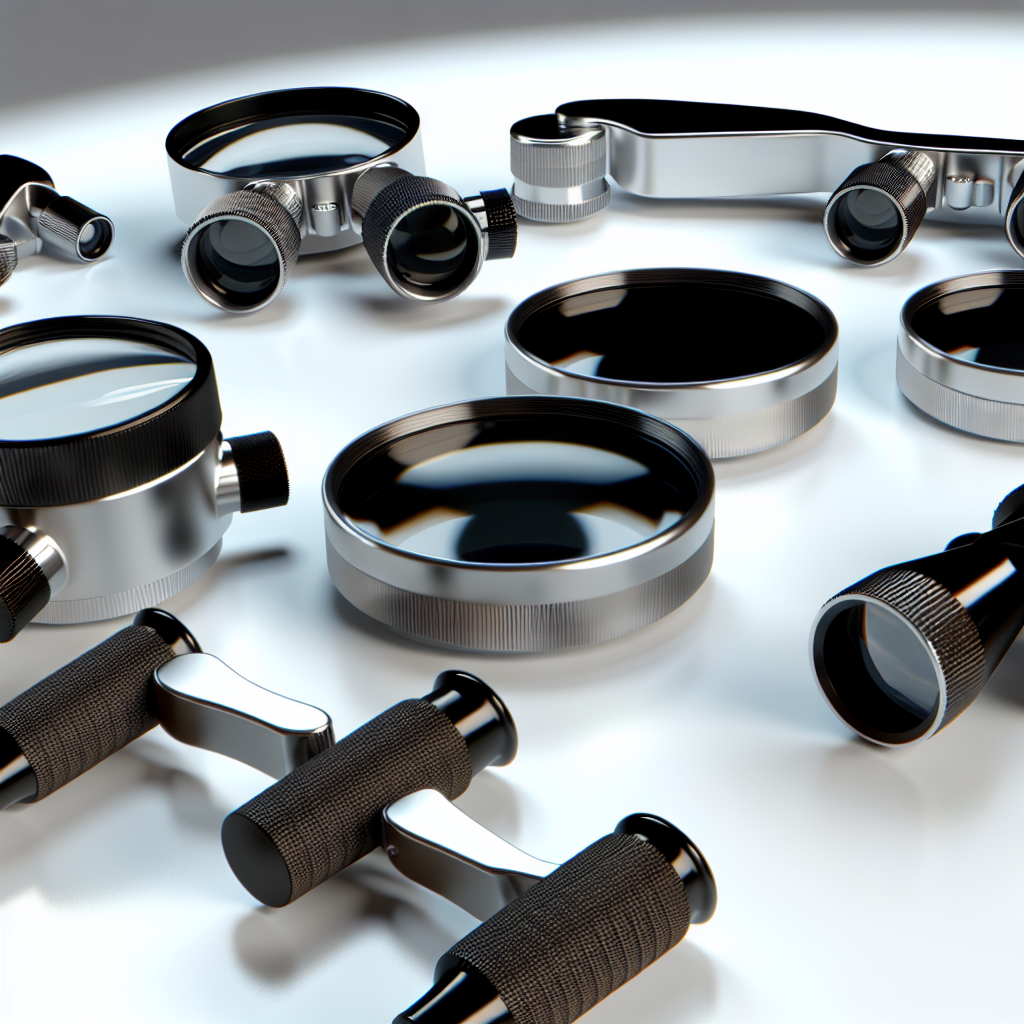
📌 Understanding Magnifier Magnification
🔍 Definition of Magnification
Magnifier magnification refers to its ability to make an object appear larger to the naked eye. More precisely, it is the ratio between the apparent size of an object viewed through the magnifier and its perceived size to the naked eye at the standard distinct vision distance (generally 25 cm for the human eye). For example, a 30x magnifier allows you to see a detail 30 times larger than with the naked eye. Understanding this concept is essential before choosing your 30x 50x magnifier or any other magnification level.
Magnification is calculated based on the focal length of the lens. Specifically, a shorter focal length offers higher magnification. However, this gain sometimes comes at the expense of other parameters like brightness or field of view. In summary, magnification expresses magnifying power, but it's not everything in magnifier use.
Good magnification allows you to examine fine details, read tiny characters, or inspect complex objects. However, it is important to ensure that the chosen magnification is suitable for the intended use, as too high a level can hinder comfort or the overall view of the object.
- A 2x to 10x magnification is ideal for general reading or observation.
- A 20x to 30x magnification offers detailed observation, perfect for collectors.
- Beyond 30x, the magnifier allows for very in-depth analysis, useful in laboratories or specialized professional settings.
Ultimately, choosing the right level of magnification is primarily about meeting a specific need, while taking into account the characteristics of the object to be observed and your own visual acuity.
🔍 Relationship Between Magnification and Field of View
A magnifier's magnification inevitably influences the field of view, meaning the portion of an object visible through the lens in a single glance. The higher the magnification, the more restricted the field of view. This rule stems from optical principles inherent in the manufacture of classic magnifiers.
Imagine two magnifiers: a 10x and a 50x. With the 10x, the object appears ten times larger, but you also see more surface; with the 50x, the visible area is significantly smaller — it's a bit like zooming with a camera: the more you zoom, the less background you see around your subject.
This parameter is crucial depending on the use:
It is therefore necessary to find the right balance between magnification and observable surface. Some models offer a main lens with lower magnification and a small integrated lens with high magnification, allowing you to switch between the two uses. If you are hesitating between several magnification levels, opt for a versatile magnifier, or even a multifunction magnifying glass depending on your budget.
📌 Types of Magnifiers Available
🔬 30x Magnifiers: For Everyday Use
30x magnifiers find their place in many homes and professional environments. This level of magnification is ideal for a varied public: philatelists, numismatists, DIY enthusiasts, teachers, or even elderly people facing tiny characters. The 30x 50x magnifier stands out for its ease of use and the sharpness of the rendered image, while offering significant visual comfort for a wide variety of tasks.
Examples of 30x magnification uses:
- Deciphering medication labels or instructions written in small print
- Inspecting a watch, ring, or coins to verify inscriptions and goldsmith details
- Reading postage stamps with precision, without risking damage to valuable collection items
- Examining the structure of a textile fiber or an insect during schoolwork or for a personal passion
These magnifiers are often compact, lightweight, and designed for easy handling. Many are equipped with an integrated LED lighting system — a major asset for readability when ambient light is lacking. Their price remains accessible, allowing everyone to have a powerful tool at home without breaking the bank.
Comparison: 10x Magnifier vs 30x Magnifier
| Criterion | 10x Magnifier | 30x Magnifier |
|---|---|---|
| Magnification | 10x (standard) | 30x (advanced) |
| Field of View | Wide | More Restricted |
| Precision | Low to Medium | High |
| Average Price | Low | Moderate |
| Target Audience | General Reading | Detailed Work |
To choose a 30x magnifier, consider the lens diameter, ergonomics (handle, compact design), and the possible presence of additional features such as lighting or focus adjustment.
🔬 50x Magnifiers: For Specialized Applications
Magnifiers offering 50x or similar magnification are an excellent choice for needs requiring in-depth observation. They are widely used by demanding professionals and collectors, as well as in industry and research.
Areas of Use:
- Jewelry: inspecting settings, detecting flaws on precious stones, analyzing micro-engravings on rings or luxury watches
- Philately: identifying micro-details and invisible watermarks on rare stamps
- Electronics: meticulous observation of printed circuits, spotting micro-cracks or bad solder joints
- Entomology / Biology: anatomical analysis of insects or complex plant samples
Their high-quality lens is often anti-reflective treated to offer increased visibility. However, the observable area is reduced: it is sometimes necessary to move the magnifier to examine an entire object. Using 50x magnifiers therefore requires more concentration and precision.
Finally, these models are frequently supplemented by variable intensity lighting, either integrated directly around the lens or via an external lamp. For a complete selection according to your advanced needs, it is recommended to consult a list of essential criteria for choosing your magnifier.
🔬 Magnifications Greater than 50x
As soon as the magnification exceeds 50x, we leave the realm of classic magnifiers to approach the world of portable or binocular microscopes. These tools are reserved for specific scientific, industrial, or artistic uses.
Main applications of high-magnification magnifiers:
- Scientific laboratory: cell analysis, observation of crystals or microorganisms
- Art trades: verification of engravings, restoration of old paintings, authentication of miniatures
- Security: checking banknotes or official documents to detect security elements invisible to the naked eye
- Industrial sector: inspection of precision electronic or optical components
Magnifiers exceeding 50x often require a stable support to avoid blurring due to the slightest tremor. They can include features such as taking photos or transferring images to a screen for comfortable and collaborative viewing.
The choice of an ultra-powerful magnifier must be accompanied by careful consideration of its use and maneuverability, as excessive magnification can hinder comfort for long-term work.
📌 Identifying Your Specific Needs
💡 Everyday Use Versus Professional Use
Before purchasing a 30x 50x magnifier or any other model, it is essential to determine your use. Consider: do you want to enlarge characters to facilitate reading, observe everyday objects, or does your activity require a high level of detail?
For everyday or amateur use:
- Reading printed documents with small characters (instructions, packaging, menus)
- Observing jewelry, sculptures, artistic works
- Identifying small defects on collectible items
For professional use:
- Jewelry work, quality control in electronics, analysis of scientific samples
- Need for high magnification (50x or more), possibly with a stand to stabilize the magnifier
- Access to accessories: interchangeable lenses, adapted lighting, photo capabilities...
In short, honestly identify your needs: will a 30x 50x magnifier suit most of your situations, or do you need even more specialized equipment?
💡 Portability and Ergonomics
Portability and ergonomics are essential criteria, often underestimated when choosing a magnifier. Yet, whether for use at home, on the go, or in a laboratory, these two aspects determine comfort and efficiency.
Portability:
- Opt for a compact, foldable, or pocket magnifier, especially for frequent travel.
- Consider the weight: a too heavy magnifier quickly tires the hand if observation lasts.
- Some magnifiers come with a carrying case or a cover to protect the lens.
Ergonomics:
- The shape of the handle, non-slip or ergonomic, allows for a secure and comfortable grip, even during prolonged use.
- The position of the lighting button (if present) should not hinder handling.
- For tasks requiring both hands free, consider a stand magnifier or a head-mounted magnifier.
Anecdote: Many professional watchmakers prefer the stability of a desktop or head-mounted magnifier to ensure high precision and avoid muscle fatigue.
The question of portability must be weighed: an ultra-powerful but bulky model risks remaining in the closet, while a lightweight and manageable magnifier will accompany you in all your activities.
📌 Important Technical Characteristics
📊 Lenses and Materials
The quality of the lens is the central criterion for a magnifier's performance. Lenses can be made of glass or acrylic:
- Optical glass: high precision, excellent color rendition, scratch resistance, but heavier and potentially fragile.
- Acrylic: lighter, cheaper, impact resistant, but already slightly lower optical quality than glass.
A good choice also relies on the purity and treatment of the lens: anti-reflective, anti-UV, or aspherical to avoid distortions at the edges. Prefer polished lenses, designed to minimize chromatic aberration and distortions.
Comparative table of lens materials:
| Criterion | Glass | Acrylic |
|---|---|---|
| Clarity | Excellent | Good |
| Weight | Heavy | Light |
| Scratch Resistance | High | Medium |
| Price | Higher | Moderate |
| Color Rendition | Natural | Correct |
Finally, consider the material of the magnifier body (plastic, metal, or aluminum) to ensure durability and safety during frequent handling.
📊 Integrated Lighting
The addition of integrated LED lighting significantly enhances the observation experience, especially in dimly lit areas or when examining micro-details. LED light, cool and energy-efficient, provides faithful color reproduction without heating or glare.
Advantages of integrated lighting:
- Better visibility of details, even in low ambient light conditions
- Increased visual comfort without rapid eye fatigue
- Ideal for seniors or those with reduced vision
- Some models offer a dimmer switch for light intensity, to adapt the power according to your needs
Depending on the use, opt for a magnifier whose power button is accessible and has sufficient battery life (standard batteries or rechargeable battery). Some advanced models even offer UV light for authenticating documents or works of art.
Tip: To avoid reflections, choose a magnifier with a diffuser integrated into the LED. This softens the light and improves readability on shiny surfaces like jewelry or plastic stamps.
The presence of lighting is now almost essential for high-power magnifiers, and it is a criterion not to be overlooked when purchasing.
📌 Tips for Maintenance and Durability
🧼 Lens Cleaning
Maintaining a magnifier, especially a high-magnification one like a 30x 50x magnifier, ensures its longevity and impeccable vision quality. Lenses must be cleaned regularly to prevent the accumulation of dust, fingerprints, or residues that could affect sharpness.
Recommended steps:
- Always use a clean, lint-free microfiber cloth to wipe the lens. Avoid abrasive fabrics that may scratch it.
- If necessary, apply a few drops of special optical lens cleaning solution (never harsh solvents!).
- Gently wipe in circular motions from the center outwards.
- Check for dust by using glancing light or a vision test.
Weekly cleaning or after each intensive use guarantees image purity and the longevity of your tool.
🧼 Storage and Protection
Proper storage protects your magnifier from shocks, scratches, and dirt. This remains essential to preserve optical quality, especially on particularly sensitive high-magnification lenses.
Practical advice:
- Always store the magnifier in its original case or a rigid padded box.
- Avoid direct exposure to sun or heat, which could alter the materials.
- Do not leave the magnifier in contact with chemicals or starches.
- Ensure that the lenses are never in direct contact with hard surfaces.
Furthermore, avoid placing the magnifier lens-side down, and wash your hands before each use to prevent depositing greasy particles. Good protection extends the lifespan of your investment.
📌 Price and Budget Comparison
💰 Budget for Personal Use
The market offers a wide range of magnifiers for every budget. For personal use, moderately magnified magnifiers like the 30x 50x magnifier can be found at very variable prices depending on lens quality, brand, integrated lighting, and materials.
Common price ranges:
- Basic 10x to 30x magnifiers: between 10 and 30 euros (plastic or acrylic, without lighting)
- Magnifying glasses x30 to x50: between 25 and 60 euros (optical glass, ergonomic controls, sometimes integrated LED)
- Pocket or foldable magnifiers with LED: 15 to 40 euros
The general trend shows that the addition of a quality lens, anti-reflective coatings, and integrated lighting justifies a slight price increase. It can therefore be wise to invest in a slightly more expensive but durable and high-performing model, especially if you plan regular use.
For a complete comparison, consult recognized brand websites, user reviews, and specialized guides to find the best value for money according to your actual needs.
💰 Investment in professional magnifiers
Professional magnifiers, essential in certain precision trades (watchmaking, dental medicine, scientific research), include advanced features: magnification greater than x50, adjustable lighting, compound lenses, stabilization support, or even digital image capture.
Indicative prices:
- Professional magnifiers with accessories: 60 to 200 euros
- Magnifiers for laboratories, binoculars, latest generation optics: 250 to 500 euros (or more depending on specifications)
The initial investment is therefore significantly higher. Nevertheless, the optical quality, robustness, as well as customization and maintenance options justify this additional cost. Before purchasing, check the availability of spare parts, the warranty offered, and the potential presence of after-sales service.
Before taking the plunge, list your needs: if tasks are varied, prefer a versatile magnifier or a set of several magnifications to cover all your uses, which can ultimately offer a better return on investment.
📌 Recommended Brands and References
🏆 Recognized brands in the field of magnifiers
Brand selection is essential to guarantee a reliable, durable, and effective purchase. Certain brands have built a solid reputation by combining innovation, robustness, and optical precision.
- Eschenbach: German leader offering high-precision optical magnifiers, for both individuals and professionals. Highly regarded by ophthalmologists.
- PEAK Magnifier (Japan): A benchmark in the market for high magnification and pocket or laboratory magnifiers.
- Bresser: German brand also known for its microscopes, offering excellent value for money for field and workshop magnifiers.
- X and Y: Brands specialized in electronic equipment and magnifiers with integrated LED.
- Carson Optical: International manufacturer offering an innovative range of foldable magnifiers and specific models for collectors or children.
Always choose a brand that offers at least a warranty, responsive customer service, and compatible accessories (batteries, cases, spare parts).
Check online reviews, feedback from other users, and comparisons to better target the x30 x50 magnifier that will meet your expectations, whether you are a curious amateur or a detail professional.
❓ FAQ on choosing an x30 x50 magnifier
-
What is the essential difference between an x30 and x50 magnifier?
The x30 magnifier magnifies an object thirty times, ideal for daily use, reading, or collecting. The x50 magnifier offers an even more precise level of detail, ideal for professional use or micro-detail examinations. -
Is the field of view really restricted with high magnification?
Yes, the higher the magnification, the smaller the observable area through the magnifier. For an overview, opt for low to medium magnifications. -
Is an x50 magnifier recommended for everyday reading?
No, it is more suitable for observing tiny details or micro-inscriptions. For general reading, an x2 to x10 magnifier is generally more comfortable. -
Why choose integrated LED lighting?
LED lighting improves visibility, especially in dark environments or for very small objects. This reduces fatigue and ensures precise observation. -
How to avoid scratches on the lenses?
Always use a suitable cloth, avoid contact with hard surfaces, and store the magnifier in a protective case after each use. -
Is it possible to change the lens of my magnifier?
Some models allow changing the lens to vary the magnification, but this is not systematic. Consult the manual or the manufacturer to check if your model offers this option.
📌 Conclusion: Choosing the right magnifier for your use
The choice of an x30 x magnifier