



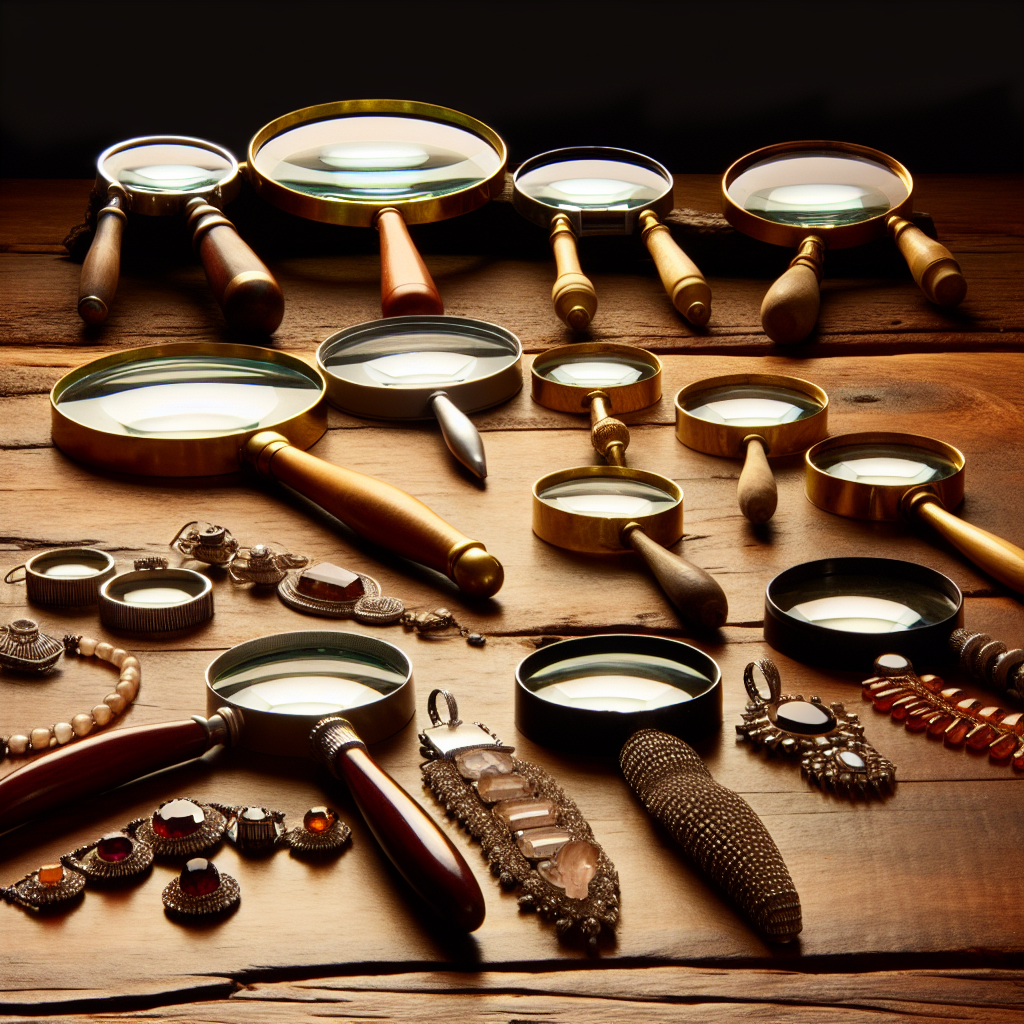
📌 Introduction to the History of the Jeweler's Loupe: A Timeless Tool
The jeweler's loupe holds a central place in the history of craftsmanship. For centuries, it has remained the symbol of precision and visual acuity necessary for examining precious metals or meticulously evaluating gemstones. Throughout the centuries, the jeweler's loupe has become one of the essential tools for goldsmiths, diamond setters, and gemology specialists. The evolution of this tool reflects that of luxury craftsmanship, as well as that of optical sciences, influencing the quality and excellence of the work performed.
Already in antiquity, the fascination with meticulous work, detailed jewelry, and rigorous verification of creations pushed artisans to seek new methods to refine their vision and precision. It is through the history of the jeweler's loupe that we perceive the evolution of techniques, the transmission of intergenerational savoir-faire, and the influence of science on art.
This tool, much more than a simple accessory, has forever transformed jewelry making and other expert trades. Analyzing its origins, evolutions, and uses is to understand how meticulousness has become central to exceptional professions. In this guide, we invite you to discover how the jeweler's loupe earned its place in the workshop, how it has improved over time, and how it continues to accompany every gesture of the artisan.
📌 The Origins of the Loupe: From Modest Beginnings to Technological Advances
The history of the loupe goes back several millennia. The oldest traces of the use of magnifying lenses were found in Mesopotamia – a time when the meticulous examination of precious objects was already necessary. These first loupes were pieces of crystal roughly cut to magnify vision. Gradually, their use extended to Greek and Roman civilizations, who used them to read or study small objects.
Scholars of the Middle Ages, fascinated by the optical properties of convex glass, transferred this embryonic technology from ancient societies to the first table-top and then portable loupes. However, it was not until the Renaissance that glass manufacturing mastery improved, allowing for the creation of more powerful loupes. The rise of precious metal work and the proliferation of goldsmith workshops made the use of the loupe increasingly indispensable every day.
The decisive step occurred with the development of optics in the 18th century. Knowledge accumulated, formulas refined, and artisans now had tools capable of transforming their view of the minute details of worked stones and metals, marking a decisive turning point towards the modernization of the sector.
- Antiquity: Cut crystals offering basic magnified view.
- Middle Ages: Development of blown glass and improvements in polishing.
- Renaissance: More precise lens matching, increased quality.
- 18th Century: Optical revolution, standardization of magnification powers.
Throughout these advancements, the loupe evolved from a rudimentary tool to a scientific precision instrument, progressively moving from the generalist domain to the much more specific one of luxury jewelry and watchmaking.
📌 The Evolution of Materials and Loupe Design
The evolution of the loupe is not limited to its use; it is also expressed in the choice of materials and the ingenuity of its design. The first models used lenses cut from crystals or semi-precious stones. However, their transmissivity was imperfect, and their weight could hinder the user.
With the discovery of more efficient glassmaking processes, the production of highly transparent glass lenses became the norm. Glass, combined with copper, brass, or steel frames, gave the loupe increased lightness, better maneuverability, and unprecedented durability.
The 20th century marked a new stage: the democratization of optical plastic (such as polycarbonate or acrylic), lighter and more resistant, offered an unprecedented quality-to-price ratio. This facilitated mass production and the diversification of models: monocular, binocular, handled, handheld, or clamp loupes.
| Era | Lens Material | Frame Material | Main Characteristic |
|---|---|---|---|
| Antiquity | Quartz, crystal | Wood, bone | Limited magnification, heaviness |
| 16th-18th c. | Blown glass | Brass, copper | Increased precision, refined use |
| 20th Century | Acrylic, polycarbonate, optical glass | Aluminum, plastic, steel | Lightness, ergonomics, suitable price |
| 21st Century | Treated glass, optical composites | Modern alloys, optimized design | Comfort, resistance, high resolution |
The miniaturization of lenses and the improvement of the field of view now allow jeweler's loupes to offer distortion-free visibility and reduce visual fatigue, which has indeed helped to reinvent artisanal practice.
🔹 The Role of Loupes in the Middle Ages
In the Middle Ages, jewelry experienced a remarkable boom, particularly in the great Gothic cities and royal workshops of Europe. Artisans then sought to improve their precision to satisfy a demanding aristocratic clientele. The arrival of the first single-lens spectacles revolutionized how goldsmiths and jewelers examined filigrees, engravings, and stone settings.
The transmission of optical expertise, often orchestrated by guilds or corporations, played a key role in this evolution. Master artisans adapted tools from books to those of the workshop, giving birth to portable loupes much more efficient than ancient models. By the end of the Middle Ages, the loupe was already available in several models and became the emblem of a certain level of skill and meticulousness in the jeweler's profession.
- Invention and dissemination of the monocular loupe
- Refinement of glass polishing techniques
- Implementation of manual quality control standards
This progress laid the groundwork for the great transformative movements that would mark the modern period and opened the way for the industrialization of optical tools.
🔹 Industrial Revolutions and Impact on Jeweler's Loupes
It was in the 19th century, with the first industrial revolution, that the manufacturing of loupes took a major turn. Mechanized production workshops now allowed for the creation of lenses of greater precision and consistent quality. This led to the emergence of specialized manufacturers who, for the first time, offered a wide range of lenses adapted to different professional uses, particularly in jewelry.
Automation, standardization, and massive access to optical glass paved the way for the democratization of the jeweler's loupe. From then on, innovation focused on improving resolution, portability, and comfort. Multifunctional models, incorporating lighting or ingenious attachment systems, emerged. This period also marked the expansion of the loupe to the watchmaking, scientific, and industrial sectors.
- Development of folding loupes for mobile artisans
- Adaptation of pocket models for intensive workshop use
- Introduction of optical certification criteria
This technological boom fostered the extreme specialization seen in 20th-century jewelry, where the tool became, for the jeweler, a guarantee of efficiency and qualitative differentiation.
📌 Diversification of Jeweler's Loupe Uses in the 20th Century
While jewelry remained the sector of excellence for the loupe, the 20th century revealed its immense potential for adaptation to other fields. This is explained by the proliferation of needs for meticulous inspection related to scientific, industrial, and educational progress. The jeweler's loupe is now found in the examination of stamps and coins, precision watchmaking, biology, geology, and even in the restoration of works of art.
Variations multiplied: loupes on clamps, headbands, electronic loupes, LED-lit loupes, or multi-magnification loupes. This economic dynamism made the tool even more perfected thanks to optical specialization and the adoption of new materials and innovations.
- Development of binocular loupes for precision work
- Emergence of models dedicated to art trades and conservation
- Introduction of LED lighting for better distinction of details
Today, the jeweler's loupe is no longer confined to the jeweler's workbench but is found in laboratories, museums, educational workshops, and among collectors and passionate amateurs.
🔹 Integration of Modern Optical Technologies
With the progress in optics at the end of the 20th century, the jeweler's loupe now benefits from specialized treatments: anti-reflective, scratch-resistant, chromatic aberration correction... The appearance of aspherical lenses revolutionized the use of the loupe by providing exceptionally sharp images across the entire field of view.
Ergonomics also became a priority: adjustable and non-slip frames, clip-on loupes for glasses, magnetic stands, or automatic focus adjustment for a personalized experience. Even lighting evolved thanks to miniaturized LED diodes, eliminating shadows and ensuring optimal observation, regardless of ambient light.
- Aspherical lenses and high-definition optical glass
- Innovative and ultra-lightweight frames
- Adjustable LED lighting integrated into the loupe
These advancements have made the jeweler's loupe a highly technological tool, capable of precisely meeting all the requirements of modern jewelry, as well as the broader demands of craftsmanship, industry, and research.
🔹 Microscopes and Loupes: Joint Evolution
The history of the jeweler's loupe is intimately linked to that of the microscope. While the loupe satisfies magnification needs between 3x and 20x in most cases, the microscope takes over for even higher magnification requirements.
Throughout the 20th century, the boundary between loupe and microscope blurred: some models of bench or laboratory loupes incorporated typical microscope properties, such as focusing or coaxial illumination, thus offering an interdisciplinary solution. High-end watchmakers and gemologists today use either interchangeably, depending on the level of detail sought.
The exchange of technology between microscope and precision optics manufacturers has fostered the constant improvement of professional loupes, which benefit from miniaturization, image stabilization, and even digital imaging.
📌 The Impact of the Loupe on Craftsmanship Quality and Precision
The advent of the loupe radically transformed the jeweler's profession. For every examination, engraving, or repair operation, the ability to see larger, clearer, directly influences the quality of the produced piece.
By allowing for careful reading of details, the loupe becomes synonymous with expertise. The verification of enamel defects, the detection of inclusions in a precious stone, the accuracy of the setting, or the alignment of engravings are only possible thanks to this instrument.
- Increased monitoring of finishing (polishing, setting, engraving)
- Reduction of error or defect rates
- Enhancement of manual work thanks to high precision
The loupe thus accompanies the artisan at every stage of the creative process, serving both for intermediate verification and final validation before presentation to the client.
🔹 Improving Gemstone Examination
For the jeweler, identifying precious stones requires surgical precision. The use of a loupe makes it possible to inspect cuts, detect internal defects (inclusions, fissures), and distinguish natural stones from synthetics.
High magnification models (10x is the norm in gemology) allow for the detection of tiny details invisible to the naked eye. The subtlety of a reflection, the regularity of a facet, or the presence of air bubbles directly influence the value of each examined gem.
Here are some examples of tasks made possible or greatly improved by the loupe:
- Examination of prongs and setting to avoid any risk of stone loss
- Analysis of polish and potential scratches or chips
- Identification of potential treatments or subsequent additions
Without this tool, it would simply be impossible to guarantee the authenticity and quality of a creation in the high jewelry market.
📌 The Jeweler's Loupe Today: New Trends and Innovations
Modernity continues to bring its share of innovations to the jeweler's loupe: new shapes, new materials, unprecedented functionalities. The biggest brands in jewelry and optics are constantly striving to push the boundaries of precision and user comfort.
Smart loupes now equip the workbenches of advanced jewelers. The integration of electronics, digital imaging, and connected options facilitates inspection and archiving of observations, bringing jewelers into the era of Jewelry 4.0.
Among the latest trends:
- Portable digital loupes with instant image capture and transfer
- Connected models with integrated analysis software
- Ergonomic frames for prolonged sessions without fatigue
- Progressive magnification and automatic sharpness adjustment
Digital technology offers a new dimension to inspection, rapid diagnosis, and certification of examined pieces. The involvement of traditional loupes in high technology ensures their future as a fundamental tool for the artisan jeweler.
🔹 Digital Applications and Smart Loupes
Today, the rise of digital technologies is revolutionizing the jewelry sector. Smart loupes combine traditional magnification capabilities with advanced technologies such as Wi-Fi, HD image recording, live viewing on tablets or computers, and instant sharing of diagnostics.
Some jeweler's loupes now have embedded processors that optimize contrast, assist the user in detecting defects, or generate automated reports for traceability and compliance.
- Associated applications capable of memorizing and comparing a series of examinations
- Loupes with object or gemstone recognition via AI
- Capture and sharing function to facilitate validation by remote experts
These innovations not only save time and increase precision but also contribute to securing transactions and the emergence of a digitized global jewelry market.
📌 Selection Criteria: How to Choose the Right Jeweler's Loupe
Choosing a jeweler's loupe is an essential act for any professional or enthusiast wishing to guarantee the excellence of their work. The diversity of models, magnification levels, and innovations requires careful consideration before any purchase.
Here are some criteria to consider to guide your choice:
- Magnification: This is the primary factor – for jewelry, the standard is 10x, but a range of 5x to 20x can be useful depending on the tasks.
- Lens Material: Optical glass offers a clearer and more durable image, while acrylic is lighter but sometimes less precise.
- Frame Type: Handheld, tabletop, ear-clip, headband...
- Comfort of Use: Weight, ergonomic grip, integrated lighting system.
- Additional options: Extra lens, LED lighting, digital connectivity, image storage.
The selection of the best loupe is based on the intended use (jewelry, gemology, watchmaking, etc.), the expected level of detail, and the frequency of use. Investing in a high-quality loupe, renowned for its precision and robustness, represents a strategic choice to enhance and add value to every creation.
To delve deeper into this topic, also consult our dedicated article: Why Invest in a Quality Jeweler's Loupe?
🔹 Factors to consider
The choice of a loupe therefore depends on several factors, the main ones being:
- Optimal magnification for the type of task to be performed
- Field of view and absence of distortion at the edges
- Frame materials: lightness, strength, feel in hand
- Presence or absence of integrated lighting
- Compatibility with other tools: wearing glasses, microscope, PC connection
Finally, it is wise to consider the manufacturer's reputation, the warranty offered, as well as the opinions of professionals who have already adopted the desired model.
📌 FAQ on jeweler's loupes
Here are the answers to the most common questions about the jeweler's loupe, its history, its uses, and its selection criteria.
- What is the difference between a jeweler's loupe and a classic loupe?
The jeweler's loupe is designed to offer superior magnification and precision, essential for inspecting the fine details of jewelry and precious stones. It most often features very high optical quality lenses and specific mounts allowing for hands-free use. - What is the ideal magnification for a loupe intended for jewelry?
10x magnification is the standard in jewelry and gemology. However, certain operations or expertises may require different magnifications, generally between 5x and 20x. - Can a jeweler's loupe be used in other fields?
Yes, it is versatile and highly appreciated in watchmaking, philately, for examining works of art, or in any field requiring precision and meticulous observation. - What are the signs that a loupe is of good quality?
A good loupe presents a clear image, without distortion at the edges, has a solid mounting, and suitable ergonomics. The presence of a marking on the glass (magnification and manufacturer) is a sign of seriousness. - What recent innovations have marked the jeweler's loupe sector?
The arrival of digital smart loupes, the integration of LED lighting, and the improvement of optical defect correction are the main innovations. - How much does a good jeweler's loupe cost?
The price varies enormously depending on the quality, the lens material, and the embedded functionalities: it ranges from twenty to several hundred euros for the most advanced models.
📌 Conclusion: The lasting legacy of the jeweler's loupe
The jeweler's loupe is much more than a simple work instrument: it is a reflection of a demanding craft, passionate about detail, and constantly seeking perfection. From its modest origins to the digital smart loupes of the 21st century, it has adapted to all technical evolutions and has accompanied generations of professionals in their quest for beauty and authenticity.
Its legacy is expressed in every precise gesture of the craftsman, in every meticulously controlled work, and in the transmission of ever more refined know-how. In an era where technology is disrupting habits, the loupe remains a pillar of jewelry, synonymous with rigor, demand, and passion for excellence. Its evolution continues to inspire innovation and strengthen customer confidence in the quality of artisanal work.
Mastering the history and innovations of such a tool ensures a brilliant present and a promising future for one's art, worthy of the most beautiful human creations.