


📌 Introduction to Magnifiers for the Visually Impaired with AMD
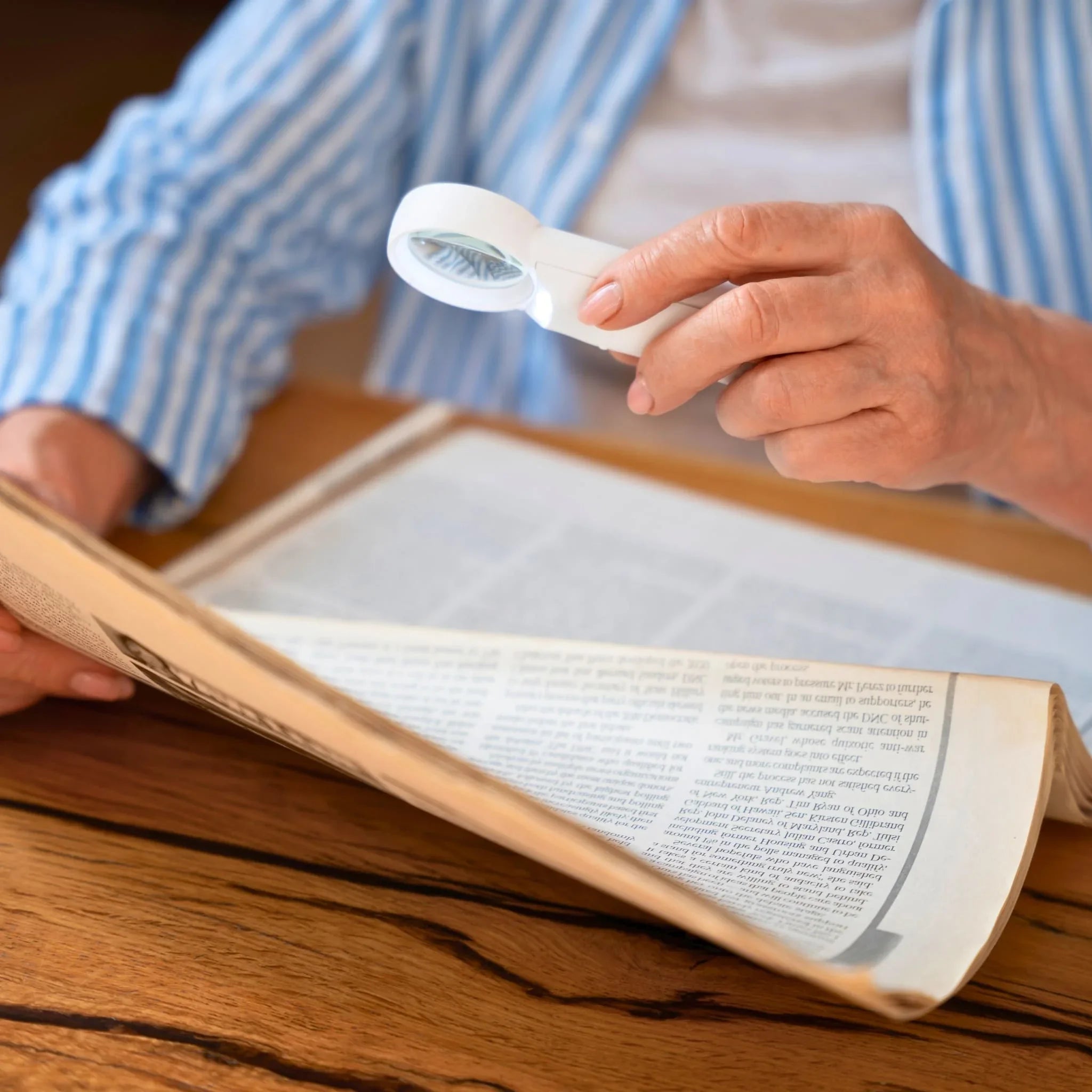
Age-related Macular Degeneration (AMD) is a common visual condition among older adults, affecting the ability to see clearly in the central field of vision. To overcome the daily challenges associated with AMD, the use of adapted devices, such as low vision magnifiers, emerges as an effective and accessible solution. These specialized tools offer indispensable support for reading, writing, creative hobbies, and any activity requiring close-up vision. This comparative article will explore in detail how to choose, use, and maintain these visual aids to improve the autonomy and quality of life of affected individuals.
By discussing the different magnifier options, their advantages, selection criteria, and preferred maintenance practices, we will guide you to make the most of these valuable instruments. You will thus be better equipped to select the solution adapted to your needs and, above all, to rediscover the pleasure of hands-on activities despite AMD.
📌 Understanding AMD and its Impact on Vision
AMD represents one of the leading causes of low vision in seniors. It progressively deteriorates the macula, a central area of the retina responsible for fine vision. To choose an appropriate visual aid, it is important to understand this pathology and its daily impact on sight.
🔍 Common Symptoms of AMD
The first signs of AMD often manifest as increasing difficulty seeing details clearly in the center of the field of vision. For example, one may notice:
- Blurred or distorted central vision, making reading difficult
- Perception of a dark or empty spot (scotoma) in the center of the eye
- Less vibrant or altered colors
- Increased difficulties in low light conditions, such as in the evening or in poorly lit rooms
These symptoms, sometimes subtle at first, should raise an alarm and lead to consulting an ophthalmologist at the first doubt to receive appropriate support.
🔍 Different Stages of AMD
The progression of AMD occurs in several stages that directly influence the choice and utility of optical aids such as magnifiers. We distinguish:
- Early stage: few symptoms, sometimes just difficulty reading small print.
- Intermediate stage: appearance of central spots, need for increased lighting for precise tasks, common use of low-magnification magnifiers.
- Advanced stage: significant loss of central vision, very difficult to read standard documents without specialized aid, necessity of high-magnification magnifiers or electronic aids.
At each stage, specific optical solutions exist: it is crucial to adapt the chosen aid to the individual evolution of the disease to ensure the maintenance of autonomy.
📌 Why Use a Magnifier for AMD?
The loss of central vision caused by AMD often deprives individuals of many essential or pleasurable activities. Magnifiers thus provide a direct, effective, and personalized response to these problems. But why prefer low vision magnifiers over other optical aids?
- They significantly improve the legibility of printed or handwritten texts.
- Magnifiers facilitate the identification of everyday objects (prices in stores, instructions, numbers on watches, etc.).
- Their variety allows them to adapt to every use (portable, electronic, stand-alone), so that everyone finds the appropriate aid.
- They are simple to use, generally do not require complex adjustments, and are affordable.
This accessory promotes the maintenance of social life and autonomy, essential elements for the well-being of visually impaired individuals.
🔍 Comparing Magnifiers and Other Visual Aids
There are different categories of optical aids, each with its strengths and limitations:
| Visual Aid | Advantages | Limitations |
|---|---|---|
| Handheld/Traditional Magnifiers | Easy to handle, affordable, lightweight | Fixed magnification, sometimes requires good coordination |
| Electronic Magnifiers | Adjustable magnification, customizable colors and contrasts, large screen | Higher price, requires electrical power or battery |
| Magnifying Glasses | Hands-free, long-term wear | Less flexible, limited customization for various uses |
| Electronic aids such as video magnifiers | High-precision magnification, comfortable reading of long documents | Bulky and expensive, less mobile |
Depending on your needs and habits, the right choice will be the one that combines simplicity, effectiveness, and comfort of use.
📌 Types of Magnifiers for the Visually Impaired
The market for magnifiers for the visually impaired offers a wide range of models adapted to AMD. There are three main families:
- Electronic magnifiers
- Pocket magnifiers
- Stand magnifiers
Each type has specific advantages depending on the intended use and the level of visual impairment.
🔍 Electronic Magnifiers
Electronic magnifiers, also called video magnifiers, represent the high end of visual aids for AMD. They are equipped with a digital screen and a camera that enlarges text or images in real time. The major advantages are:
- Continuously adjustable magnification, up to 20 times or more
- Ability to invert colors (white on black, yellow on blue, etc.) to optimize contrast for each user
- Capture and save images for later reading or sharing with loved ones
- Portable or desktop format depending on the models
This solution offers the greatest flexibility and a pleasant reading experience, especially for people with very reduced vision.
🔍 Pocket Magnifiers
Compact and easy to slip into a bag or pocket, pocket magnifiers are perfect for mobile use. They come in simple versions (fixed magnification) or with an incorporated LED light. Their advantages:
- Ultra-portable, ideal for reading labels, tickets, or restaurant menus
- Intuitive to use, no setup required
- Generally affordable price
- Sometimes autonomous power via batteries for onboard lighting
Although their lens diameter is often smaller than that of desktop models, their practicality convinces a large number of active users.
🔍 Stand Magnifiers
Stand magnifiers, or planned magnifiers, are discs or magnification bars that are placed directly on the page or object to be observed. Their main strengths include:
- Great stability of use (no need to hold by hand)
- Easy reading of long documents without fatigue
- Availability of illuminated models to enhance visibility
- Ideal for people suffering from tremors or muscle weakness
These are perfect options for reviewing bills, mail, or doing crosswords.
📌 How to Choose the Right Magnifier for AMD?
Choosing an effective magnifier when suffering from AMD requires a personalized analysis of one's needs and habits. To optimize your choice, several criteria must be taken into account:
- The level of visual impairment
- Main activities (long reading, travel, DIY, etc.)
- Comfort and maneuverability
- Available budget
🔍 Adequate Magnification Factors
The essential magnification varies according to the progression of AMD and the type of activity. Some useful benchmarks:
- 1.5x to 3x: for examining large surfaces (newspapers, instructions)
- 4x to 6x: perfect for reading small notices, brochures, or invoices
- 7x and more: reserved for situations of very reduced vision or high precision, often necessary with severe progression of the disease
Note that the stronger the magnification, the narrower the field of view. A healthcare professional can help you assess the optimal level for your needs.
🔍 Comfort and Ergonomics Criteria
Beyond magnification, ease of use plays a decisive role. Pay particular attention to:
- Lightness: heavy magnifiers quickly tire the user; prefer compact or stand models for long sessions.
- Ergonomic handle: a good grip minimizes effort.
- Maneuverability: ease of adjustment (focus, angle change) ensures comfortable reading.
- Lens surface: the wider the lens, the easier the image is to observe.
Finally, evaluate the presence of integrated lighting, a real plus to compensate for the low perceived luminosity due to AMD.
📌 Techniques for Effectively Using a Magnifier with AMD
Owning a good magnifier is only part of the process: to maximize its effectiveness, it is necessary to master certain usage techniques. This helps reduce visual fatigue and achieve optimal precision in all close-up activities.
🔍 Optimal Magnifier Positioning
The effectiveness of a magnifier largely depends on the focal distance between the lens, the object to be examined, and the eye. Follow these tips:
- Bring the magnifier about 5 to 10 cm from the object depending on the model; move the object closer or further away until a clear image is obtained.
- For a handheld magnifier, hold the handle firmly and avoid tremors by resting your elbow on the table.
- With a stand magnifier, slide it over the text to follow the lines at your own pace, effortlessly.
- Test different positions and angles to adapt the magnifier to your residual field of vision.
A well-positioned magnifier significantly reduces muscle and visual strain.
🔍 Additional Lighting
For most people with AMD, natural light alone is not sufficient to properly use their magnifier. Here's why additional lighting is essential:
- It amplifies the sharpness and contrast of text or images.
- It helps reduce the necessary magnification, which widens the usable field of view.
- Models with integrated lighting (LED) offer a practical solution, especially when traveling or in dimly lit rooms.
- Prefer white light, which is more comfortable for the eyes, and position the light source directly above or to the side to avoid glare.
The combination of a magnifier and an LED desk lamp makes a winning duo for daily reading.
📌 Magnifier Care and Maintenance
For your magnifier to last, regular maintenance is essential. A clean lens and a functional device ensure optimal use at all times.
🔍 Regular Lens Cleaning
Dust, fingerprints, and dirt can affect the clarity of a magnifier. Here are some simple cleaning tips:
- Use a soft microfiber cloth, dry or slightly dampened.
- For stubborn dirt, opt for a specific cleaning product for optical lenses.
- Avoid paper tissues or rough cloths, which could scratch the surface.
- Never apply product directly to the lens; spray on the cloth, then wipe carefully.
This quick routine extends the life of the magnifier and helps maintain its performance.
🔍 General Condition Checks
Beyond cleaning, some checks are regularly necessary:
- Check for scratches, cracks, or signs of wear on the lens.
- Test the proper functioning of the integrated lighting and replace batteries if necessary.
- Inspect the handle, joints, or casing (for electronic models): no play or assembly defect should be observed.
For in-depth maintenance advice, consult our practical guide: Tips for Maintaining Your AMD Magnifier.
📌 Additional Resources and Support for the Visually Impaired
Acquiring the right magnifier is not always enough. Numerous associations, workshops, and programs offer help to maximize the autonomy of people with AMD.
🔍 Associations for the Visually Impaired
Many associations work to provide support and assistance to the visually impaired, whether it concerns medical information, help with equipment acquisition, or the creation of support networks:
- Association France DMLA: prevention campaigns, documentary resources, support forums.
- UNADEV: rehabilitation workshops, visual aid advice, daily support.
- Fédération des Aveugles et Amblyopes de France: defense of rights, administrative support, information on support schemes.
These networks facilitate the exchange of experiences and the discovery of concrete solutions adapted to each situation.
🔍 Training Programs and Workshops
Many specialized centers, municipalities, or associations offer workshops and training on the use of visual aids such as low vision magnifiers:
- Introduction to the use of magnifiers: handling, adjustment, choice of the right magnification.
- Collective practice sessions: exchange of advice, testing of different magnifier models.
- Personalized support: home adaptation, installation of supplementary lighting, administrative assistance for obtaining funding.
These devices strengthen confidence in one's equipment and highlight (literally!) tips that change daily life.
📌 Frequently Asked Questions (FAQ) on Low Vision Magnifiers for AMD
- What are the most recommended magnifier models for advanced AMD?
For advanced AMD, prefer electronic magnifiers with high magnification and contrast settings. Luminous stand magnifiers are also very effective in cases of muscle weakness. - How to maintain a magnifier if one has difficulty manipulating small objects?
Use a cleaning kit with a long handle, or ask for help from a relative or an optician for regular maintenance. - Are there aids available to finance the purchase of an electronic magnifier?
Some financial aids exist through the MDPH or mutual insurance companies. Also inquire with specialized associations. - Can a magnifying glass really allow you to read an entire book?
Yes, with an appropriate magnifying glass (magnification, field of view and sufficient lighting), it is entirely possible to read for a long time. Desktop or electronic models are the most suitable. - What is the difference between an AMD magnifier and a standard magnifier?
AMD magnifiers are specifically designed to maximize central visibility, offer lighting options, and often have more extensive contrast and magnification adjustments than classic magnifiers. - Where can I buy a magnifying glass suited to my situation?
You can find a specialized selection on our dedicated page: AMD Magnifier Collection for the Visually Impaired.
📌 Conclusion: Maximizing the use of a magnifying glass for a better quality of life
Faced with the daily challenges of AMD, adapted magnifiers open up new perspectives for preserving one's autonomy. Whether electronic, pocket, or desktop models, it is essential to choose a magnifier that meets one's needs and to master good use and maintenance practices.
Do not hesitate to contact associations or participate in training workshops to maximize the benefits of your magnifier. The goal? To fully enjoy an active, rich, and independent life thanks to innovation and the support of experts. To go further and ensure the longevity of your equipment, consult our exclusive tips for properly maintaining your AMD magnifier!