



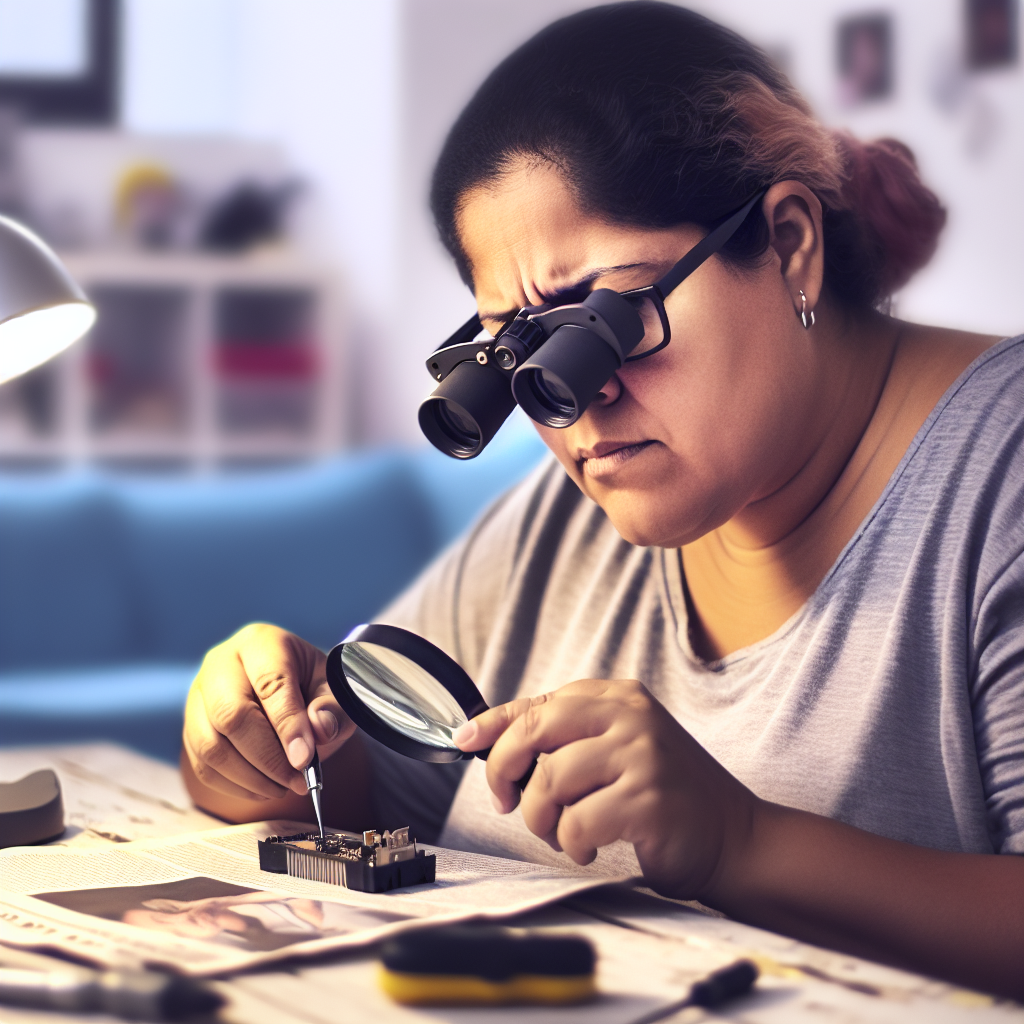
📌 What is a Binocular Magnifier?
The binocular magnifier is a precision optical instrument designed to offer magnified, three-dimensional, and highly detailed observation of objects at low magnification. It stands out from other types of magnifiers and conventional microscopes by the presence of two eyepieces, hence its name binocular, allowing the user to view simultaneously with both eyes. This unique feature improves depth perception and reduces eye strain, making the observation experience much more comfortable and natural.
Generally designed with an inclined stereoscopic head, the binocular magnifier gives an impression of relief, essential during delicate manipulations or the examination of complex surfaces. It is equipped with high-quality objective lenses, whose magnifications typically range from 10x to 40x, although some models offer a wider range, thanks to interchangeable objectives or continuous zooms. In addition, most binocular magnifiers are equipped with integrated lighting, most often LED or halogen, to optimize the visibility of details.
The device typically consists of the following elements:
- Two eyepieces for stereoscopic vision.
- A sturdy stand with a stage for placing the object to be observed.
- Objectives mounted on a turret or equipped with a zoom system.
- Lighting devices for incident light (from above) and/or transmitted light (from below).
- A precise focusing system, sometimes assisted by a fine adjustment rack.
The binocular magnifier, at the intersection of the pocket magnifier and the laboratory microscope, is therefore distinguished by its versatility and ease of use. Accessible to healthcare professionals, technicians, artisans, teachers, students, and amateurs, it stands out as the daily observation tool for detail enthusiasts.
📌 How Does a Binocular Magnifier Work?
To fully understand the efficiency of binocular magnifiers, it is necessary to explore their optical principle and internal mechanisms. The main objective of this tool is to make fine details perceptibly visible to the naked eye, by increasing the size and clarity of the observed object, while maintaining relief vision.
Its operation is based on stereoscopic technology:
- Each of the two eyepieces receives a slightly different image of the object, captured through two parallel and separate optical paths.
- The brain merges these two images to create a three-dimensional perception (impression of volume and relief).
- This system thus facilitates the distinction of details in depth and not just on the surface.
Mechanically, the binocular magnifier is equipped with:
- An adjustable focusing system to obtain a sharp image, regardless of the size and position of the object.
- An interpupillary adjustment mechanism, ensuring perfect alignment with your eyes and preventing any visual discomfort.
- Interchangeable objective lenses or a zoom, which allow varying magnifications according to specific needs.
Lighting also plays a key role. On some models, incident light illuminates the object from above, ideal for opaque objects, while transmitted light comes from below, perfect for translucent objects such as certain tissues, minerals, or insects.
In summary, the binocular magnifier combines magnifying power, mechanical precision, and optimal visual comfort for observation adapted to multiple contexts. To choose the right model, you should carefully consider your observation objectives and the environments where you intend to use it.
📌 Different Applications of Binocular Magnifiers
Binocular magnifiers, thanks to their precision and ergonomics, find their place in many environments, both professional and amateur. Their versatility allows them to meet a multitude of needs, whether for observation, manipulation, or meticulous intervention on small objects and surfaces. Let's explore in more detail the areas where they are essential.
🔍 Use in the Medical Field
Healthcare professionals, analysis laboratories, and dental practices use binocular magnifiers for precision tasks, such as:
- Meticulous examination of biological tissues, cells, or pathological samples.
- Preparation of samples during histological analyses.
- Inspection and cleaning of surgical instruments.
- Precise dental care requiring fine visualization and treatments.
- Microsurgical suturing or dermatological diagnosis.
Thanks to their ability to magnify without distortion, they offer optimal working comfort, limiting visual fatigue and allowing for long-duration interventions. The ergonomic posture and stereoscopy improve hand-eye coordination, essential for safe and rapid gestures.
🔍 Use in Jewelry and Watchmaking
In the delicate world of jewelers and watchmakers, the binocular magnifier is an indispensable ally:
- For identifying and appraising precious stones and materials.
- For restoring, polishing, and repairing watches, bracelets, and necklaces.
- For precise positioning of miniature components during the reassembly of watch movements.
Clear vision of tiny elements not only ensures an impeccable finish but also speeds up the process while limiting the risk of error. The expression of artisanal savoir-faire is enhanced through controlled observation.
🔍 Uses in Biology and Botany
Fundamental research as well as the teaching of living organisms greatly benefit from the binocular magnifier. Biologists and botanists use it for:
- Close-up study of insects, microorganisms, leaves, seeds, or plant tissues.
- Analysis of natural phenomena at low magnifications preceding microscopic examination.
- Identification of structures, anatomies, or lesions difficult to differentiate with the naked eye.
Stereoscopy here takes on its full meaning, allowing for realistic educational observation, facilitating learning and knowledge sharing. Students and teachers alike commonly use binocular magnifiers in school and university laboratories.
🔍 Binocular Magnifiers for Nature Enthusiasts
For naturalists, amateur entomologists, and gardeners, the domestic use of binocular magnifiers opens the door to an unsuspected world of details. Whether it's for:
- Observing garden fauna: caterpillars, insect molts, butterfly wings.
- Investigating floral textures and structures.
- Studying rocks, minerals, or fossils brought back from walks.
- Identifying plant diseases by observing damaged stems and leaves.
Family or educational practice makes the experience enriching, awakening scientific curiosity in both young and old, while developing an understanding of the living world.
Feel free to browse the collection of binocular magnifiers adapted to every need, whether professional or driven by a passion for discovery.
📌 The Advantages of Using Binocular Magnifiers
Using a binocular magnifier comes with a multitude of concrete benefits. Whether you are a professional, researcher, or enlightened amateur, the regular use of this tool improves the quality and precision of your observations and interventions.
🔍 Enhanced Detailed Vision
Thanks to their advanced optical systems, binocular magnifiers offer an image of great sharpness and depth, facilitating the analysis of the smallest details:
- Identification of micro-fissures, surface defects, or parasites undetectable to the naked eye.
- Precise evaluation of an object's colors, textures, and reliefs.
- Decomposition of the subject into different visually perceptible layers.
This advantage is particularly crucial for analysis, repair, diagnosis, or research work, where every detail matters. The ability to observe for a long time without fatigue means nothing is left to chance.
🔍 Optimized Comfort of Use
One of the great assets of the binocular magnifier lies in the comfort it provides. Unlike monocular systems or conventional microscopes, binocular observation:
- Prevents eye strain and headaches even during prolonged sessions.
- Allows for a natural posture thanks to inclined heads and ergonomic supports.
- Offers customizable settings (interpupillary distance, diopter) to adjust to each user.
This comfort in observation stimulates concentration and reduces postural stress, for prolonged performance in the best possible conditions.
🔍 Increased Productivity
The use of a binocular magnifier often results in significant time savings. The increased clarity and stereoscopic vision facilitate:
- Rapid decision-making during diagnoses or analyses.
- Coordinated execution of complex gestures with high precision.
- Fluid interpretation of delicate situations (meticulous repairs, laboratory manipulations, etc.).
Consequently, the binocular magnifier helps increase efficiency and reduce error margins during delicate work, by supporting the consistency of results.
To delve deeper into this topic, discover the advantages of a binocular magnifier for your needs.
📌 Criteria to Consider When Buying a Binocular Magnifier
Choosing a suitable binocular magnifier requires examining several essential criteria, depending on your uses and your budget. Here are the points to analyze when selecting your device.
🔍 Magnification and Resolution
Magnification determines the level of enlargement of the object, while resolution measures the sharpness of visible details. For most common applications, a range of 10x to 40x is sufficient. However, some models offer zooms from 7x to 45x, or even more, allowing for versatility of use.
Make sure to select a high resolution to ensure the necessary contrast and sharpness for meticulous work. In addition, check the compatibility of interchangeable objectives if your activities require it (microbiology, watchmaking, etc.).
🔍 Integrated Light Sources
Lighting is a crucial factor for optimal observations. Modern binocular magnifiers are equipped with:
- LED light sources for cool, homogeneous, low-consumption lighting.
- Halogen systems for warmer, more nuanced light.
- Incident light (from above) and/or transmitted light (from below) depending on the type of object to be examined.
Prefer models offering adjustable lighting intensity or direction, to adapt the brightness to each situation.
🔍 Ergonomics and Adjustability
For long and comfortable use, the ergonomics of the binocular magnifier are crucial:
- Opt for a head inclined between 30° and 45° for a natural posture.
- Ensure the presence of an interpupillary adjustment adapted to your morphology.
- Check for precise and fluid focus knobs.
- A stable stage of adequate dimensions ensures the support of your objects.
🔍 Materials and Durability
The quality of the materials directly impacts the longevity of your device:
- Choose a metal or alloy structure for robustness.
- Prefer optical glass lenses treated for scratch and anti-reflection.
- Ensure compliance with electrical safety standards, especially for models with integrated lighting.
Regular maintenance will significantly extend the lifespan of your binocular magnifier.
📌 Maintenance of Binocular Magnifiers
To ensure consistent performance and optimize the lifespan of your device, maintenance must be an integral part of your habits. A well-maintained binocular magnifier not only ensures perfect observation but also preserves optical and mechanical quality.
🔍 Lens Cleaning
Lenses are the heart of your instrument. Their cleaning requires rigor and delicacy:
- Use a microfiber cloth exclusively designed for optics.
- Avoid aggressive chemical products and prefer special optical solutions.
- Gently lift dust with an air blower then polish with soft circular movements.
Regular cleaning maintains maximum image clarity and prevents the appearance of annoying spots or scratches.
🔍 Mechanical Check and Adjustment
Reliable mechanics guarantee precision. Remember to:
- Check the proper functioning of the focus knobs.
- Ensure the accuracy of the position of the eyepieces and objectives.
- Tighten if necessary the screws of the stand or the binocular head.
Periodic preventive checks save you from unpleasant surprises during manipulation.
🔍 Appropriate Storage Solutions
Finally, store your binocular magnifier in a suitable environment:
- Prefer a dustproof protective cover.
- Keep it away from humidity and at a stable ambient temperature.
- Avoid shocks or vibrations that could misalign the mechanics or damage the lenses.
For travel, prefer a padded case and make sure the magnifier is well secured.
📌 Popular Binocular Magnifier Brands
The market is full of renowned manufacturers offering varied ranges, from entry-level models to high-end professional ones. Among the main brands are:
- Leica — renowned for ergonomic handling and exceptional optics.
- Zeiss — favored by researchers and laboratories for its remarkable resolution.
- Olympus — a leader in the medical and university sector.
- Bresser — appreciated by amateurs and schools for its value for money.
- Euromex — specialized in education, biology, and technical applications.
- Carl Roth, Nikon, Swift — excellent alternatives available in France.
Before any purchase, it is recommended to compare optical performance, robustness, ergonomics, as well as the availability of after-sales service and compatible accessories.
📌 Testimonials and User Reviews
Users of binocular magnifiers frequently share their satisfaction with the practicality, performance, and reliability of these instruments. Here are some excerpts from real experiences:
- As a jeweler for twenty years, I couldn't do without my binocular magnifier for appraising and restoring all my creations. A real time-saver and quality finish!
- As a biology teacher, the binocular magnifier greatly facilitates practical lessons: students are fascinated and progress better thanks to 3D vision.
- As an entomology enthusiast, I use my binocular magnifier to observe the smallest details of specimens collected during my walks. You access a new invisible world without it.
- As a dentist, I particularly appreciate the stability of the focus and the clarity of the lighting during my precision interventions.
- As a model hobbyist and DIYer, my binocular magnifier allows me to work without fatigue, even for several hours at a time, with impeccable precision.
These testimonials reflect the variety of uses and highlight the advantages of quality equipment, provided it is chosen in line with specific needs.
📌 Frequently Asked Questions
- What is the difference between a binocular magnifier and a classic microscope?
A binocular magnifier offers low magnification (from 10x to 40x), a three-dimensional observation ideal for examining entire objects or performing delicate manipulations. A classic microscope, on the other hand, allows for much higher magnifications but generally provides a flat image.
- Can one use a binocular microscope for observing cells?
A binocular microscope is not intended for observing individual cells as it cannot achieve the necessary magnification powers. It is more suitable for studying microorganisms, tissues, insects, or small solid objects.
- Is a binocular microscope suitable for children and beginners?
Yes, entry-level models with easy focusing are particularly suitable for educational use by children, promoting the discovery of scientific observation safely.
- What types of lighting are available?
There are mainly two types of lighting: LED for white, cool, and economical light, and halogen for warmer illumination. Some models combine incident and transmitted light for increased versatility.
- Which brand should I choose to start with?
Brands such as Bresser, Euromex, or Swift are recognized for their reliability and accessibility, ideal for beginners, while Leica, Zeiss, or Olympus are suitable for experts or demanding laboratories.
- How do I effectively maintain my binocular microscope?
Regularly clean the lenses with a suitable cloth, check the mechanical settings, store the device in a dry, dust-free place, and perform periodic maintenance according to the manufacturer's recommendations.
📌 Conclusion: Maximize Your Potential with a Binocular Microscope
The binocular microscope proves to be an indispensable tool for anyone wishing to observe, manipulate, or analyze objects with precision, reliability, and comfort. Its versatility makes it valuable in various contexts: medicine, biology, crafts, education, and scientific hobbies. Thanks to its optical, mechanical, and ergonomic advantages, it optimizes the vision of details while limiting fatigue and significantly increases the productivity of users, both novices and experts.
By carefully choosing your binocular microscope according to your usage criteria and ensuring its regular maintenance, you maximize your observation potential and open the way to new discoveries. Do not hesitate to take the plunge and equip yourself: the world of detail is within your reach, to enrich your practices, your knowledge, and your passion for the meticulous.