


📌 What is a magnifying glass?
A magnifying glass is a simple optical instrument, consisting of a convex lens, that allows for an enlarged view of observed objects. It is designed to facilitate the observation of details often invisible to the naked eye. By directing light and bending its rays, the lens of the magnifying glass enlarges the image projected onto the retina, thus giving the illusion that the object being viewed is larger than in reality.
The main role of a magnifying glass is to improve the sharpness and visibility of small objects, fine patterns, or tiny text. Its use is common in fields as varied as reading, examining jewelry, numismatics, philately, and even electronic repair workshops. This type of instrument is characterized by its ease of use and its effectiveness in meeting various needs, for both individuals and professionals.
Today, magnifying glasses come in many models adapted to specific uses, ranging from compact pocket magnifiers to sophisticated versions for medical or scientific applications.
📌 The history of magnifying glasses
The history of the magnifying glass has its roots in antiquity. There are mentions of the use of polished stones as lenses to magnify images as early as Mesopotamia and ancient Egypt. The first magnifiers were very rudimentary, often made of quartz or beryl.
In the Middle Ages, the development of glass polishing techniques transformed the design of magnifying glasses. Scholars, monastic scribes, and scientists used convex "reading stones" to read fine manuscripts. It was from the 13th century that Roger Bacon, an English philosopher, precisely described the magnifying effect of a convex lens on text.
The Renaissance marked the rise of optical instruments. Italian and Dutch artisans perfected the manufacture of glass and lenses, paving the way for the first microscopes and astronomical telescopes, of which the magnifying glass is the direct ancestor. During the Age of Enlightenment, its use spread to botany, zoology, and medicine.
The 19th century saw the appearance of the first mounted magnifiers, on stands or handheld, more suitable for the meticulous examination of objects. The 20th century brought the first models with integrated lighting and lightweight plastic, making the magnifying glass accessible to everyone at affordable prices. Today, it is an everyday tool and a professional instrument whose technology continues to evolve, notably with the appearance of models equipped with LEDs, variable magnification, or digital cameras.
📌 The different types of magnifiers available
The world of magnifying glasses offers an impressive diversity of models, each adapted to a specific use. Here is an overview of the most common types of magnifiers:
- Pocket magnifiers: Compact, lightweight, easy to carry, ideal for travel or quick examination of an object.
- Stand magnifiers: Equipped with a stable base, they allow hands-free operation to manipulate objects to be examined, perfect for collectors or model makers.
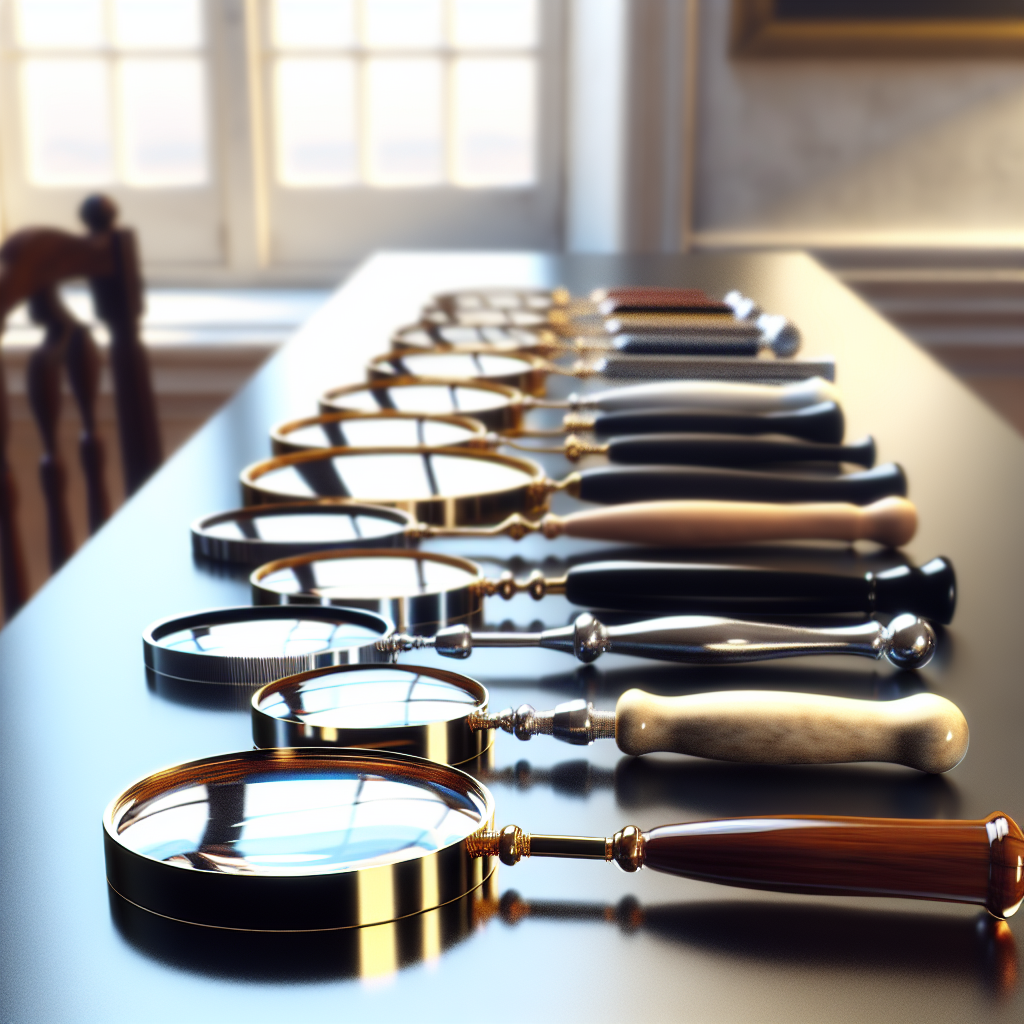
- Handheld magnifiers: Classic models with a handle, simple to use and orient at the desired angle.
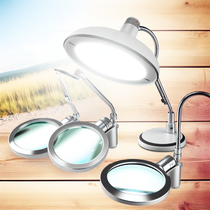
- LED magnifiers: Integrate a lighting system, essential for observing in dimly lit environments.
- Binocular magnifiers: Allow stereoscopic observation, used by professionals in the medical or scientific sector.
- Head-worn magnifiers and magnifying spectacles: Remain fixed on the head or in front of the eyes, ideal for long-duration work requiring precision and comfort.
- Electronic magnifiers: Equipped with a screen, they offer digital magnification and the ability to take photos or videos.
This diversity meets various needs: reading small characters, observing minerals, identifying ancient coins, or assembling sensitive electronic components. The choice of magnifier type will essentially depend on the intended use and the required degree of magnification.
📌 How does a magnifying glass work?
The basic principle of how a magnifying glass works relies on optics. Its convex lens gathers and refracts the light rays emitted or reflected by the observed object. These rays thus converge to form an enlarged image that is projected onto the retina of the eye.
Specifically, when the object is at a distance less than the focal length of the lens, the eye perceives a virtual, upright, and larger image than the object itself. The more pronounced the curvature of the lens, the greater the magnification capacity, but the depth of field and peripheral sharpness may suffer. It is therefore important to find the right balance depending on the object one wishes to observe.
The quality of the magnifying glass also depends on the purity of the lens material, its anti-reflective treatments, and its diameter. Some models integrate multiple lenses (called achromatic) to correct optical defects such as chromatic or spherical aberrations, thus ensuring a clear and faithful vision.
It should be noted that the viewing angle and observation distance play a role in the effective magnification perceived by the user. It is thanks to a combination of physical laws and artisanal know-how that the magnifying glass continues to offer a simple and powerful solution for detailed observation.
📌 Key criteria for choosing a magnifying glass
Choosing a magnifying glass involves considering several important criteria. Needs vary greatly depending on the use (reading, collecting, jewelry, electronics, medicine, etc.), hence the importance of carefully examining the following characteristics.
- Lens size and shape: influence the observation surface and handling comfort.
- Magnification level: must be adapted to the fineness of details sought without sacrificing clarity or field of vision.
- Lens material: guarantees durability, lightness, and transparency of the produced image.
- Ergonomics: handle, stand, headband, facilitate use over long periods.
- Lighting: the addition of LEDs improves observation in all circumstances.
- Portability: prefer compact models for frequent travel.
- Brand reputation: a recognized manufacturer is a guarantee of performance and reliability.
The choice of the right model therefore depends on a set of compromises between optical performance, physical comfort, and intended use. It may be wise to compare several models before investing.
🔹 Lens size and shape
The size of a magnifying glass lens determines the observation surface, as well as the field of view offered to the user.
- Large lens: Suitable for reading entire pages, workshop work, or searching large surfaces. Heavier, but less fatiguing observation.
- Small lens: Lighter, easy to transport. Ideal for detailed examination (coins, stamps, jewelry).
The shape is also important. A round lens offers a uniform field of view, while a rectangular or square lens is better suited for reading texts. Some magnifiers are equipped with a bifocal or aspheric lens to allow for dual use (detailed and global).
To find the right compromise, it is necessary to consider the primary use: prolonged reading, occasional observation, or meticulous handling. The size and shape of the lens directly contribute to the ergonomics and effectiveness of the magnifying glass.
🔹 Magnification level
The magnification level represents the ratio between the size of the image perceived through the magnifying glass and its actual size to the naked eye. It is generally expressed as a number followed by "x" (e.g., 2x, 5x, 10x).
- 1.5x to 3x: Perfect for reading, inspecting small parts, creative hobbies. Comfortable for prolonged use.
- 5x to 10x: For examining very fine details, in jewelry, philately, or for checking printed circuits.
- Beyond 10x: Professional uses, especially in laboratories, medical fields, or for analyzing microstructures. Reduced field of view.
Too high a magnification can make the image blurry or difficult to stabilize, while too low a magnification will not provide the necessary level of detail. It is essential to choose the right level according to the task to be performed.
🔹 Lens material
The choice of lens material influences the optical quality, durability, weight, and cost of the magnifying glass.
| Material | Advantages | Disadvantages |
|---|---|---|
| Optical glass | High clarity, scratch-resistant, excellent light transmission | Heavier, can break if dropped, higher price |
| Acrylic | Lightweight, unbreakable, cheaper, good clarity for low magnifications | Scratches more easily, lower optical quality at high magnifications |
For professional or intensive use, optical glass remains the reference in terms of rendering and color fidelity. Acrylic is suitable for daily use or a younger audience due to its extreme lightness and safety.
📌 Common applications of magnifying glasses
The magnifying glass is found in a multitude of fields, both professional and domestic. Its usefulness is widely recognized for the precision it offers. Here are some examples of notable applications:
- Reading: Visually impaired or elderly people use magnifiers to more easily access tiny printed characters on documents, medications, or newspapers.
- Numismatics and philately: For examining the condition, micro-details, and authenticity of coins, stamps, or collectible banknotes.
- Jewelry: Artisan jewelers use magnifiers to inspect precious stones, settings, and setting work with extreme precision.
- Science and education: Researchers, students, or naturalists use magnifiers to observe insects, leaf structures, or minerals.
- Electronics: Technicians use magnifiers to handle or solder very small components on printed circuits.
- Art and restoration: To verify the meticulousness of a work, repair artworks, or clean fragile and ancient objects.
This versatility makes the magnifying glass an indispensable tool in many environments. Models are often adapted to each use, hence the importance of clearly identifying your needs before purchase.
📌 Specialized magnifiers for professionals
Certain sectors demand increased precision that can only be ensured by specialized magnifiers, often developed in partnership with professionals in the field.
- Jeweler's loupes (or "thread counters"): Equipped with high magnification (10x to 20x), they allow for the inspection of gems, precious metals, and engravings. Their closed design prevents stray light from altering the vision.
- Watchmaker's loupes: Adapted for the meticulous examination of watch mechanisms, they are worn over the eye, leaving the hands free.
- Industrial magnifiers: Used for quality control, inspection of welds, or verification of finishes in manufacturing plants.
- Ornithological or botanical magnifiers: Offer moderate magnification but a wide field of view for field study of birds, insects, or plants.
- Archaeology and restoration magnifiers: Used for conservation, detection of cracks or alterations on ancient objects.
These models are often more robust, with very refined optics, and can integrate features such as precise focusing or LED lighting. Professional users choose their magnifier according to strict criteria of reliability and image quality.
📌 Magnifying glasses for medical use
In the medical field, the magnifying glass becomes an essential aid for the daily practice of many specialists. Surgeons, dentists, dermatologists, and veterinarians use magnifying spectacles to achieve the accuracy required for each clinical act.
- Medical binocular loupes: Mounted on spectacle frames or a head-band, they offer stereoscopy – a perception of depth – which is very useful for surgery or endodontics.
- Diagnostic magnifiers: Used for dermatological examination, tissue analysis, or the detection of parasites in animals.
- Dissection magnifiers: Essential in laboratories or operating rooms for manipulating tissues or performing microsutures.
Magnifying glasses for medical use are designed to remain comfortable during long procedures. They are distinguished by their precision, robustness, and the customization of their optics according to the user. The addition of lighting systems, the possibility of choosing the working distance, or the type of mounting are among the key selection criteria for these demanding professionals.
📌 Advantages of magnifying glasses with LED lighting
The integration of LED lighting into the design of magnifying glasses represents a major advancement for many users. This lighting promotes sharper observation, even in low or variable light conditions.
- Improved contrast: The LED directly illuminates the observed area, revealing details that would remain invisible in natural or ambient light.
- Less eye strain: Well-distributed brightness reduces visual effort during prolonged examinations.
- Mobility and autonomy: LEDs consume very little energy, allowing for long-term use on battery power.
- Flexibility of use: Some models offer adjustable lighting intensity or colorimetry to adapt to different tasks.
- Modern design: The addition of LEDs allows manufacturers to design more compact, elegant, and practical models.
Thanks to these many advantages, LED magnifiers are popular with both individuals and professionals, whether for night reading, watchmaking work, or quick field checks.
📌 Maintenance and cleaning of magnifiers
Maintaining your magnifier is essential to ensure optimal image quality over time. A few simple precautions can prevent premature wear and deterioration of optical performance.
- Lens cleaning: Use a clean, dry microfiber cloth to dust the surface. In case of smudges, opt for an appropriate optical cleaner. Never use aggressive or abrasive products that could damage the anti-reflective coating.
- Scratch protection: Store the magnifier in its case when not in use. Avoid placing it lens-down on a hard surface.
- LED lighting check: If the magnifier is equipped with LEDs, regularly check for proper functioning and replace batteries as needed.
- Careful handling: Do not drop the magnifier, especially optical glass models, to limit the risk of cracks or chips.
Regular maintenance extends the lifespan of the magnifying glass, while ensuring clear visibility with each use. This preventive approach is part of a sustainable investment strategy.
📌 Comparison of popular brands
The magnifying glass market is full of manufacturers, from small family businesses to large industrial groups. Several brands enjoy an established reputation thanks to the reliability, innovation, and quality of their products.
- Eschenbach: A renowned German manufacturer, offering optical magnifiers of excellent craftsmanship, prized for medical and jewelry use.
- Levenhuk: Specializing in optics for education and industry, combining modern design with competitive value for money.
- Carson: An innovative American brand, famous for its LED magnifiers, electronic models, and portable devices.
- Peak: A Japanese reference in optical precision, offering high-magnification magnifiers for micro-inspection.
Choosing a reputable brand ensures quality after-sales service, a solid warranty, and compatibility with professional accessories. Feel free to browse our collection of magnifying glasses to discover the best offers on the market.
📌 Tips for buying a magnifying glass online
Acquiring a magnifying glass online offers many advantages, but it is important to follow certain recommendations to avoid disappointments and choose the most suitable model.
- Consult the product sheet: Carefully check the technical specifications (type, magnification, lens diameter, weight, presence of LED lighting, etc.).
- Read customer reviews: Buyer feedback is valuable for assessing real-world usability, durability, or potential defects of a model.
- Compare prices and services: Take into account the guarantees offered, ease of return, or availability of customer service.
- Check the seller's reputation: Opt for a specialized store or a reputable dealer in the field of optics.
- Beware of overly tempting offers: Copies or low-priced imported products can hide very average optical quality.
Finally, use specialized buying guides or comparisons to refine your selection. To learn more on this topic, discover why it might be wise to invest in a quality magnifying glass before your purchase.
📌 Avoiding common mistakes when choosing a magnifying glass
Buying a magnifying glass may seem simple, but certain common mistakes should be avoided to ensure an optimal experience:
- Choosing too high a magnification: High magnification reduces the field of view and makes focusing difficult, especially for reading.
- Neglecting user comfort: A poorly designed handle or excessive weight limits the duration of use.
- Forgetting the importance of lighting: Poorly designed or absent lighting significantly reduces readability in dark environments.
- Choosing an inadequate lens diameter: Too small, it will limit the observation area; too large, it can hinder manipulation.
- Ignoring material quality: A low-end plastic magnifying glass scratches easily or distorts the image.
- Not taking into account the primary use: A universal magnifying glass may not be suitable for specific needs (jewelry, electronics, medical reading, etc.).
Anticipate your needs, take the time to compare, and always prioritize optical quality and manufacturer reliability.
📌 Frequently Asked Questions (FAQ) about Magnifying Glasses
- What is the difference between a magnifying glass and a microscope?
A magnifying glass allows for naked-eye observation of slightly magnified objects (up to about 20x), while a microscope offers much higher magnification (up to several hundred or thousands of times) to examine microscopic structures invisible without this tool.
- What magnification should I choose for easy reading or sewing?
A magnification of 2x to 3.5x is generally sufficient for reading text or sewing. Beyond that, the field of view narrows, and comfort may be reduced.
- How can I prevent the magnifying glass from scratching?
Always store the magnifying glass in its case, avoid direct contact with hard surfaces, and clean the lens with a soft microfiber cloth, without abrasive products.
- Can I use an LED magnifying glass with glasses?
Yes, there are handheld or stand-mounted LED magnifiers designed to be used with prescription glasses. Specific magnifying glasses-spectacles models are also available to suit your vision.
- Can the LED in a magnifying glass wear out quickly?
LEDs are economical and durable. With normal use, their lifespan reaches several thousand hours. You simply need to replace the batteries when necessary.
- Is there a difference in quality between acrylic and glass magnifiers?
Yes, the l