

📌 Why Choose a Full-Page Magnifier?
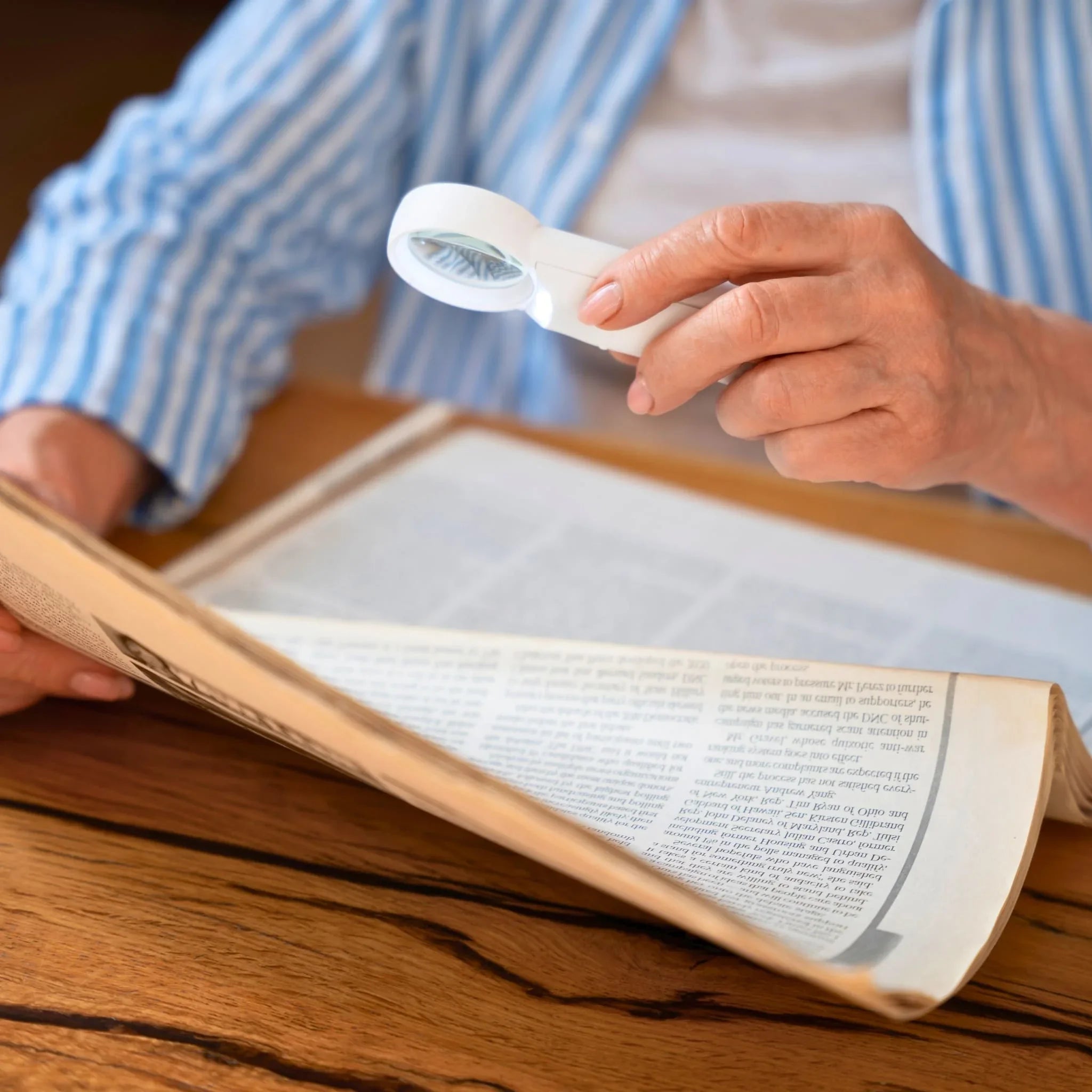
When it comes to reading or examining detailed documents, choosing a full-page magnifier often proves to be a wise decision. Unlike traditional magnifiers that offer a reduced field of view, this format covers a large part, or even the entirety, of a document. This feature eliminates the need to frequently move the tool and promotes more natural and comfortable reading. Professionals, students, and reading enthusiasts are increasingly opting for this model to benefit from optimal visual comfort and an immersive experience. Its success is also due to its ease of use: simply place the magnifier on the document to immediately enjoy enlarged, clear, and readable text. For those who spend long hours reading books, magazines, or examining plans, eye strain is significantly reduced with a full-page magnifier. Moreover, this choice adapts to various situations: reading at home, analyzing professional documents, assisting the elderly or those with low vision, and even observing works of art. Its large surface limits repeated manipulations, reduces the risk of reading errors, and provides true ease of use. However, the success of this visual aid also lies in preventing common purchasing mistakes. Before investing in this type of product, it is essential to understand the key criteria to avoid compromising user satisfaction and the durability of the equipment. Let's discover together how to make an informed and relevant purchase, avoiding classic pitfalls that could harm your user experience.
📌 Common Mistakes When Selecting Magnification Power
The choice of magnification is crucial for the effectiveness of a full-page magnifier. Many users make the mistake of opting for high magnification, thinking that more is necessarily better. However, too high a magnification can narrow the field of view and make reading fragmented. Conversely, too low a magnification may not provide the expected enlargement. It is therefore essential to identify your real needs, taking into account your visual acuity and the type of documents you read. Testing different models, even in a store, helps to practically determine the most suitable magnification for your comfort. If you mainly read novels or magazines, a 2x to 3x magnification is often ideal, while professional needs for small print or detailed plans may require more. Remember: the primary goal is to combine comfort, efficiency, and ease of daily use.
➡️ Understanding Magnification and Its Effects
The magnification level directly affects several aspects of reading. The more it increases, the more the text will be enlarged, but the surface covered in one glance decreases. Thus, with a 3x magnification, only a portion of the page will be clearly visible, requiring more frequent movement of the magnifier. A moderate magnification (around 2x) offers a good compromise between text size and visualized surface. The choice must also consider the resolution of the full-page magnifier: too high a magnification on a mediocre lens produces a blurry image, a source of eye strain. Here is a summary table of the main magnification families and their suitability according to use, to help you avoid any disappointment:
| Magnification Power | Approx. Covered Surface | Recommended Use |
|---|---|---|
| 1.5x – 2x | Almost full page | Reading novels, magazines, newspapers |
| 2.5x – 3x | Half to one-third of a page | Administrative documents, detailed plans |
| 4x + | Localized area | Observing precise details (stamps, circuits, miniatures) |
Remember that the best magnification is one that meets both your daily needs and your visual comfort without compromising sharpness.
📌 Considering Optical Quality
Optical quality is one of the most decisive aspects when purchasing a full-page magnifier. It can be tempting to choose a low-priced model, but the composition of the lens (acrylic, standard plastic, or optical glass) strongly impacts the sharpness and lifespan of the product. High-quality acrylic lenses or, even better, treated optical glass, offer sharper images, less distortion at the edges, and increased scratch resistance. There are also anti-reflective and anti-UV treatments that are valuable for prolonged use. A cheap product with a basic plastic lens is likely to tarnish quickly, produce distortions in the center or on the sides, and become unusable after a few months. Specialized manufacturers invest in the purity of the optical material and in an anti-fatigue design, decisive factors for eye comfort.
- Prioritize brands known for the quality of their optics.
- Check for the presence of anti-scratch and anti-reflective coatings.
- Inspect the uniformity of the lens before purchase: a good full-page magnifier offers the same clarity over the entire magnification surface.
In summary, image clarity and fidelity directly depend on the quality of the lens: be uncompromising on this criterion to guarantee a durable and satisfying purchase.
📌 Importance of Magnifier Dimensions
The size of your full-page magnifier must be adapted to how you will use it daily. A common mistake is to overlook this parameter: a magnifier too small for A4 documents or books can quickly become frustrating, while an imposing format unnecessarily weighs down the tool for pocket books. First, determine the type of documents you want to enlarge most often. If you mainly read novels, a magnifier covering the entire page of a standard book (approximately 18 x 25 cm) will suffice. For administrative files or plans, opt for a format suitable for A4.
- Measure the surface of your typical pages to know which size to choose.
- Beware of "full page" mentions: some products actually cover less than 80% of an A4 page.
Do not neglect the thickness of the magnifier: an overly bulky model becomes difficult to handle and transport. Prioritize lightness, thinness, and robustness to ensure easy, long-term use.
📌 Avoiding Magnifiers Without Lighting
Another common pitfall when buying a full-page magnifier is ignoring the importance of lighting. However, even in a well-lit room, magnification can darken the observed text, making it less readable. Models equipped with integrated, perfectly oriented LEDs offer remarkable readability even in dim light or on glossy paper that reflects ambient light. The absence of lighting can also lead to faster visual fatigue, preventing prolonged reading. Today, LED systems consume very little energy, do not heat up, and last a long time, making them an undeniable asset for your daily comfort.
- Check the number of LEDs and their distribution: good light coverage avoids shadowed areas.
- Prefer models that do not require wired connection for increased mobility.
To learn more about the variety of full-page magnifiers available and compare their lighting systems, consult our dedicated collection of full-page magnifiers to make an informed choice.
➡️ Considering Adjustable Brightness Options
Certain situations require adapted light intensity: soft light for yellowed paper, full power for faint characters, etc. Magnifiers with adjustable brightness allow for optimal customization according to the support and ambient light. This functionality is also found on portable or battery-powered models, facilitating reading in all contexts, whether at the office or on the go. A simple control (button or touch dimmer) prevents you from being dazzled or, conversely, from lacking contrast in your text. If you suffer from light sensitivity or read at different times of the day, this option is highly recommended.
- Prefer gradual adjustment or multiple intensities rather than a simple on/off function.
- Consider the ease of changing batteries or the autonomy of a rechargeable battery to optimize your product.
By optimizing clarity and contrast, adjustable brightness prevents visual fatigue and significantly improves reading comfort.
📌 Considering the Magnifier's Weight
If you intend to handle your full-page magnifier for extended periods, weight quickly becomes a crucial criterion. Many users underestimate this aspect, but an overly heavy product quickly tires the wrist. It is therefore recommended to prefer lightweight materials, such as advanced acrylic or aluminum alloys, while maintaining long-lasting durability. Weighted models were once synonymous with quality, but current technology allows for excellent transparency and robustness without excessive weight. Especially for seniors or those suffering from musculoskeletal disorders, a lightweight magnifier allows for prolonged use without pain.
- Look for the weight in the technical specifications (ideally less than 300g for an A4 page).
- Test the grip and maneuverability if possible before purchase.
- Avoid low-end models made of too thin plastic, which risk breaking quickly, even if they seem attractive on the scale.
The right compromise between lightness and rigidity will ensure a comfortable experience and preserve your reading pleasure day after day.
📌 Magnifier Portability
For mobile or on-the-go use, the ability to easily transport your full-page magnifier becomes essential. Some models are foldable or come with rigid cases, which provides great flexibility: whether you are traveling, on a train, or moving from one desk to another, your reading tool must be both durable and compact. A flat and thin design slips easily into a bag, while a bulky model will prove cumbersome for mobile workers or students.
- Prioritize magnifiers that are compact and shock-resistant.
- Check the size, thickness, and presence of transport accessories (sleeves, cases, clips).
- Opt for those that easily fit into a pocket or briefcase.
Portability directly influences the regularity of use and the ability to be useful in any situation. A thoughtful purchase will ensure the permanent availability of your magnifier, without risk of damage during transport.
📌 Ignoring Ergonomic Criteria
Ergonomics is a fundamental consideration when purchasing a full-page magnifier. A poorly adapted design can quickly lead to wrist discomfort, or even pain. Prioritize models with removable handles or those equipped with a hand rest, which facilitate grip and allow for different positions depending on the material being read. Some products offer an anti-slip frame and a textured surface to prevent slipping, which reduces the risk of drops and breakage.
- Test the handling of the magnifier to ensure its stability.
- Favor designs that reduce finger fatigue.
- Consider the position of the power button for illuminated models: it should be accessible even during full use.
The ergonomic choice guarantees regular use, without discomfort or muscle tension, especially for prolonged or intensive use.
📌 Underestimating the Importance of Accessories
Often neglected, accessories nevertheless contribute greatly to the longevity of your full-page magnifier. A quality case, resistant to shocks or scratches, protects the lens from external aggressions and limits wear and tear on the material. Furthermore, a suitable microfiber cloth extends the clarity of your optics without damaging it. Some models offer table stands, facilitating prolonged use without direct manipulation, which is advantageous for people with reduced mobility or for consulting many documents in a row. There are also specific cleaning kits to avoid smudges, as well as spare batteries or cables for illuminated models.
- Invest in a carrying case to prevent scratches during travel.
- Never neglect the maintenance of your equipment, or risk reducing its lifespan.
- Check if compatible accessories exist on the manufacturer's website or from your retailer.
A minimal investment in suitable accessories will significantly extend the effectiveness and appeal of your magnifier in daily use.
📌 Budgetary Considerations
Managing the budget for a full-page magnifier requires discernment and preparation. One of the major mistakes is to buy an entry-level model for economy, even if it means sacrificing magnification quality, solidity, or features. Conversely, a high price is not always a sign of quality: precisely analyze the technical specifications and the guarantees offered.
- Always weigh the investment/lifespan ratio: a good magnifier generally lasts several years.
- Compare several offers on specialized sites and pay attention to seasonal promotions.
- Check the possibility of return or exchange in case of incompatibility with your real needs.
Don't forget to include the cost of essential accessories. Getting a quality magnifier, even for a slightly higher than average investment, often turns out to be cheaper in the long run. To help you choose, discover our comparison of the 5 best full-page magnifiers recommended this year.
📌 User Reviews and Feedback
Beyond technical specifications, the experience of other users represents a valuable source of information on the relevance of the model. Take the time to consult testimonials, both on sales websites and in specialized forums. You will discover the real strengths and weaknesses of the product over time, far from commercial promises. However, beware of extreme reviews (too positive or too negative) that are often biased or unrepresentative.
- Prioritize reasoned feedback detailing usage, strengths/weaknesses, and after-sales service.
- Take into account the date of the review: a recent product evolution can change its reliability.
Question the variety of user profiles (seniors, students, professionals, etc.) to check if the magnifier will suit your particular use. Cross-referencing several consistent opinions on a criterion (solidity, comfort, lighting effectiveness) is often revealing.
➡️ How to Interpret Reviews
Reading between the lines of customer reviews is a skill. Beware of undetailed or overly enthusiastic feedback: look for those that detail the context of use, regularity of use, and proven weaknesses (weight, battery life, lens fragility, etc.). Group reviews on the same issue for an objective opinion: if several people mention the weakness of a button or insufficient light, there is often some truth to it. Do not hesitate to contact the review writers for more specific information, or ask your questions on specialized forums. Cross-analysis will give you an accurate picture of the product.
📊 FAQ – Frequently Asked Questions About Buying a Full-Page Magnifier
-
What is the difference between a traditional magnifier and a full-page magnifier?
The full-page version covers a large surface (generally the size of a book page or document). It eliminates the need to constantly move the magnifier, offers superior reading comfort, and reduces eye strain. -
What magnification should I choose for everyday reading?
A power between 2x and 3x is generally sufficient for most daily reading, offering the ideal balance between an enlarged field of view and satisfactory magnification. -
Why is lighting essential?
Because integrated light, via LEDs, improves the contrast of enlarged text. This facilitates reading in dimly lit rooms or on highly reflective paper. The absence of lighting can significantly hinder comfort of use. -
Does lightness really influence fatigue?
Absolutely. An overly heavy model quickly causes wrist pain, especially during prolonged use. Modern materials combine robustness and lightness to protect your joints. -
Are accessories essential?
Yes. A protective case, a stand, or a cleaning cloth helps preserve the sharpness and durability of your magnifier. They secure transport and facilitate daily maintenance. -
How to verify the authenticity of a good lens?
Prioritize magnifiers from reputable brands with high-grade acrylic or treated glass lenses. Test the clarity across the entire surface and look for specialized labels or expert reviews.
🧠 Conclusion: Optimize Your Full-Page Magnifier Purchase
Avoiding common pitfalls when buying a full-page magnifier is within everyone's reach, provided they are well-informed. From lens quality to ergonomics, lighting, and accessories, every detail contributes to transforming your experience. Remember to align your choices with your specific needs: type of documents, frequency of use, mobility, reading duration... By considering these recommendations and relying on user feedback, you maximize your chances of investing in a reliable, durable, and perfectly adapted tool for your daily life. Happy enlightened reading!