


📌 Understanding the Different Types of Magnifiers
🔍 Varieties of Magnifiers and Their Uses
Before learning how to use a magnifier to observe the world with precision, it's essential to understand the different models available on the market. Each type of magnifier has specific features adapted to particular uses. Whether you're a reading enthusiast, a professional jeweler, or a science enthusiast, there's a magnifier perfectly suited to your needs.
➥ Pocket Magnifier: Compact and Practical
The pocket magnifier is the preferred choice for those seeking mobility. Generally featuring a foldable design and lens protection, it easily slips into a pocket or handbag. Numismatists, philatelists, and other micro-observation enthusiasts particularly appreciate its practicality for inspecting details in any circumstance. Its ease of use, combined with its lightness, makes it an essential tool for travel.
➥ Handheld Magnifier: Versatile for Various Uses
An iconic model, the handheld magnifier is held by an ergonomic handle. It is ideal for reading, examining maps, fabrics, or everyday objects. Available with a wide range of magnifications and diameters, this magnifier offers great versatility. It suits both individuals and professionals for occasional or repeated tasks.
To explore the available range, you can consult our collection of varied handheld magnifiers, which we particularly recommend for those seeking quality and reliability.
➥ Stand Magnifier: Stability for Long Observations
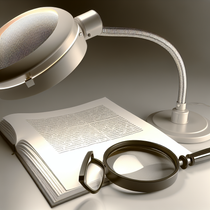
Equipped with a stable stand, stand magnifiers free up your hands and allow for prolonged observations without effort. Jewelers, watchmakers, electronics engineers, and model-making enthusiasts benefit from this stability for intricate work. They come in adjustable models that facilitate adapting the distance and zoom level according to the user's needs.
➥ Illuminated Magnifier: For Optimal Lighting
Combining magnification and lighting, the illuminated magnifier is the ideal solution in low-light environments. Equipped with LEDs or neon lights encircling the lens, it provides homogeneous light that significantly improves the contrast and sharpness of observed details. Illuminated magnifiers are perfect for sewing, reading, or any precision work requiring reliable lighting.
📌 Criteria for Choosing a Magnifier
🔍 How to Select the Right Magnifier
Choosing the right magnifier is not trivial; it guarantees an optimal experience tailored to your specific needs. Several essential criteria must be considered to optimize comfort, performance, and durability.
➥ Magnification: Adjusting to Your Needs
Magnification, often denoted by "x" (2x, 10x…), defines the image's enlargement factor. A 2x magnification means the object appears twice as large as to the naked eye. For reading, a magnification of 2x to 5x is usually sufficient, while for jewelry or portable microscopy, higher magnification may be necessary. Be careful, however, as beyond 10x, sharpness can decrease, and the visible surface can significantly shrink.
➥ Lens Material: Glass vs. Plastic
The quality of the lens directly impacts visual quality. Glass lenses offer excellent optical clarity and better scratch resistance, ideal for regular and prolonged use. Plastic lenses, lighter and more economical, are suitable for occasional use or for children. However, they scratch more easily and may show slight distortion at high magnification. Therefore, glass should be preferred for demanding uses.
➥ Size and Weight: Importance for Mobility
The lens diameter affects the area you can observe without moving the magnifier. Large lenses offer a comfortable field of view but are heavier, while compact models prioritize mobility, sometimes at the expense of visual comfort. Weight influences maneuverability: for prolonged handheld use, a lightweight magnifier is preferable.
Furthermore, inquire about the ergonomics of the handle or stand to avoid excessive fatigue during long observation sessions.
📌 Understanding Magnification
🔍 Magnification and Image Clarity
Magnification is at the heart of using a magnifier: it determines the ability to observe fine details. Understanding it well helps you avoid pitfalls of ill-suited magnifiers and ensures clear and comfortable observations.
➥ Calculating Magnification: Formulas and Explanations
The magnification of a magnifier is determined by the formula M = D/4, where "D" indicates the dioptric power of the lens. A 20-diopter magnifier will therefore have a 5x magnification (20/4). The standard distinct vision distance (usually 25 cm) must also be considered. Some manufacturers specify the actual magnification taking into account optical quality – choosing the right magnifier therefore involves knowing these concepts well.
| Magnification | Typical Uses | Field of View |
|---|---|---|
| 2x to 3x | Reading, sewing, household tasks | Wide |
| 5x to 8x | Inspection, philately, scientific observation | Medium |
| 10x and up | Jewelry, watchmaking, electronics | Reduced |
➥ Impact of Magnification on Distortion
The higher the magnification, the more difficult it is to obtain an image free of distortion. The edges of the image may become blurred, and the depth of field decreases, which can bother unaware users. Higher-quality magnifiers sometimes use multiple lenses (triplets or achromatic) to limit these optical defects. For everyday use, it is advisable to opt for moderate magnification, thus ensuring a compromise between field of view, clarity, and ease of use.
📌 Preparing to Use a Magnifier
🔍 Workspace Preparation
A well-prepared environment is essential to ensure precise and enjoyable observations. Many users overlook these aspects, but they contribute significantly to the success of an observation session, whether brief or long.
➥ Lighting Choice: Natural or Artificial
Lighting significantly impacts observation quality. Natural light, soft and diffuse, preserves contrast and limits unpleasant reflections. Ideally, place your workstation near a window, but avoid direct light on the object being observed. If there isn't enough natural light, opt for a white LED lamp, positioned diagonally to reduce glare and highlight even the smallest details.
➥ Posture and Comfort: Preventing Fatigue
Proper posture contributes to comfort and minimizes fatigue. Sit at a stable table, back straight, arms comfortably supported. Also, ensure the object to be examined is at the correct height, generally between 25 and 35 cm from your face, to maintain natural vision and breathing. If you plan long sessions, invest in an ergonomic chair and take regular breaks to protect your eyes and joints.
📌 Basic Techniques for Effective Use
🔍 Mastering the Art of Magnifier Manipulation
Using a magnifier correctly requires a few simple but essential tips. To optimize the precision of your observations, it is important to adopt the right gestures and habits from the first uses.
➥ Correct Grip: Stability and Precision
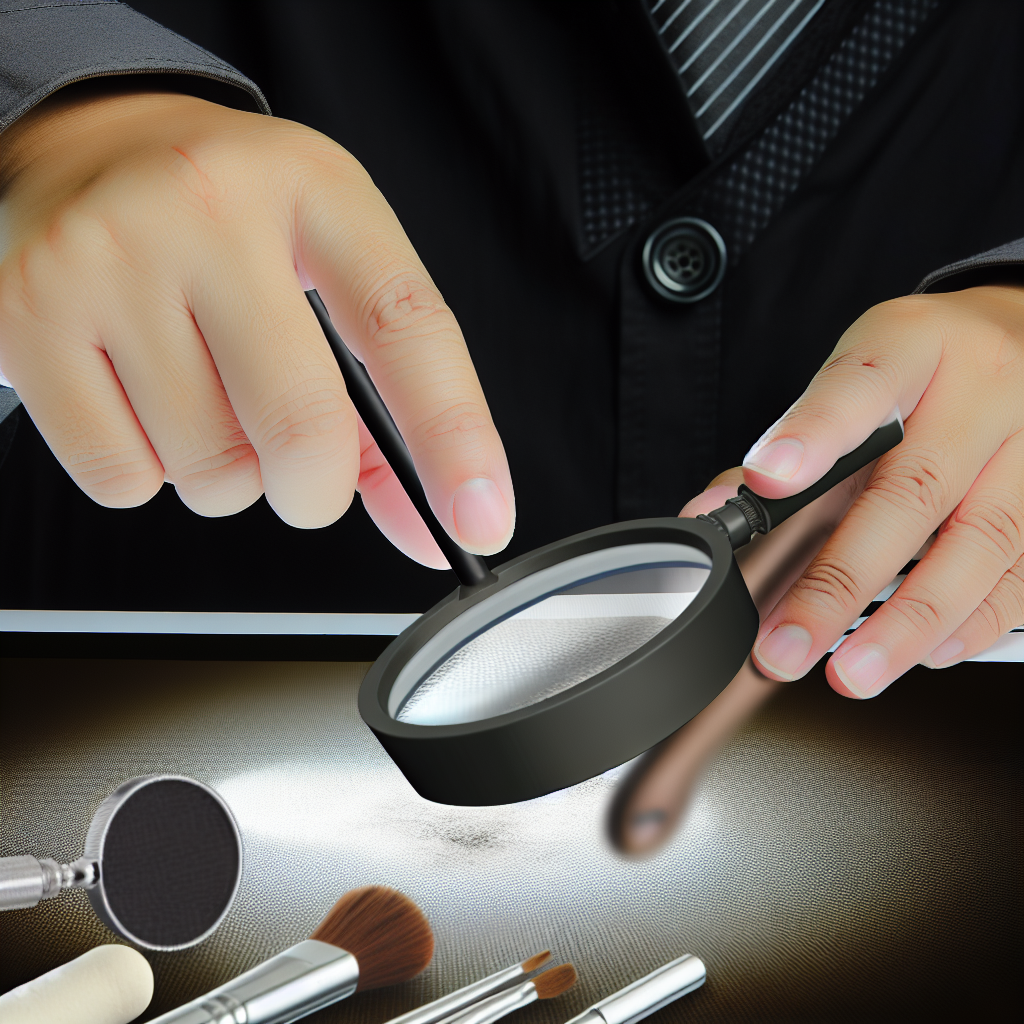
The magnifier is generally held with a full hand, by its handle or stand. Place the lens between your eye and the object to be examined, keeping your hand steady to prevent any trembling. For light objects, it is often more practical to move them rather than the magnifier itself, to maintain constant focus. For optimal results, lightly rest your elbow on the table to enhance stability.
➥ Adjusting Focal Distance: Finding the Optimal Focal Point
The focal point is the distance at which the object will be clear through the magnifier. This distance varies for each lens and must be experimented with. Slowly bring the magnifier towards the object, then towards your eye, until you obtain a clear and magnified image. Some models suggest positioning the magnifier close to the eye and gradually bringing the object towards the lens, while other models prefer the inverse position. Take a few moments to test and memorize the optimal distance for your tool.
📌 Advanced Magnifier Usage
🔍 Techniques for Detailed Observations
After mastering basic techniques, perfect your observations with advanced methods. These tips are particularly useful for professional or scientific applications, where every detail matters.
➥ Systematic Scanning: Observation Technique
Rather than observing a fixed point, it is recommended to adopt a regular movement to explore the surface to be examined. Move the magnifier or the object in parallel lines, systematically. This ensures no detail is missed, very useful for inspecting surfaces, documents, or spotting hidden defects. In quality control professions, this is a key technique for detecting anomalies invisible to the naked eye.
➥ Using Filters: Reducing Glare
Reflections can impair viewing, especially on smooth or shiny surfaces. Some magnifier models are equipped with polarizing filters, which greatly reduce unwanted reflections. You can also use a magnifier in combination with anti-glare glasses or adjust the lighting angle to optimize visibility. Photographers and art restorers commonly use these techniques to appreciate every nuance of the observed surface.
📌 Magnifier Care and Cleaning
🔍 Taking Care of Your Observation Tool
A well-maintained tool ensures lasting performance and optimal observation clarity. Neglecting magnifier maintenance can lead to scratches or bothersome deposits, altering image quality and reducing the device's lifespan.
➥ Regular Cleaning: Preserving Transparency
Use a soft microfiber cloth, similar to those for glasses, to remove smudges and dust. Avoid abrasive products or rough papers that could damage the lens. For stubborn dirt, a little distilled water or a specific optical cleaner will suffice. Apply it gently, then let it air dry. Repeat this regularly to maintain sharpness.
➥ Secure Storage: Avoiding Scratches
Always store your magnifier in its case when not in use. Choose a dry place, away from dust and temperature fluctuations. If you have several magnifiers, avoid knocking them together or stacking them without protection. A simple precaution that extends the life of your instruments and ensures daily comfort of use.
📌 Common Mistakes to Avoid
🔍 Pitfalls of Using Magnifiers
Using a magnifier may seem intuitive at first glance, but certain pitfalls can limit its effectiveness, or even damage the tool or cause eye strain.
➥ Wrong Position: Impacts on Observation
Holding the magnifier at an incorrect distance or angle often leads to image degradation (blur, distortion, visual fatigue). Failure to respect the optimal focal point can also strain eye muscles and cause headaches. Get used to positioning the lens precisely and adjusting the angle to obtain a clear image in all circumstances.
➥ Inappropriate Lighting: Clarity Problems
Lighting that is too strong or poorly directed generates reflections and glare, while insufficient lighting makes observation difficult. Always favor white, diffuse light, and, if possible, opt for a magnifier with adjustable integrated lighting. To learn more about common mistakes, feel free to consult our detailed article Top 7 Mistakes to Avoid When Buying a Reading Magnifier.
📌 Benefits of Correct Magnifier Use
🔍 Improving Your Daily Observations
Properly using a magnifier transforms the observation experience and offers numerous daily benefits, for both professionals and individuals.
➥ Increased Precision: Details Revealed
Whether for classic use or meticulous observation, correct magnifier handling reveals details often invisible to the naked eye. This provides a gain in confidence for professions requiring visual expertise, but also a true source of satisfaction in hobbies (collecting, DIY, nature...). Every detail brought to light enriches knowledge and increases efficiency.
➥ Less Eye Strain: Prolonged Comfort
Correct adjustment of distance and magnification helps preserve the eyes, avoiding muscle tension or headaches. Thanks to optimized ergonomics and good lighting management, observation sessions can be prolonged without discomfort, paving the way for intensive daily or professional use.
📌 Practical Applications of Magnifiers
🔍 Uses in Various Professional Fields
The magnifier is a multifaceted tool, essential in many sectors of activity and scientific disciplines.
➥ Jewelry and Watchmaking: Fine Detail Analysis
Jewelers and watchmakers rely on specialized magnifiers (binocular magnifiers, head-worn magnifiers, or stand models) to examine and assemble tiny parts. Examining the purity of a diamond, adjusting small screws, or restoring the mechanics of a watch requires ultra-precise vision, which only a good magnifier can provide.
➥ Education and Science: Educational Support
In classrooms and laboratories, the magnifier finds its place as an educational aid. It helps students understand the microfauna of a leaf, the details of an insect, or the structure of a crystal. Also a popular tool for introducing biology or geology, it sparks the curiosity of young people and facilitates practical learning of natural sciences.
📌 Magnifiers and Modern Technology
🔍 Integration of Magnifiers and Modern Techniques
Technological evolution has revolutionized the traditional concept of the magnifier, paving the way for digital and mobile applications that further broaden the possibilities for analysis and observation.
➥ Digital Magnifiers: A New Dimension
Digital magnifiers integrate cameras and screens to magnify images, analyze them, and sometimes record them. They are used in electronic inspection, medicine, and scientific research. These tools offer ease of sharing (via HDMI or USB output), and their intuitive interface allows for measuring, annotating, and saving observations on a computer.
➥ Mobile Applications: Transform Your Smartphone
Applications available on smartphones now transform these devices into true electronic magnifiers. Thanks to the high resolution of the sensors, magnifying text or a detail becomes accessible to everyone, everywhere. These pocket solutions are extremely practical for visually impaired people or for consulting a map, reading a label, or identifying a plant during a walk.
📌 Expert Opinions and Recommendations
🔍 Perspectives and Advice from Specialists
To go further, it is always relevant to benefit from the informed advice of sector professionals and to refine your choice through concrete feedback.
➥ Professional Testimonials
Watchmakers, jewelers, naturalists, and teachers all emphasize the importance of good handling and appropriate use of magnifiers. Ergonomics, stability, and lighting are among the aspects praised when choosing the tool, as are lens clarity and material robustness. Everyone also highlights the need for careful maintenance to preserve long-term optical performance.
➥ Recommended Buying Guides
Specialists recommend defining your usage precisely before purchasing: reading, scientific observation, medicine, or jewelry. Consult customer reviews and compare optical quality, ergonomics, and manufacturer warranties. Taking the time to read technical specifications and user reviews helps you select the magnifier that truly meets your expectations.
📌 Frequently Asked Questions
🔍 Answers to Common Questions
➥ How to Improve Magnification?
To increase magnification, it is possible to use models offering a higher zoom or to combine several magnifiers. However, one must be vigilant about the distortion that can appear at high magnification and always prioritize superior optical quality to maintain sharpness.
➥ Why is My Magnifying Glass Not Clear?
A lack of clarity often comes from a dirty or scratched lens, or an incorrectly set focal point. Clean it regularly, check for scratches, and adjust the distance between your eye, the magnifying glass, and the object to be observed until you get a clear image.
➥ What is the Difference Between a Magnifying Glass and a Microscope?
A magnifying glass enlarges the image of an object visible to the naked eye, while a microscope allows you to observe structures invisible to the naked eye, such as cells. Microscopes have much higher magnifications and often rely on complex optical systems.
➥ Where and How Should I Store My Magnifying Glass?
Store your magnifying glass in a rigid case, away from direct light, dust, and humidity. Do not leave it unprotected to avoid scratches.
➥ Can a Magnifying Glass Be Used with Glasses?
Yes, many magnifying glasses are designed to be used over glasses. It is recommended to choose a magnifying glass with a large eyepiece and sufficient working distance to maintain good visual comfort.
➥ Should I Prioritize a Lighted Magnifying Glass?
If you are working in a dark environment or observing very detailed small objects, a lighted magnifying glass significantly improves clarity and sharpness. For occasional tasks in bright light, a classic magnifying glass will suffice in most cases.
📌 Conclusion and Final Tips
🔍 Towards Optimal Use of Your Magnifying Glass
➥ Key Points Revisited
To achieve maximum precision, it is crucial to select a magnifying glass suited to your use, master the grip and focal point adjustments, ensure regular maintenance, and pay attention to lighting and steady hand movements. Each type of magnifying glass has its advantages, and only practice and attention to detail will guarantee effective and pleasant observations.
➥ Tips for Long-Term Use
Remember to take care of your magnifying glass as a real tool: store it properly, clean it after each use, and do not hesitate to invest in a quality model to improve your comfort and the lifespan of your accessory. Remember, using a magnifying glass optimally not only improves the quality of your observations but also your daily visual well-being. To go further, talk to professionals and explore our specialized guides; you will surely find the ideal magnifying glass for your needs.