


📌 Introduction: Understanding Optical Microscopy
Optical microscopy is an essential technique for exploring the world of the infinitely small. This tool, used in both professional laboratories and by science enthusiasts at home, allows us to observe objects invisible to the naked eye, such as cells, fibers, or microorganisms. Its operation relies on light and specially designed lenses to magnify details, thus facilitating analysis and discovery. In this guide, we will explore the many professional and personal applications related to using an optical microscope. Whether you are a curious student, a teacher, a scientist, or an observation enthusiast, you will find reliable resources here to understand, choose, use, and maintain your optical microscopy equipment.
📌 History and Evolution of Optical Microscopy
The history of optical microscopy began in the 17th century with the creation of the first microscopes. The earliest models, notably the one attributed to Zacharias Janssen in 1590, allowed scientists to enter a new era where the invisible became observable. Later, Antonie van Leeuwenhoek refined lenses and observed living cells, bacteria, and even blood circulation in small animals for the first time.
The following centuries saw numerous innovations. In the 19th century, Carl Zeiss and Ernst Abbe revolutionized objective lens design, leading to sharper images and better resolution. With the invention of the compound microscope, it became possible to observe more complex cellular structures in detail. The advent of the phase-contrast microscope in the 20th century opened new horizons, especially in biology, making it possible to study living cells without staining.
Beyond technical advancements, the history of optical microscopy is also marked by the involvement of renowned anatomists, biologists, and chemists. Today, it is part of the technological arsenal of many laboratories and is accessible to the general public, continuing to fuel research, discoveries, and innovations worldwide.
- 1590: Invention of the optical microscope by the Janssen family
- 1674: First observations of single-celled organisms by Leeuwenhoek
- 1830: Improvement of optical quality by Joseph Jackson Lister
- 1930: Development of the phase-contrast microscope
- 21st century: Appearance of digital and connected microscopes
The evolution of optical microscopy illustrates how human ingenuity constantly pushes the boundaries of scientific knowledge. The increasing accessibility of these instruments now allows both researchers and amateurs to adopt the optical microscope for varied and exciting uses.
📌 Understanding How an Optical Microscope Works
At the heart of optical microscopy is a precise assembly of lenses and an illumination system. Diffused or reflected light passes through the sample, then is refracted by the lenses to produce a magnified image easily observable by eye or via a camera.
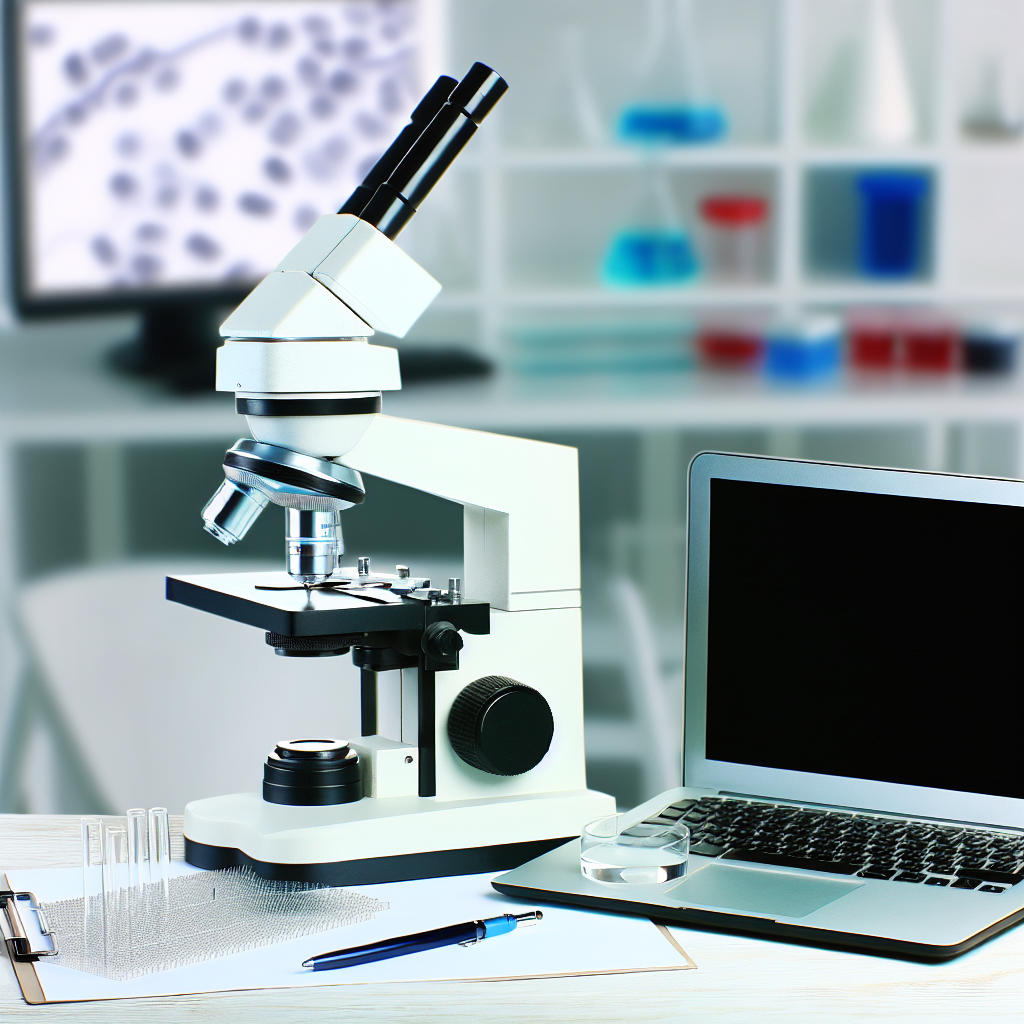
An optical microscope typically consists of the following elements:
- The eyepiece: the lens through which the user looks.
- The objectives: lenses close to the sample, offering different magnifications (e.g., x4, x10, x40, x100).
- The stage: platform where the object to be observed is placed, often adjustable with micrometer screws.
- The condenser and diaphragm: control the light intensity and beam.
- The illumination system: usually an LED or a halogen lamp placed below the specimen.
Careful manipulation of these elements allows for sharp, high-quality images. Some microscope models include a digital camera, facilitating instant capture and sharing of observations.
➠ Types of Optical Microscopes
Several types of optical microscopes exist, designed for specific uses:
- Reflected light optical microscope: used to examine opaque surfaces (e.g., metals, small electronic components).
- Inverted optical microscope: ideal for observing cell cultures in Petri dishes, as the objectives are located below the stage.
- Fluorescence optical microscope: utilizes the fluorescence of certain dyes to highlight specific structures in biological samples.
Each type meets distinct needs, which we will elaborate on in the following sections dedicated to their applications.
📌 Professional Applications of Optical Microscopy
The professional use of optical microscopy covers numerous fields: from health to scientific research, including engineering and forensic science. Here is a theoretical and practical overview of its main areas of application.
➠ Use in Biology and Medicine
In biology and medicine, the optical microscope is a fundamental tool for observing and analyzing cells, tissues, bacteria, and other microorganisms.
- Medical diagnosis: the microscope is routinely used to analyze blood samples, identify bacteria, parasites, or cellular abnormalities.
- Cellular biology research: it allows observation of the structure and dynamics of living cells.
- Histology: the study of tissues and organs would not be possible without optical microscopy.
In hospital laboratories and research centers, scientists use the microscope to evaluate treatments, diagnose diseases, and understand how living organisms function.
➠ Role in Materials Research
Optical microscopy also plays a crucial role in industry and materials analysis research.
- Quality control: inspection of the purity of materials, metals, and alloys.
- Geology and mineralogy: study of rocks, minerals, or stratigraphic surveys.
- Development of new materials: validation of the microstructure of innovative composites and polymers.
For engineers, optical microscopy allows for rapid identification of defects, cracks, or impurities that could compromise the safety and performance of a finished product.
➠ Contribution to Forensics
In forensics, optical microscopy is an invaluable ally for collecting and analyzing evidence often invisible to the naked eye.
- Analysis of fibers, hair, and textiles
- Examination of fingerprints, paint traces, or inks
- Identification of explosive particles
Forensic police use optical microscopy to identify samples, prove a match, or rule out suspects during criminal investigations. Its extreme precision, combined with ease of manipulation, offers compelling means in resolving judicial cases.
To go further and discover concrete examples, consult our selection of the best optical microscopes of the year.
📌 Personal Applications of Optical Microscopy
The democratization of the microscope also allows for satisfying personal curiosity and fostering lifelong learning. Let's examine how this valuable instrument finds its way into homes and schools.
➠ Education and School Projects
The optical microscope proves to be a fantastic educational tool. It allows for:
- Understanding the structure of living organisms (plant cells, animal cells).
- Exploring important scientific curriculum concepts (cell cycle, reproduction, etc.).
- Learning scientific rigor through the manipulation of precision instruments.
In many schools, optical microscopy is an integral part of teaching, from middle school to high school. Students can thus prepare their own slides, perform staining, and interpret concrete results.
Kits specially designed for children and teenagers help introduce younger learners to scientific observation, making the microscope a real stepping stone towards higher education or research careers.
➠ Scientific Hobbies
Nature lovers, passionate about insects, botany, or astronomy, will find in optical microscopy a fun and enriching way to explore their environment.
- Observation of aquatic microfauna (paramecia, rotifers, algae, etc.)
- Study of crystal or mushroom growth
- Examination of textile fibers, minerals, or pollens
Thanks to the portability and affordability of "general public" models, it is possible to go exploring, to take your microscope on hikes or outdoor observations. Sharing discoveries via digital photography also helps create communities of passionate amateurs, where experiences and anecdotes are freely exchanged.
To discover our complete range dedicated to home discovery, explore our selection of optical microscopes online.
📌 Advantages of Using an Optical Microscope
Optical microscopy offers many advantages, both for professionals and amateurs:
- Ease of use: even for beginners, handling an optical microscope proves intuitive after a few explanations.
- Versatility: it allows examination of a wide variety of living or inanimate samples.
- Affordable cost: compared to electron or atomic force microscopes, optical models are more accessible, including for family or school purchases.
- Portability: many compact models exist, suitable for field situations or mobile teaching.
- No complex preparation required: simple glass slides are usually sufficient to prepare a sample.
The speed of observation, the ability to capture and share images, and the diversity of applications make it a preferred choice in many contexts, whether professional, educational, or personal.
📌 Limitations and Challenges of Optical Microscopy
Despite its many advantages, using an optical microscope also presents limitations and constraints that should be known to optimize the results obtained:
- Limited resolution: due to the wavelength of visible light, it is impossible to observe structures smaller than 200 nanometers, which excludes viruses and most macromolecules.
- Need for a finely prepared sample: some objects require precise cutting or complex staining to be visible.
- Required expertise: rigorous interpretation of images sometimes requires knowledge in biology, chemistry, or materials science.
- Sensitivity to settings: poor lighting or focusing can distort the quality of the observation.
Optical microscopy is sometimes supplemented by more advanced techniques, such as electron microscopy, to meet certain specialized needs in fundamental research.
Nevertheless, investing in learning its proper use and sample preparation techniques allows for full benefit, even with the constraints mentioned above.
📌 Buying Guide for an Optical Microscope
Choosing the ideal optical microscope depends on several essential criteria, adapted to each use and budget. Here is a detailed guide to direct your choice:
| Criterion | Detail | Recommendations |
|---|---|---|
| Magnification | Range of objectives (x4, x10, x40, etc.) | Education (x4 to x40), Research (up to x100) |
| Lighting type | LED, halogen, natural light | LED for more comfort and mobility |
| Budget | From 60 to 5,000 euros | To be adapted according to frequency and level of requirement |
| Accessories | Preparation kits, cameras, carrying cases | Favor complete kits for beginners |
| Target audience | Beginners, students, amateurs, professionals | Check ergonomics and ease of use |
- Also consider the warranty and the quality of after-sales service.
- Compare digital models that allow you to easily save your observations.
- For specific needs (such as fluorescence or polarization), opt for specialized models.
Taking the time to identify your actual needs will help you select a reliable, scalable optical microscope suited to your scientific aspirations.
📌 Maintenance and Care of an Optical Microscope
The performance of a precision tool like the optical microscope largely depends on the care it receives. Here are the essential steps to ensure a long life for your instrument:
- Regular lens cleaning: use special cloths and avoid abrasive solvents.
- Storage in a dry place: humidity can damage optical elements and promote corrosion.
- Dust protection: always cover your microscope after use.
- Checking screws and movements: ensure the mechanical components are in good condition (stage adjustment, focusing knobs).
- Lighting adjustment: replace bulbs or LEDs regularly if necessary.
Remember to consult your model's manual for specific procedures and call a professional for delicate operations (optical alignment, repairs).
A well-maintained instrument will accompany you for many years, guaranteeing clear and precise images with every observation.
📌 Recent Innovations in Optical Microscopy
The vibrant field of microscopy continues to be enriched by new technological feats. Among the most notable innovations are:
- Super-resolution microscopy (STED, PALM, STORM): breaks through the classical optical resolution limit to reveal structures at the nanometer scale.
- Smart microscopes: integration of artificial intelligence for automated analysis and real-time image sorting.
- Digital and connected microscopy: control and sharing of images accessible from tablets, computers, or smartphones.
- Innovative light sources: controlled spectrum lighting, improving the quality of observations and reducing eye strain.
- Portable applications: foldable, ultra-compact, or 3D-printed models to further democratize access to scientific observation.
These developments place optical microscopy at the heart of future challenges in education, medicine, and advanced industries.
📌 How to Get Started with Optical Microscopy
Getting started with microscopy means first following a few simple steps before diving into the exploration of the minuscule. Here is a step-by-step tutorial to get you started:
- Prepare your workspace: choose a flat, well-lit, and stable surface.
- Read the user manual: discover the function of each component of your microscope.
- Install your sample: place it in the center of the stage, secure it, and select the lowest power objective to start.
- Adjust the lighting: modify the intensity to optimize the view without dazzling the image.
- Focus: first use the coarse adjustment knob for rough focusing, then the fine adjustment knob for maximum clarity.
- Change objectives if necessary: gradually increase magnification to see more details.
- Capture or Draw Your Observation: Note your findings or capture them using a digital camera.
If in doubt, feel free to consult video tutorials, join specialized forums, or ask a teacher for advice to quickly progress in this fascinating world.
📌 FAQ: Common Questions on Optical Microscopy
- What are the essential settings for obtaining a good image?
Lighting adjustment, choosing the right objective lens, and precise focusing (coarse then fine) are the main steps. Good cleaning of the slide and lenses also improves sharpness. - What are the differences between a simple and compound optical microscope?
A simple microscope uses only one lens (like a magnifying glass), while a compound microscope combines several lenses (objectives and eyepieces) to offer much higher magnifications and more detailed images. - Can viruses be observed with an optical microscope?
No, the resolution of an optical microscope does not allow for viewing viruses, which are far too small. An electron microscope must be used for that. - How to choose a microscope for a child or beginner?
Choose a robust, easy-to-use model with low magnification (x4 to x40), an illustrated manual, and starter kits to facilitate discovery. - Should I invest in a digital optical microscope?
Digital models make it easier to capture and share images. They are ideal for group work, education, and families: the choice will also depend on the budget and desired uses. - Where can I find samples to observe with my optical microscope?
You can prepare your own slides from leaves, onion skins, pond water, etc. Many educational kits also offer pre-prepared samples to make it easier to get started.
📌 Conclusion: The Impact of Optical Microscopy in Everyday Life
The optical microscope embodies curiosity, scientific rigor, and openness to the invisible. Present in both advanced laboratories and within schools and amateur homes, it allows everyone to explore the infinitely small and better understand the world around us. Thanks to the democratization and constant innovation of tools, optical microscopy continues to open up new perspectives, from life sciences to technology, from forensics to simple natural contemplation.
Whether your interest is professional, educational, or recreational, you will find in the collection dedicated to optical microscopes and our practical guides the resources necessary to take the plunge and make your first fascinating discoveries.