


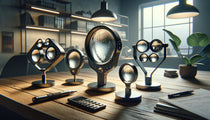

The microscope, a revolutionary tool that transformed our understanding of the microscopic world, is often attributed to Zacharias Janssen. This Dutch spectacle maker made history by developing this ingenious device in the late 16th century. Although other inventors also contributed to the instrument's refinement, Janssen is generally recognized for inventing the compound microscope.
The compound microscope consists of multiple lenses that provide higher magnification compared to a simple magnifying glass. This innovation paved the way for major scientific discoveries and allowed researchers to explore structures invisible to the naked eye. Consequently, Janssen played a crucial role in the development of natural sciences.
In what year was the microscope invented?
The microscope was invented around the year 1590, a period marked by numerous technological and scientific advancements. While the exact date is subject to debate, experts agree that it was around this time that the first versions emerged. This development was made possible by the ingenuity and curiosity of artisans of the era.
The late 16th century and early 17th century were periods rich in scientific innovations. The invention of the microscope coincided with an increased thirst for knowledge and a desire to better understand the mysteries of nature. This synchronization allowed the tool to immediately find its place in laboratories and cabinets of curiosities.
The historical context of the 17th century
The 17th century was a time of upheaval and major discoveries. The scientific revolution was in full swing, and Europe was experiencing profound changes in how science was practiced and perceived. Researchers of this era sought to question established knowledge and explore new ideas.
In this context, the invention of the microscope played a preponderant role. It enabled scientists to make precise observations and formulate theories based on tangible evidence. This period also saw the emergence of emblematic figures like Galileo and Newton, who helped shape modern science.
The first types of microscopes used
The first microscopes were relatively simple and rudimentary. They consisted mainly of a series of lenses that increased the size of observed objects. These early models were limited by lens quality, but nonetheless led to important discoveries.
Over time, these microscopes were improved to offer greater magnification and clearer resolutions. These evolutions facilitated the exploration of cellular structures and opened the way for entirely new research fields, transforming our understanding of the biological world.
The evolution of the microscope over time
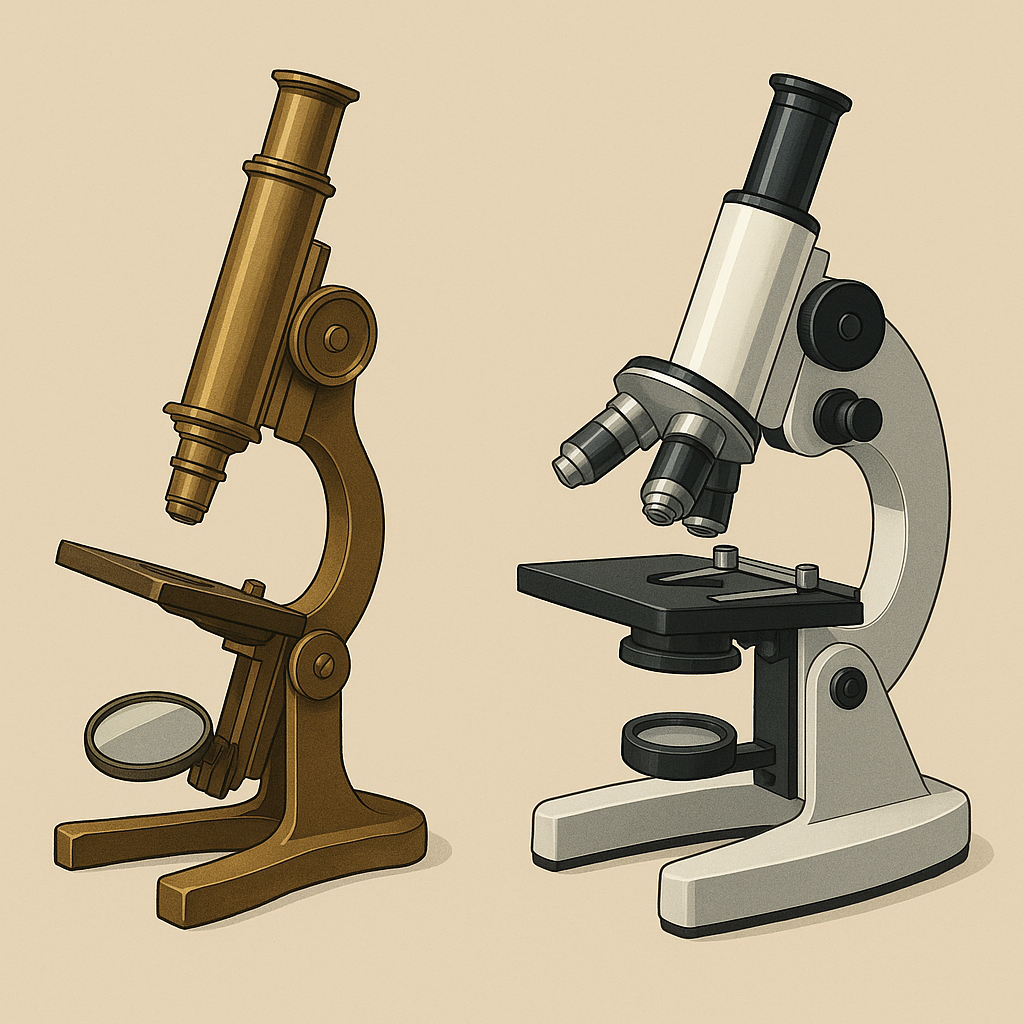
Since its modest beginnings, the microscope has undergone a remarkable evolution. Constant improvements have been made, both in design and materials used. In the 18th and 19th centuries, the introduction of achromatic lenses improved image quality and reduced chromatic aberrations.
In the 20th century, the rise of technology led to the invention of the electron microscope, which uses electron beams to obtain very high-resolution images. This evolution pushed the boundaries of scientific observation, making it possible to see details at the atomic level, and revolutionized fields such as molecular biology and nanotechnology.
Optical, electron, and other microscopes: what are the differences?
Optical, electron, and other microscopes offer distinct functionalities. The optical microscope uses visible light to magnify objects and is ideal for observing living or colored specimens. It is widely used in biology and medical laboratories.
In contrast, the electron microscope uses electrons to produce high-resolution images. It is essential for studying extremely small structures, such as viruses and molecules. Other types of microscopes, such as atomic force microscopes, even allow for the study of surfaces at the nanoscale.
Why the invention of the microscope revolutionized science
The invention of the microscope had a profound impact on the scientific world. By allowing the observation of structures invisible to the naked eye, it opened new avenues of research in fields such as biology, medicine, and chemistry. Thanks to it, cells, bacteria, and other organisms could be discovered and studied in detail.
This scientific revolution also had social repercussions. It led to a better understanding of diseases, crucial medical advancements, and a more rigorous approach to research. The microscope remains an indispensable tool in modern science today.