

📌 Understanding the Different Types of Reading Magnifiers
🔍 Handheld Magnifier: Mobility and Flexibility
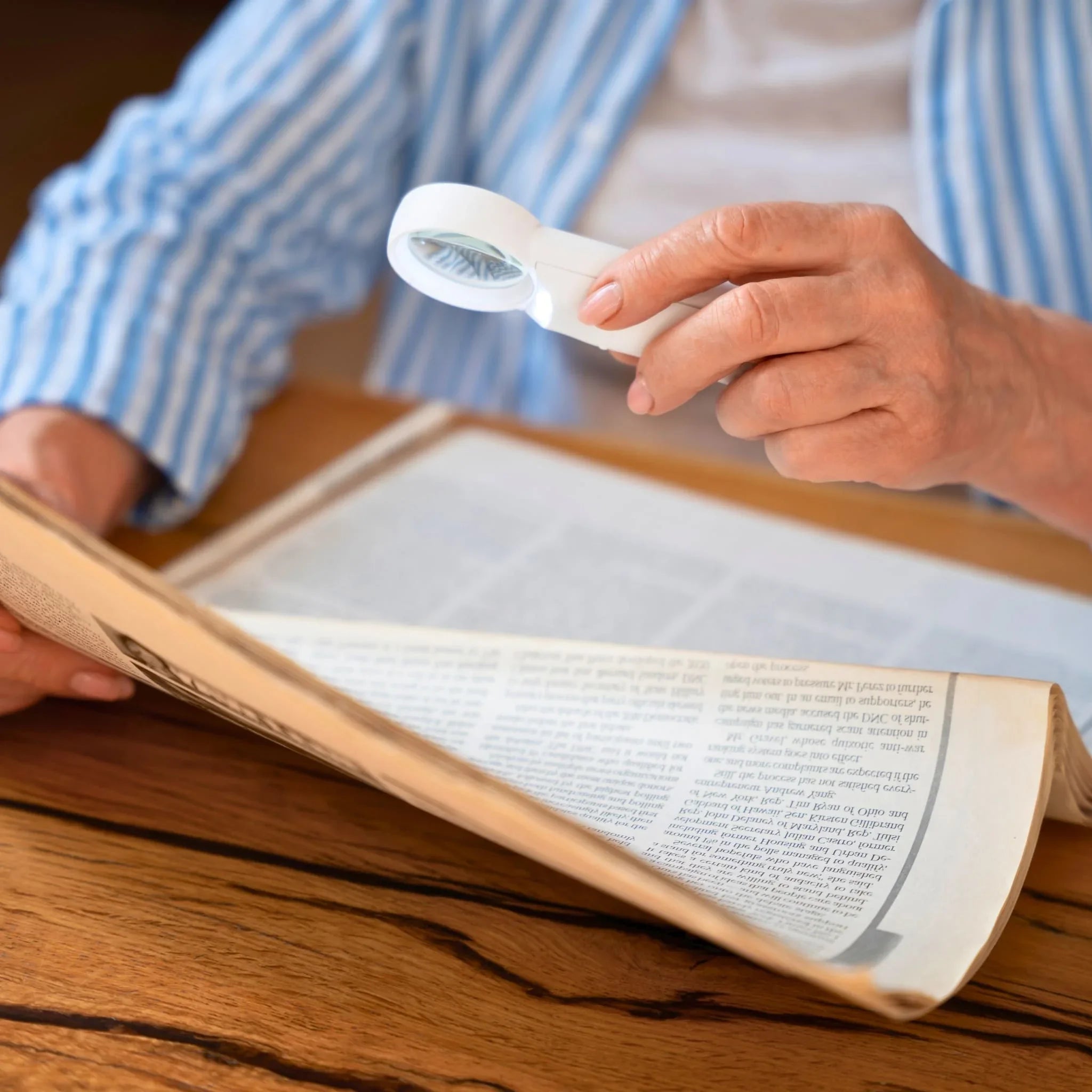
The handheld magnifier is one of the most common models on the market and remains an essential tool for many readers. This type of magnifier stands out for its ease of use and mobility. Generally composed of an ergonomic handle and a large lens, it is ideal for people who need to read texts occasionally or quickly check details on a book, label, or newspaper.
Advantages:
- Easy to transport in a bag or satchel, making it perfect for schoolchildren or professionals on the go.
- Quick focus: simply place the lens over the text for immediate magnification.
- Various models adapted to many uses, from simple enlargement to reading very fine print.
Disadvantages:
- Reading can be tiring in the long run, as the magnifier must be held at a constant distance from the material.
- Less stability: can shake or move, which detracts from comfortable prolonged reading.
- Limited field of vision depending on the size of the lens.
In the family of handheld magnifiers, some innovative models offer integrated LED lighting or aspheric lenses for better visual comfort. This makes them attractive for those who want a simple but effective solution, while prioritizing portability and flexibility.
Whether you're a vintage market enthusiast, a novel reader, or simply curious to observe details in nature, the handheld magnifier will meet your occasional needs for magnified reading.
🔍 Stand Magnifier: Stability and Comfort
The stand magnifier is an ideal solution for those who prioritize comfort and stability. Equipped with a supporting base or an articulated arm, it is placed directly on the surface to be read, freeing the user's hands. This type of magnifier is particularly appreciated for prolonged reading activities or manual work requiring precision and immobility.
Advantages:
- Optimal stability, which reduces muscle fatigue.
- Wider field of vision thanks to generally larger lenses.
- Often equipped with integrated lighting, perfect for reading in medium or low light conditions.
- Ability to adjust the tilt and height to adapt the vision for each user.
Disadvantages:
- Reduced mobility: difficult to transport due to its size and weight.
- Takes up space on the desk or table, which can be inconvenient if space is limited.
Stand magnifiers are frequently found in model-making workshops, sewing studios, or among seniors who have difficulty holding an object for a long time. They provide definite comfort, thereby improving concentration and extending the possible duration of reading or observation without discomfort.
Thanks to their design, which aims to limit visual and physical fatigue, these magnifiers support users in their daily activities, while guaranteeing impeccable vision quality.
🔍 Electronic Magnifier: Technology for Vision
The electronic magnifier represents the most advanced version of the reading magnifier. Using high-definition cameras and LCD screens, it displays magnified text in real time, with the ability to change background color, adjust contrast, or increase magnification level with the simple press of a button.
Advantages:
- High and adjustable magnification, often much greater than classic optical magnifiers.
- Customization options such as color inversion, increased contrast, or highlighting of certain characters.
- Image saving for later review, or even display on an external screen for greater comfort.
- Ideal for people suffering from severe visual pathologies (AMD, cataracts, etc.).
Disadvantages:
- Higher purchase price than a classic magnifier.
- Battery life to monitor (rechargeable battery).
- Equipment sometimes more complex to use for people unfamiliar with technology.
These magnifiers are particularly appreciated in educational or professional settings to overcome certain visual impairments. They offer remarkable accessibility and meet the needs of personalizing the reading experience.
In short, the electronic magnifier is the technological choice par excellence for those seeking versatility, efficiency, and ease of adaptation to different reading contexts.
🔍 Folding Magnifier: Practicality and Portability
The folding magnifier is the preferred companion for those who like to travel light or always want a magnification solution at hand. Foldable, it easily slips into a pocket, wallet, or pencil case.
Advantages:
- Mini format, ideal for frequent travel.
- Lens protection when folded, thus limiting the risk of scratches or damage.
- Intuitive use: quick opening and closing, without complex mechanisms.
Disadvantages:
- Often smaller lens, limiting the field of vision.
- Magnification sometimes less powerful compared to bulkier models.
- Rarely equipped with lighting, which can be inconvenient in low light conditions.
The folding magnifier finds its place among the everyday accessories of readers who move around a lot. It allows deciphering a notice, reading a label, or checking a train ticket, whether traveling, in the city, or at home. Its discreet appearance and lightness make it a choice ally for prioritizing efficiency in all circumstances.
In conclusion, each type of reading magnifier offers distinct advantages, to be selected according to your specific needs and the context of use.
📌 Factors to Consider When Choosing the Right Magnifier
💡 Magnification: Finding the Right Balance
The level of magnification is the fundamental criterion in choosing a reading magnifier. Expressed in multiples ("x2", "x5", etc.), magnification indicates how many times the observed object appears enlarged compared to its real size. It's about finding the right compromise: too weak, it won't provide the desired visual relief; too strong, it risks narrowing the field of vision, requiring the magnifier to be moved regularly.
- For general reading (books, newspapers), a magnification between x2 and x3 is generally recommended.
- For more complex or very small texts (labels, instructions), a magnifier greater than x4 may be preferable.
- For detailed work (stamps, jewelry), there are magnifiers reaching x7 or more.
It is essential to test several levels to identify the one that best suits your visual acuity and reading habits. A vision professional can also advise you on choosing the optimal magnification, especially in cases of a particular pathology.
💡 Lens Size: Influence on Field of Vision
The size of the lens is an important parameter not to be overlooked. The larger it is, the more text it covers at once, facilitating reading fluidity. However, a lens that is too large with high magnification can cause distortions at the edges or make the magnifier heavier.
- Small diameter lens: ideal for targeting specific words or details; ultra-compact format, perfect for travel.
- Large diameter lens: suitable for reading entire paragraphs; often preferred by seniors or for prolonged reading.
The choice must take into account the nature of the text to be read and the environment in which you use the magnifier. It is therefore wise to try different models before buying.
A tip mentioned by many users: the rectangular magnifier, which replicates the format of a line of text, guarantees a more fluid reading experience than traditional round models, especially for novels and newspapers.
💡 Materials and Lens Quality: Clarity and Durability
The quality of the lens significantly influences image sharpness and the durability of the magnifier. Manufacturers mainly offer two types of materials:
- Optical glass: offers unmatched clarity, exemplary scratch resistance, but is heavier.
- Acrylic plastic: lighter and less expensive, it equips the majority of recent magnifiers, even if the optical quality is slightly lower.
For durable and intensive use, prefer glass or high-quality acrylic lenses treated against scratches. Some models offer aspheric lenses that reduce distortion, thus improving visual comfort.
Finally, always check for the "scratch-resistant" mention when purchasing to ensure optimal clarity over time.
💡 Integrated Lighting: Reading Without Visual Strain
The addition of integrated LED lighting represents a significant advance for reading without eye strain. Magnifiers equipped with this technology guarantee uniform and powerful illumination of the text, facilitating clear reading even in dark or poorly lit environments.
- Ideal for seniors or those with visual impairments.
- Eliminates parasitic reflections often encountered with external light sources.
- All models (handheld, stand, electronic) now have versions with integrated lighting.
Battery life should be considered to avoid interrupting reading. Some models offer dimmer switches, allowing you to adjust the light to your personal comfort.
For a stress-free reading experience, always choose a magnifier with effective lighting adapted to the size of the lens.
💡 Ergonomics: For Prolonged Use Without Effort
Ergonomics encompasses all features designed to make using the reading magnifier comfortable and intuitive. Non-slip grip, curved shape, light weight, and good distribution of the center of gravity are all criteria to consider before purchase.
- A too-heavy magnifier quickly fatigues the hand and wrist.
- The presence of an articulated arm for stand models offers greater flexibility, allowing for the adoption of the ideal posture.
- Buttons should be easily accessible and operable with one hand, especially for electronic models.
When purchasing, it is common to test different models in store to judge their grip and comfort. Good ergonomics, combined with non-slip materials and a refined finish, allows for more serene and pleasant reading, regardless of the duration or intensity of use.
Find tested and approved models on the reading magnifier page of our site to choose the ergonomics that will best suit you.
📌 Specifics for Special Needs
🔧 Magnifiers for Seniors: Simplicity and Efficiency
With age, eyesight often gradually declines, making reading small print laborious. Magnifiers for seniors prioritize ease of use, comfort, and robustness.
- Models with large lenses for a maximized field of vision.
- Moderate magnification (x2 to x4) to maintain fluid but relaxed reading.
- Ergonomic buttons and easy-to-clean lenses.
- Integrated LED lighting to combat poor ambient lighting.
Adding a bright color to the handle or stand makes the magnifier more noticeable for people with memory or motor disorders. Stand and rectangular models are often favored to facilitate hands-free use and prevent trembling.
A common anecdote: many seniors describe rediscovering the pleasure of daily reading or crossword puzzles, simply thanks to a magnifier adapted to their needs.
🔧 Magnifiers for Visually Impaired People: Optimizing Accessibility
When visual impairments are significant, it is advisable to opt for specialized magnifiers that offer advanced features or are adapted to very specific needs.
- Electronic magnifiers with LCD screens and high magnification (up to x20).
- Ergonomic models with adaptable lighting options, adjustable contrast, and color inversion modes.
- Possibility to connect the magnifier to a TV screen for large-format reading.
Portable models exist to allow visually impaired people to maintain their autonomy in daily tasks (shopping, reading administrative documents, etc.).
Investing in these tools may sometimes seem significant, but the benefit in terms of quality of life and regaining autonomy often proves to be much higher than the initial cost.
🔧 Magnifier for Dyslexics: Cognitive Improvement
Dyslexic individuals encounter particular difficulties in deciphering words and letters. Certain magnifier devices can help them, especially colored reading guides or electronic reading magnifiers equipped with customizable color filters.
- Reading guides with yellow, blue, or green backgrounds, facilitating line tracking and reducing visual confusion.
- Electronic models offering text conversion thanks to adapted fonts (OpenDyslexic, Dyslexie, etc.).
- Increased character size and brightness adjustment to reduce cognitive fatigue.
While a magnifier does not address the underlying cause of dyslexia, it greatly contributes to improving reading comfort and self-confidence when faced with written text.
To guide you in this choice, discover our detailed guide on the subject here.
📌 Maintenance and Care Guide
🛠️ Lens Cleaning: Practical Tips
Regular maintenance ensures the clarity of your lens and extends the lifespan of your reading magnifier. Here are some simple steps to follow:
- Use a soft microfiber cloth, specifically designed for optics, to avoid scratching.
- In case of stubborn stains, lightly dampen the cloth with demineralized water or a specific solution for optical lenses. Avoid harsh chemicals.
- Never spray directly onto the lens to prevent any risk of infiltration into the frame.
- Remember to also clean the stand and handle, especially to prevent the accumulation of bacteria or residues.
Adopting these simple gestures will help preserve the sharpness and effectiveness of your magnifier long-term.
🛠️ Storing Your Magnifier Correctly: Guaranteed Longevity
Good storage habits significantly reduce the risk of damage to the lens or structure. Here are some tips:
- Always store the magnifier in its protective case after each use, even for short trips.
- Avoid prolonged exposure to heat, direct sunlight, or humidity.
- Keep the magnifier out of reach of young children, except for models specifically adapted.
- If your magnifier runs on batteries, remember to remove them during prolonged periods of non-use to prevent oxidation.
Attention to maintenance and storage increases the lifespan of your tool, making it reliable for years to come.
📌 Frequently Asked Questions About Reading Magnifiers
-
1. Which magnifier is best suited for reading small print?
To read small print, it is advisable to use a high-magnification magnifier (x4 or more) with a quality lens to avoid distortion.
-
2. How do I choose between a handheld magnifier and a stand magnifier?
The choice depends on your use: the handheld magnifier is more mobile, while the stand magnifier offers stability and comfort for prolonged reading.
-
3. Are electronic magnifiers suitable for seniors?
Yes, some electronic magnifiers are specially designed for seniors, with simple interfaces and large screens.
-
4. Why are some lenses rectangular and others round?
The rectangular shape is better suited for reading lines of text, while the round shape is more for observing precise details.
-
5. Should I favor a magnifying glass with integrated lighting?
Integrated lighting optimizes reading quality in all light conditions and reduces eye strain.
-
6. Can children use a reading magnifying glass?
Yes, provided you choose a lightweight and durable model, suitable for their small hands. There are playful educational models for young readers.
📌 Conclusion and final recommendations
🔗 Tips for making the right choice
To find the ideal reading magnifying glass, first identify your main needs: occasional or intensive reading, mobility, need for additional lighting, associated visual pathology, etc. Choose a comfortable model, with ergonomics designed for your use, and select the appropriate lens size.
Also, remember to check the quality of the lens material and the presence of LED lighting if you read in varying light conditions. Do not hesitate to ask an optician for advice or consult specialized guides.
A well-chosen magnifying glass not only improves reading quality but also reduces the risk of fatigue or visual discomfort over time.
🔗 Comparison of the best reading magnifiers 2023
| Model | Type | Magnification | Lens size | Lighting | Recommended use |
|---|---|---|---|---|---|
| VisionMax LED | Handheld magnifier | x3 | 75 mm | Yes (LED) | Occasional, mobile reading |
| Stabilight Pro | Stand magnifier | x2.5 | 100 mm | Yes | Extended reading, workshop |
| OptiScreen+ Digital | Electronic magnifier | x4 to x20 | 5-inch screen | Yes | Low vision, strong correction |
| PocketFold | Folding magnifier | x3 | 35 mm | No | Travel, emergency |
To go further, compare all models, discover their advantages, and consult customer reviews to select the magnifier best suited to your needs. You can find a complete selection on our dedicated reading magnifiers collection page as well as our updated guide.