

📘 Introduction to Reading Magnifier Magnification
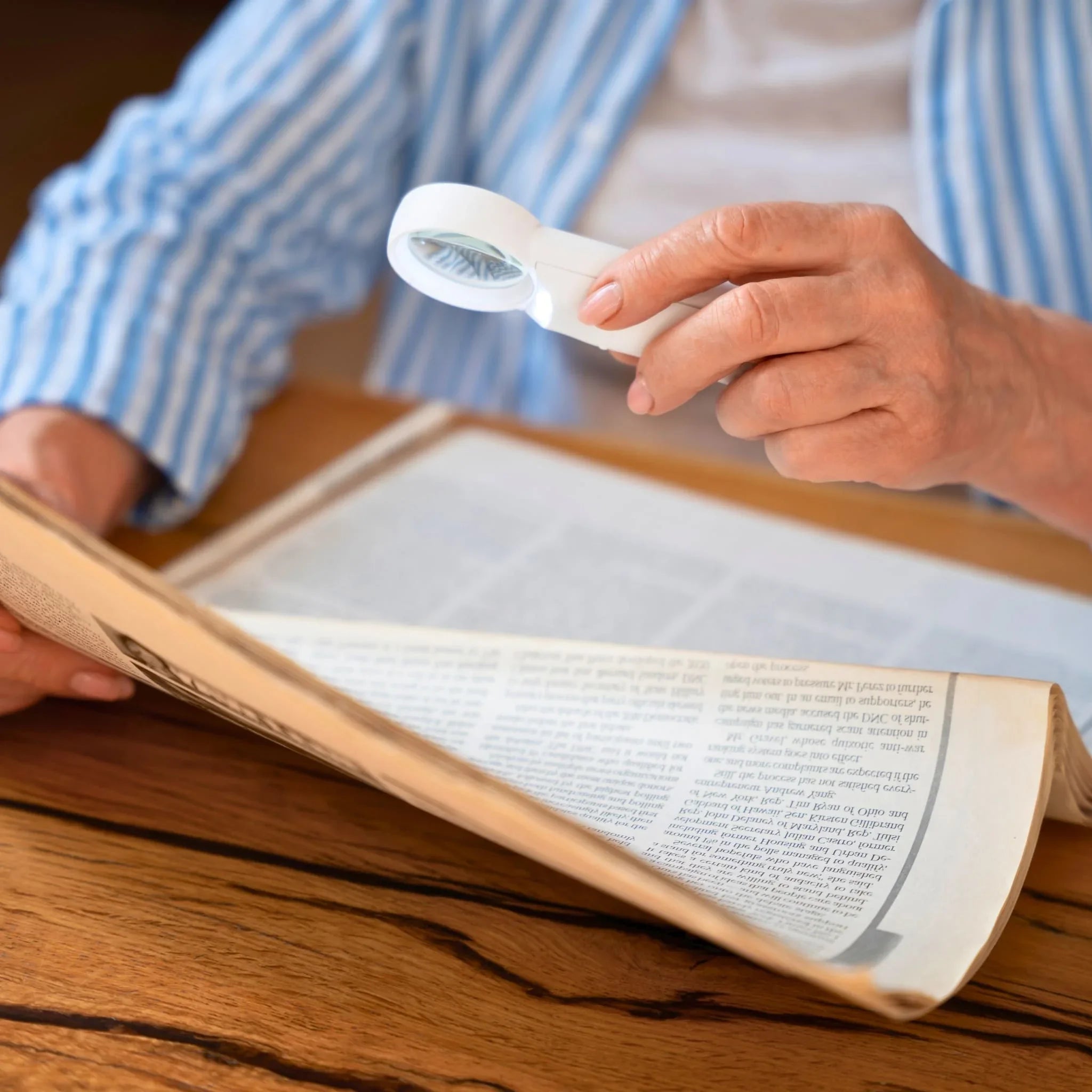
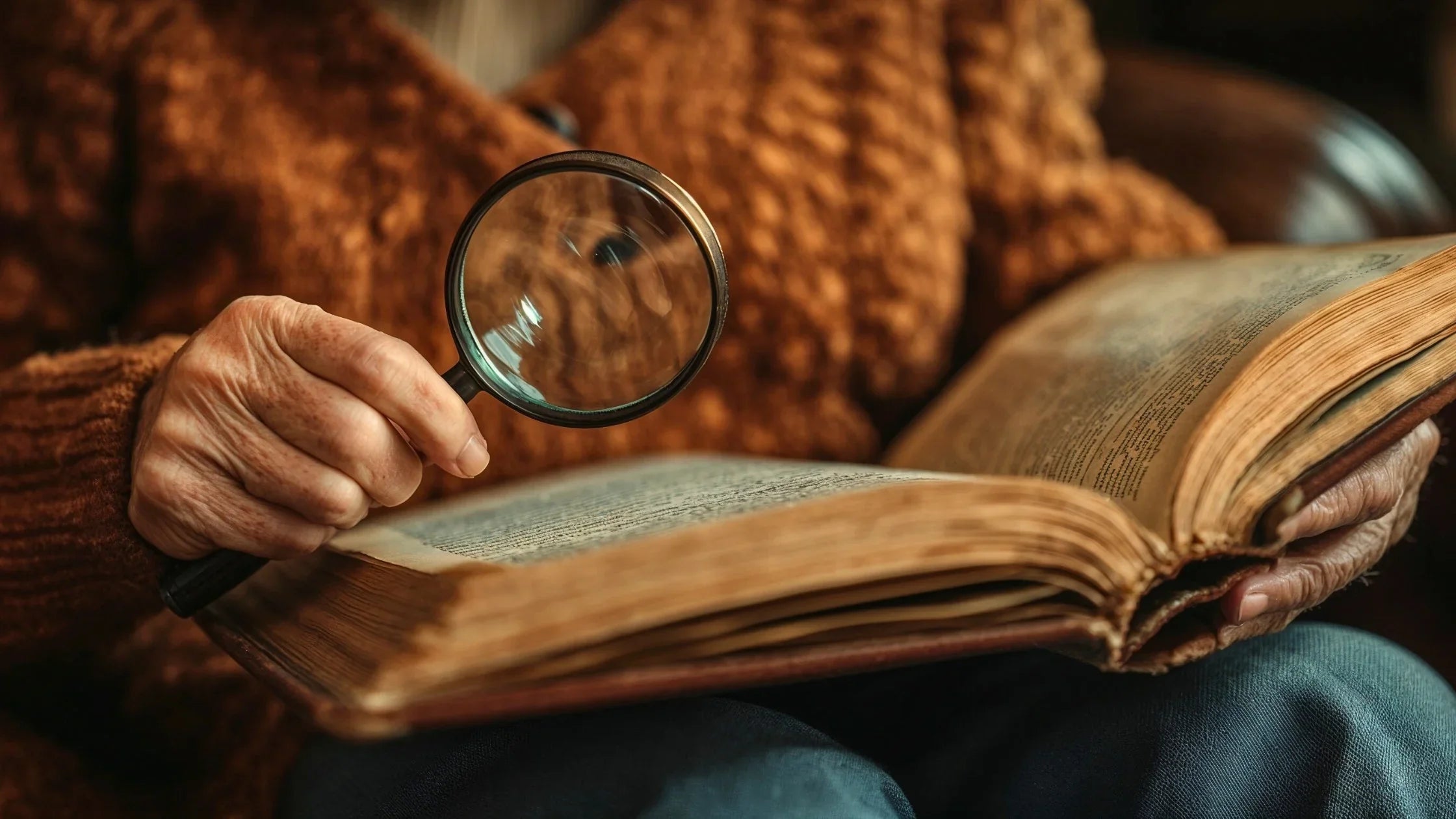
Whether it's reading the newspaper, deciphering medicine instructions, or enjoying a good novel, reading can become a challenge with age or certain visual impairments. Fortunately, reading magnifiers are here to help you rediscover that pleasure. But one question often arises: What is the ideal magnification for a reading magnifier?
This comprehensive guide will help you understand the different levels of magnification, choose the right magnifier for your needs, and avoid common mistakes. Whether you are a senior, a visually impaired person, or simply looking for visual comfort, this article is for you.
🧠 Understanding the Principle of Optical Magnification
What is magnification?
Magnification is the factor by which an image is enlarged compared to its actual size. For example, 2x magnification means that the observed object appears twice as large through the magnifier.
How is it measured? (Diopters vs. Magnification)
Magnification can be expressed in diopters (D) or as a magnification factor (x):
| Diopters | Magnification | Focal Length (cm) |
|---|---|---|
| 4 D | 1.5x | 25 cm |
| 8 D | 2x | 12.5 cm |
| 16 D | 4x | 6.25 cm |
👉 The higher the diopter, the greater the magnification, but the shorter the focal length.
🔎 Why Use a Reading Magnifier?
Age-related reading difficulties
With age, near vision decreases, a natural phenomenon called presbyopia. From the age of 40, many people begin to experience difficulty reading small print.
Specific vision problems: presbyopia, AMD, etc.
Visual disorders such as age-related macular degeneration (AMD), cataracts, or glaucoma may require the use of a high-magnification magnifier.
💡 What is the ideal magnification for a reading magnifier?
Recommended magnification for standard reading
For comfortable reading (newspapers, books), a magnifier between 2x and 3x is generally sufficient. This level offers a good compromise between field of view and clarity.
Magnification for reading very small print
To decipher labels, instructions, or tiny text, a magnification between 4x and 6x is recommended. However, be aware of the reduction in the field of view.
Magnification and focal length: a balance to be found
High magnification reduces the reading distance and the field of view. It is therefore necessary to test different models to find the balance adapted to your needs.
🧮 Comparative table of the most commonly used magnification levels
Here is a table comparing the magnification levels commonly used for reading magnifiers:
| Magnification (x) | Diopter (D) | Focal length (cm) | Recommended Use |
|---|---|---|---|
| 1.5x | 4 D | 25 cm | Standard reading |
| 2x | 8 D | 12.5 cm | Reading books, newspapers |
| 3x | 12 D | 8.3 cm | Small print |
| 4x | 16 D | 6.25 cm | Labels, instructions |
| 5x | 20 D | 5 cm | Fine details |
| 6x and + | 24 D and more | <5 cm | Very precise reading, low vision |
This table allows you to quickly identify the magnifier that will suit your specific need.
🕶️ Types of Magnifiers and Their Magnification
Handheld magnifiers
These are the most common. Practical and portable, they offer magnification from 2x to 5x. Ideal for occasional use.
Reading magnifiers with LED lighting
They add integrated lighting that improves readability. Available in 2x to 6x, they are perfect for low-light environments.
Electronic magnifiers
Equipped with a screen, they allow zoom from 2x to over 20x, with adjustable contrast. They are suitable for people with severe visual impairment.
Tabletop magnifiers
Designed to be stable, they allow hands-free reading. Generally 2x to 3.5x, perfect for prolonged reading.
✅ How to Choose the Right Magnification for Your Needs
Reading books or newspapers
A magnification of 2x to 3x is sufficient for most printed texts, while maintaining a good field of view.
Reading labels or instructions
Opt for a magnifier between 4x and 5x, especially if the characters are small or condensed.
Precision work (sewing, DIY)
Choose 4x to 6x magnifiers, or even head-mounted or articulated arm magnifiers for hands-free work.
Discover our complete selection of reading magnifiers suitable for all uses.
🛠️ Practical Tips for Effectively Using a Magnifier
-
Maintain the correct distance between the magnifier and the text.
-
Position yourself facing a natural light source or use a LED magnifier.
-
Move the magnifier, not the text, to maintain focus.
-
Regularly clean the lens to avoid distortion.
-
Test different models before buying.
⚠️ Common Mistakes to Avoid When Choosing Magnification
-
Thinking that higher magnification is always better: a 6x might have too small a field of view for comfortable reading.
-
Neglecting optical quality: a cheap magnifier can distort the image.
-
Ignoring focal length: high magnification implies very close reading.
-
Choosing a magnifier without trying it: every eye is different!
👴 Magnifiers for Seniors: What Power to Choose?
For seniors, a 2.5x to 3.5x magnifier is often ideal. It makes reading easier without straining the eyes too much. For more advanced conditions, such as AMD, an electronic magnifier can be considered.
👓 Ideal Magnification According to Visual Pathologies
AMD (Age-related Macular Degeneration)
Recommended: 5x and above, with integrated lighting or an electronic magnifier for better contrast.
Glaucoma
As peripheral vision is affected, a magnifier with a wide field of 2x to 3x is preferable.
Cataract
Opt for a 3x to 4x illuminated magnifier, pending an operation or after it if vision remains blurred.
📱 Applications and Alternatives to Traditional Magnifiers
-
Smartphone applications such as "Magnifier + Flashlight" or "Seeing AI"
-
Digital e-readers with integrated zoom
-
Magnifying glasses for reading
-
Video magnifiers (CCTV) for maximum comfort
🧪 Innovations and New Technologies in Magnifiers
-
Digital magnifiers with OCR (text-to-speech)
-
Bluetooth-connected magnifiers to transmit text to the screen
-
Blue light filters for enhanced eye comfort
📚 Resources and Optician Recommendations
It is highly recommended to consult an optician or ophthalmologist for a personalized vision assessment. Networks like LISA (Loupes et Instruments Spécifiques pour Aveugles - Magnifiers and Specific Instruments for the Blind) or UNADEV also offer adapted solutions.
❓ FAQ: Answers to frequently asked questions
1. What magnification is suitable for an elderly person?
Between 2.5x and 3.5x for basic reading. For more significant visual impairments, opt for 4x and above.
2. Is 10x magnification useful for reading?
No, it is often too powerful for reading text. It is more suitable for occasional uses such as jewelry making.
3. What is the best magnifying glass for reading the Bible or old documents?
A 3x to 4x magnifier with LED lighting is perfect for characters that are often small and fine.
4. Can a magnifying glass be used to read on a screen?
Yes, but it is preferable to use an electronic magnifier or accessibility options (digital zoom).
5. Are there hands-free magnifiers for knitting or reading?
Yes, desk magnifiers or those with articulated arms allow you to keep your hands free.
6. Where can I buy a medical-grade magnifying glass?
In optical stores, specialized pharmacies, or online via sites like optique-vision.fr or Amazon (low vision category).
📝 Conclusion: choose wisely to read well
Choosing the right magnification for a reading magnifier is above all about finding the balance between comfort, legibility, and specific use. Between a simple magnifier for reading your favorite novel and an electronic device to counteract AMD, every eye deserves a tailored solution.
Take the time to try it out, ask a professional for advice, and you'll see: a good magnifier can change your daily life!