


📌 Introduction to the History of Magnifying Glasses for Children
The history of magnifying glasses for children is a fascinating adventure that spans centuries, embracing advances in science and education. Both a playful and educational object, the children's magnifying glass stimulates the natural curiosity of young people and develops their observation skills. From simple lenses once ground to ingenious and safe objects today, the magnifying glass dedicated to youth has reinvented itself in step with technological, educational, and cultural advancements. This article offers a journey through the evolution of the children's magnifying glass: from its ancient origins to its latest digital innovations, including its pedagogical contributions and its impact on cognitive development. Explore with us the essential steps, notable anecdotes, and the already unfolding future of this object which has always invited us to look at the world more closely.
🕰️ Origins and Invention of Magnifying Glasses
🔍 First Appearance of the Magnifying Glass
The history of the magnifying glass dates back to antiquity. As early as Roman times, philosophers and scientists laid the first foundations of the principle of magnification by convex lens. The first accounts report the use of crystal or glass spheres filled with water which, when placed on small objects, allowed their details to be magnified. Seneca the Younger, a Roman philosopher, observed in the 1st century that certain objects placed behind a rounded glass appeared enlarged. Throughout the Middle Ages, the technique was refined: monastic scribes used "reading stones" to decipher manuscripts.
The widespread use of magnifying glasses among children, as a distinct tool, would however take time. Its integration into the world of childhood truly began only in the 19th century, encouraged by educational renewal and the rise of naturalism. The miniaturization of optical lenses then allowed young naturalists to be equipped with robust models. The first toy magnifiers appeared in educational catalogs, making their way into classrooms and homes.
- Antiquity: crystal or glass lenses
- Middle Ages: reading stones
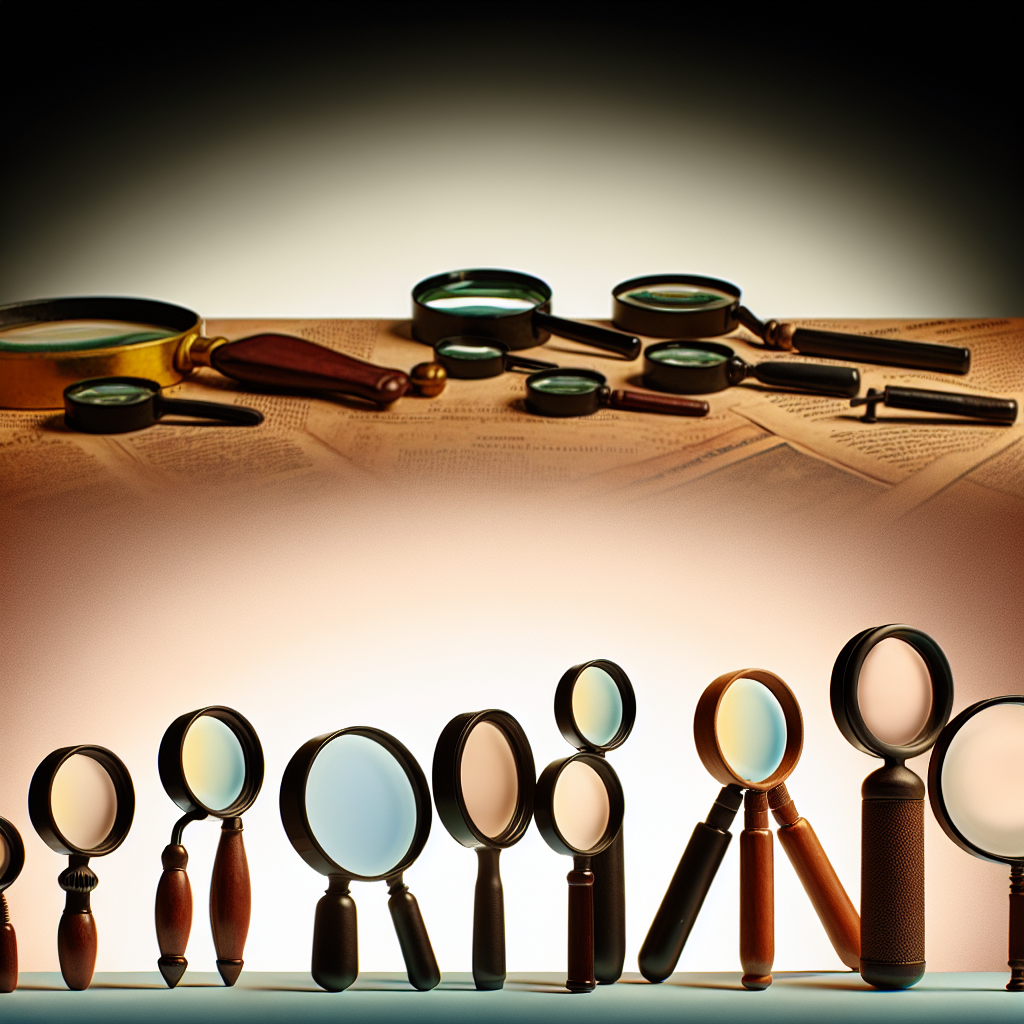
- Industrial Revolution: democratization and miniaturization
This gradual transition of the magnifying glass from a scientific instrument to a playful and educational accessory for youth marked a turning point in its history.
💡 Invention and Development
While the magnifying lens itself has been known since antiquity, its adaptation as a children's magnifying glass relies on several key innovations. By the end of the 19th century, modern pedagogy made "seeing for oneself" a pillar of learning. Teachers then introduced magnifying glasses with metal or bone frames into school supplies, allowing students to observe leaves, insects, and minerals.
With the advancement of plastic molding in the 20th century, the manufacturing of magnifying glasses evolved. Magnifying glasses became lighter, less expensive, and above all, safer. Unbreakable plastics replaced glass, limiting risks for young hands. Children's magnifying glasses then offered bright colors, ergonomic handles, and adapted magnifications (generally between 2x and 5x).
| Period | Magnifier Innovation | Usage for Children |
|---|---|---|
| Antiquity | Crystal/Glass Lens | Not specifically |
| Middle Ages | Reading Stone | Adult use, monks |
| 19th Century | Brass/Stainless Steel Magnifier | Beginning of children's pedagogy |
| 20th Century | Colored Plastic Magnifier | Toys, education |
Each technical development brought the magnifying glass closer to the children's world. The quintessential scientific tool thus adapted to make learning concrete, visual, and engaging, preparing the ground for the explosion of creativity in the following decades.
👩🔬 Evolution of Features of Children's Magnifying Glasses
The educational boom of the 20th century imposed new challenges on magnifying glass manufacturers. Now, in addition to optical quality, safety, ergonomics, and playfulness became indispensable criteria in the design of a children's magnifying glass. Manufacturers competed in ingenuity to democratize scientific observation from an early age.
🎨 From Simple Lenses to Stimulating Designs
Historically, the first children's magnifying glass was a miniaturized version of an adult model. But quickly, the demand for adapted, colorful, and fun products emerged among parents and teachers. Manufacturers innovated to encourage children to pick them up for pleasure as much as for educational necessity.
- Colorful and attractive frames: to capture attention and distinguish adult from children's magnifying glasses
- Soft and pleasant-to-the-touch materials: non-slip plastic, ergonomic handles, playful shapes (animals, nature patterns, etc.)
- Adapted magnification: neither too high nor too low magnification to observe the texture of everyday objects
- Integrated accessories: compasses, LED lights, storage compartments
Design plays a key role: an attractive magnifying glass encourages spontaneous handling and promotes exploration of the surrounding world. These changes make the magnifying glass a playmate as well as a scientific observation tool.
Anecdote: Some children's magnifying glass models are now designed in partnership with child psychiatrists and educators to enhance sensory appeal and handling for very young children.
📚 Pedagogical and Educational Dimensions
The core of the children's magnifying glass's evolution lies in its massive integration into educational programs. Since the early 20th century, educators have emphasized hands-on manipulation and direct observation, values championed by Montessori and Freinet movements.
- Strengthening the spirit of inquiry: manipulating the magnifying glass develops the sense of research and experimentation.
- Transmission of scientific vocabulary: observation of leaf veins, insect anatomy, crystal structure...
- Diversification of pedagogical activities: nature exploration, observation drawings, simple optics experiments.
- Accessibility to young audiences: introduction from kindergarten, discovery classes, playful workshops.
Concrete example: In many primary school textbooks, "magnifying glass challenges" are offered weekly to encourage observation and then detailed description of common objects (textile fibers, coins, garden fauna).
Thus, the children's magnifying glass is no longer just a toy; it becomes a tool for developing cognitive and linguistic skills, preparing young people for the scientific approach and wonder at the complexity of living things.
🌍 Cultural Impact of Magnifying Glasses for Children
The history of the children's magnifying glass is not limited to technological advancements or the emergence of new materials. It is also part of culture and the collective imagination, associated with discovery, exploration, and scientific reflection, as well as play.
🏫 Integration into Learning and Discovery
From the beginnings of compulsory schooling in France, the use of a magnifying glass appeared in school kits. The great educators of the 20th century (Maria Montessori, Célestin Freinet) advocated concrete observation of the world, manipulation, and curiosity: the magnifying glass naturally became a bridge to understanding living things and matter.
The role of the children's magnifying glass in educational culture extends far beyond school. It accompanies children during "nature outings," insect hunts, discoveries in museums or botanical gardens. It embodies this desire to learn by tinkering, testing, and looking more closely. In children's literature, the magnifying glass is often associated with the figure of the detective, the naturalist, or the "little scientist," from the Famous Five to Inspector Gadget.
- Tales and novels: tool of the curious and astute hero
- Museums and scientific workshops: initiation through experimentation
- Family: tradition passed down through generations (garden explorations, insect collections, etc.)
The integration of the children's magnifying glass into collective culture is therefore multifaceted: it accompanies educational rituals and stimulates imagination, encouraging every child to become an explorer of their own environment.
🧩 Connection with Cognitive Development
Children's use of a magnifying glass occurs at a strategic age for cognitive development. Observing, manipulating, and experimenting are fundamental acts for intellectual growth.
The magnifying glass promotes the acquisition of:
- Observation skills: detail discrimination, visual analysis
- Critical thinking: comparison, hypotheses (why does this leaf have dots? is this stone rough up close?)
- Scientific rigor: note-taking, observation sketches, basic measurements
- Curiosity and wonder: pleasure of discovery and understanding
Studies in child psychology show that regular use of a children's magnifying glass encourages memorization, initiative, and perseverance in learning. There are also benefits for hand-eye coordination and patience. Manipulating the magnifying glass can even become a therapeutic activity, used to alleviate certain attention disorders, for example.
In short, the magnifying glass is not just a tool or a gadget: it is a vector for awakening, self-confidence, and openness to the world.
🛠️ Materials and Technologies Used in Modern Magnifying Glasses
With the evolution of expectations (safety, comfort, accessibility) and the advent of new technologies, the manufacturing of magnifying glasses for children has radically transformed over the decades. Learning about materials and optical innovations means offering the best possible use to the new generation of young explorers.
🧪 Innovations in Optical Technology
Traditional magnifiers almost exclusively used glass lenses. The transition to plastic allowed for more widespread use but did not compromise optical quality: on the contrary, modern optical polymers, such as acrylic or treated polycarbonate, ensure clear vision without distortion or aberration.
The last few decades have seen the arrival of:
- Aspheric lenses: improve sharpness at the periphery
- Anti-scratch and anti-UV treatments: extend the life of the magnifier and protect eyesight
- Integrated LEDs: allow observation in low light conditions
- Double lens systems: to obtain multiple levels of magnification on the same object
Anecdote: High-end models sometimes integrate anti-glare devices so that the child can easily observe both indoors and outdoors, regardless of lighting conditions.
📏 Safe and Durable Materials
Safety and durability requirements have led designers to favor innovative, healthy, and environmentally friendly materials. Gone are the old models made of fragile glass or sharp metal frames! Welcome to certified unbreakable plastics, non-toxic paints, and ergonomic shapes adapted to children's hands.
| Material Type | Advantages | Disadvantages |
|---|---|---|
| Optical Glass | High definition quality | Fragility, risk of breakage |
| Acrylic Plastic | Light, unbreakable, good optical quality | Risk of scratches |
| Polycarbonate | Ultra-resistant, flexible, recyclable | Higher cost |
Today, most children's magnifying glasses comply with European toy standards EN71, guaranteeing the absence of phthalates, bisphenols, and other controversial substances. Many models are increasingly using bioplastic, and some brands are focusing on recycled packaging to reduce their environmental impact.
These material choices illustrate both a commitment to child safety and a concern for sustainable development.
🏆 Comparison of Old and Modern Magnifying Glasses for Children
The evolution of children's magnifying glasses perfectly illustrates the ability to adapt to the changing needs of families, teachers, and young users. This comparison allows us to measure the progress made from a simple magnifying instrument to an innovative and versatile object.
| Criterion | Old Magnifying Glasses | Modern Magnifying Glasses |
|---|---|---|
| Lens Material | Glass | Unbreakable optical plastic |
| Frame | Steel, bone, brass | Colored, ergonomic plastic |
| Accessories | Absent | LED, compass, compartments, etc. |
| Safety | Low for children: risk of cuts or breakage | Toy standards, padded edges, no harmful substances |
| Design | Sobriety, neutrality | Playful, customizable shapes |
| Price | High | Accessible to all |
Old magnifying glasses were therefore more oriented towards scientific and heritage use, while today the priority is accessibility, safety, and sensory awakening.
📈 Contemporary Selection Criteria
With the current diversity of products, choosing an appropriate children's magnifying glass involves considering several essential criteria, both for scientific awakening and daily safety.
- Safety: prioritize non-toxic materials, rounded edges, and the absence of small detachable parts.
- Ergonomics: non-slip handle, lightweight, shape adapted for small hands.
- Optical quality: clarity, transparency, and reasonable magnification (generally 3x or 4x for versatile use).
- Durability: resistance to shocks and scratches, easy maintenance.
- Stimulating design: bright colors, patterns, shapes of characters or animals.
Parents and educators also look for playful options: LED light, double magnifier, observation tray, or even multi-activity packs for scientific workshops.
To learn more, discover a varied selection meeting all modern requirements on our children's magnifying glass collection page.
Finally, if you want to avoid the main pitfalls when making your purchase, consult our detailed article: the mistakes to avoid when buying a children's magnifying glass.
🔮 The Future of Magnifying Glasses for Children
In a rapidly evolving world, the children's magnifying glass continues to evolve to adapt to the digital revolution and interactive pedagogy. The future promises to be exciting, where new technologies and educational approaches promise to amplify the potential of this simple observation instrument.
🎥 The Integration of Augmented Reality
Augmented reality (AR), which overlays digital information onto physical reality, is gradually being introduced into educational tools, including children's magnifying glasses.
- Educational applications coupled with the magnifying glass: automatic identification of insects, plants, or objects from a simple observation.
- Interactive games: learning while having fun, with exploration missions to carry out in nature or at home.
- Immersive experiences: 3D animations, scientific explanations overlaid on the real image seen through the magnifying glass.
The fusion of tangible and digital thus multiplies the capacity for wonder and learning through practice.
Today, start-ups are already developing children's magnifying glasses capable of connecting to mobile applications, paving the way for enriched and personalized experiential education.
🌐 Connected and Digital Magnifying Glasses
The near future of children's magnifiers is moving towards models fully integrated into the digital world: connected magnifiers.
- USB Magnifier: connected to a tablet or computer, it allows viewing, recording, and sharing discoveries on screen.
- Magnifiers with memory and camera: instant snapshots for archiving or sharing observations.
- AI-assisted analysis: automatic identification and interactive explanations.
These innovations promise to transform the transmission of scientific knowledge, offering young explorers the opportunity to observe, experiment, and understand the world in an even more immersive and fun way.
Beyond technical progress, the aim is to place curiosity, experimentation, and scientific evidence back at the heart of learning, while adapting to the digital practices already familiar to children.
❓ FAQ on children's magnifiers
🧐 From what age can a child use a magnifier?
In general, magnifiers are recommended from 3 years old, under adult supervision to ensure safe use. From kindergarten, children can handle a magnifier adapted to their small hands to explore their environment without risk.
🔢 What magnification should I choose for a child's magnifier?
Most children's magnifiers offer a magnification between 2x and 5x. For beginners, a magnification around 3x is ideal: it allows distinguishing details without causing visual distortion or discomfort during observation.
🧼 How to care for a child's magnifier?
Always clean the magnifier with a soft microfiber cloth to avoid scratches. Avoid harsh chemical products. If the magnifier is plastic, lukewarm water and a little mild soap are sufficient, taking care to dry it thoroughly afterward.
🔒 Are children's magnifiers safe?
Yes, provided you choose a product that complies with European standards. Opt for unbreakable plastic models, without small detachable parts or toxic substances, and avoid glass magnifiers for younger children.
🎁 Is a child's magnifier a good educational gift?
Absolutely! It stimulates curiosity, develops fine motor skills, encourages scientific reasoning, and supports families and teachers during nature explorations. It's a tool that combines fun and learning.
👨🏫 How to integrate a child's magnifier into home learning?
Suggest observation games (treasure hunts, clue detection), invite the child to look closely at everyday objects, or explore the garden together. Use the magnifier to draw from nature, compare different materials, and conduct simple scientific experiments.
🎉 Conclusion: A continuous journey
From antiquity to the digital age, the children's magnifier has continuously evolved to meet the thirst for learning and wonder of the youngest. A tool for discovery, transmission, and imagination, it remains today an undisputed companion for young explorers. The future already promises new experiences combining technology, safety, and pedagogy – so that each generation can see the world… a little closer.
🧭 Resources and references for further reading
- "Scientific Awakening through Play", Sciences & Vie Junior Magazine, no. 245
- Alternative Pedagogies and Observation, Montessori France dossier
- Children's Magnifier Buying Guide, French Federation of Parents' Associations
- Museum of Science and Industry: Children's workshops and optical discovery
- https://www.sciencesetavenir.fr/high-tech/loupe-augmented-reality (future technologies)
- Toy standards EN71: https://www.ecologie.gouv.fr/jeux-jouets