


📌 Introduction to Reading Magnifiers
🔍 What is a Reading Magnifier?
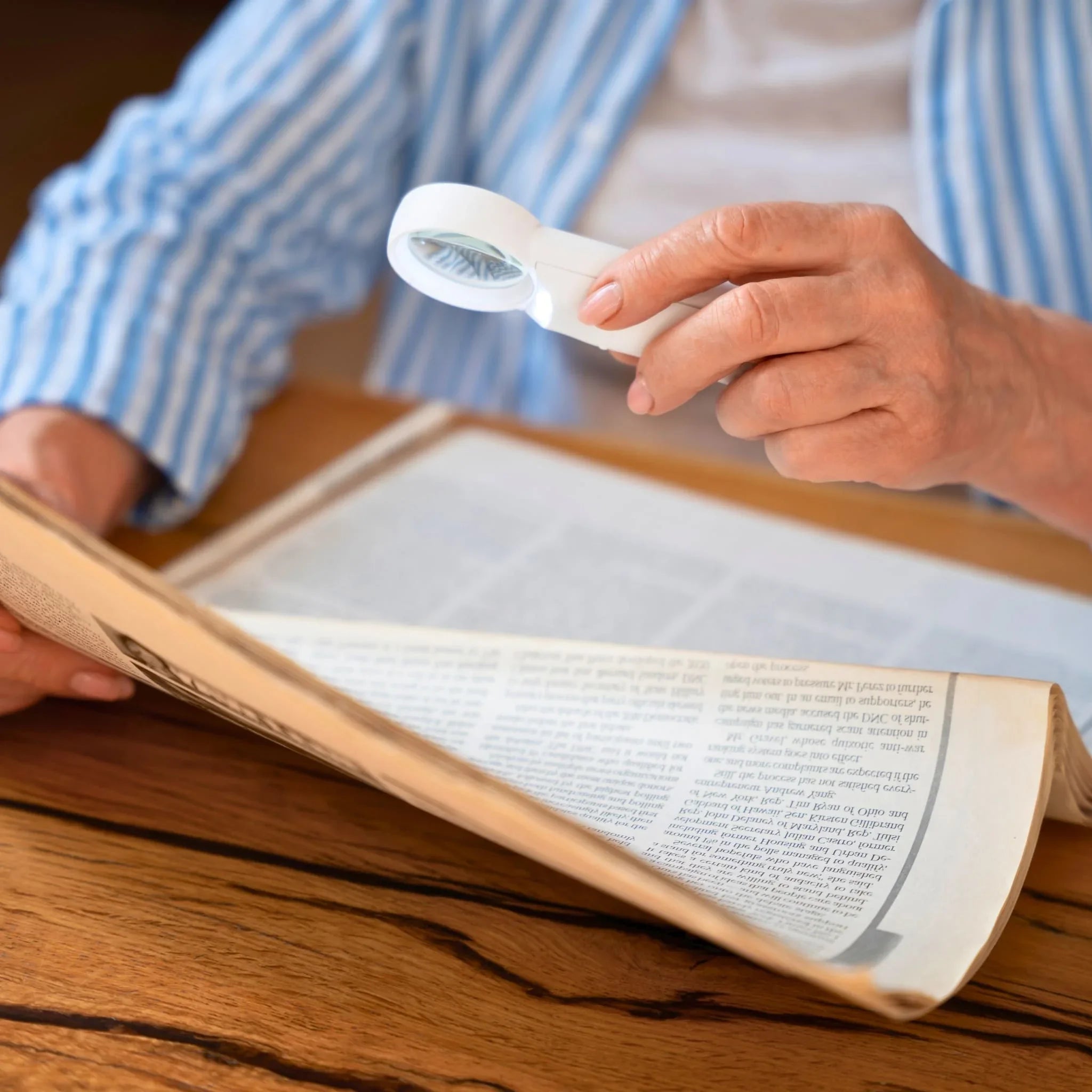
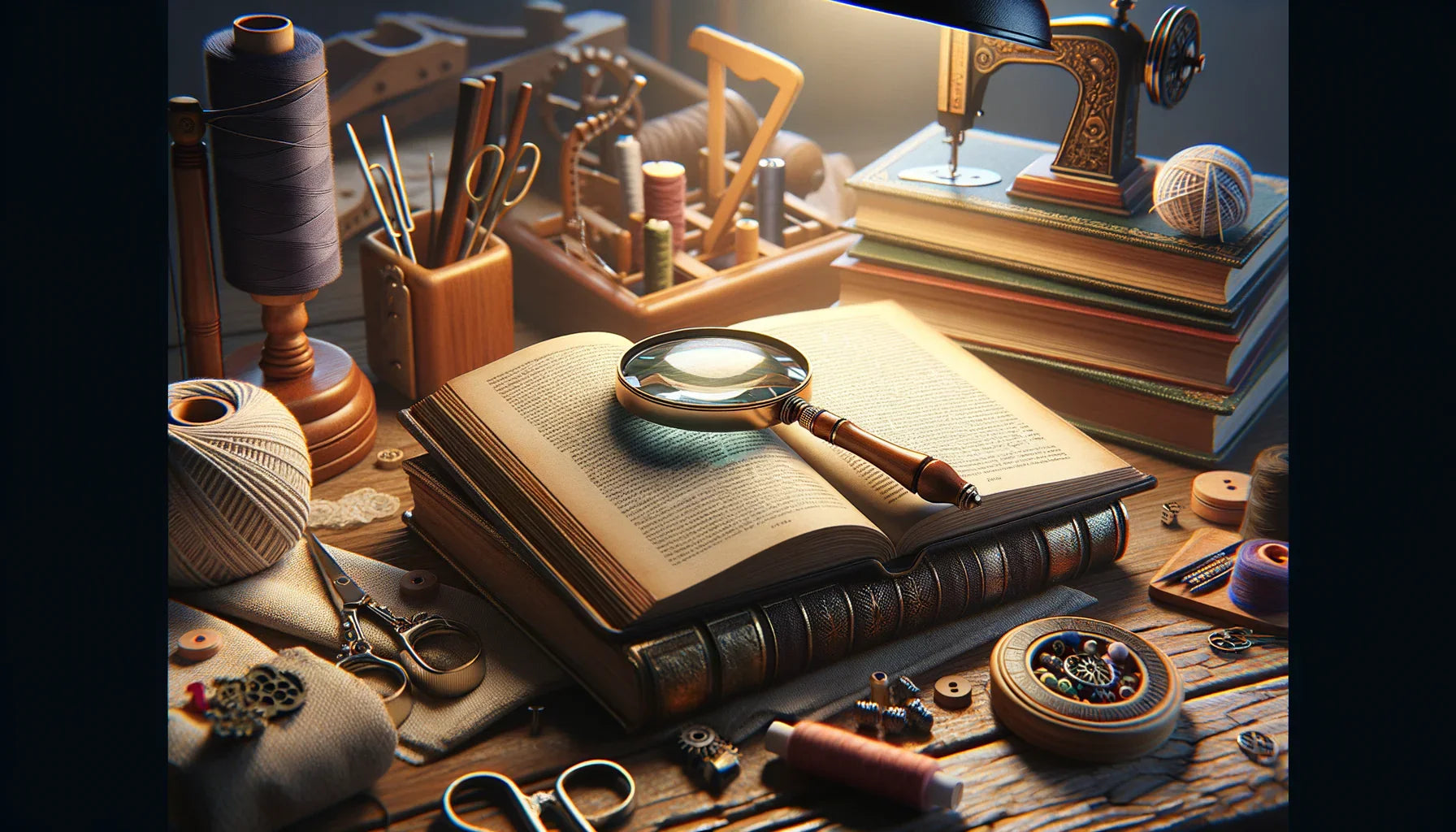
A reading magnifier is an optical accessory designed to enlarge the image of objects or texts to facilitate viewing. It generally consists of one or more glass or plastic lenses, offering magnification adapted to users' needs. Used for centuries, the reading magnifier has become an essential tool for people suffering from visual fatigue, age-related vision problems, or for any activity requiring the detailed examination of small elements. Its use is not limited to reading: it also accompanies miniature model enthusiasts, meticulous DIYers, and craft or sewing enthusiasts.
The use of a reading magnifier in daily life helps relieve eye strain and significantly increases visual precision. Whether reading a novel with small print, checking a technical notice, or inspecting delicate embroidery, this tool quickly becomes indispensable. Recent technological developments have also enabled the integration of advanced features, such as LED lighting or digital connectivity, significantly enriching the possibilities of the traditional magnifier.
📚 Different Types of Magnifiers
The world of reading magnifiers is particularly varied, with each model having specific features adapted to a precise context. We mainly distinguish:
- Handheld magnifier: compact and easy to handle, it is ideal for mobile and quick use.
- Stand magnifier: thanks to its stable support, it allows hands-free operation during meticulous work or long reading sessions.
- Desktop magnifier: often used on a desk, it is perfect for observing flat documents or objects.
- Headband or spectacle magnifier: it is fixed on the head, guaranteeing maximum comfort during manual activities, especially sewing or electronic repair.
- Electronic or digital magnifier: equipped with a screen and a camera, this model offers adjustable magnification and numerous options for the visually impaired.
Here is a comparative table of the main types of reading magnifiers:
| Type of Magnifier | Advantages | Common Uses |
|---|---|---|
| Handheld Magnifier | Maneuverable and lightweight, easy to transport | Quick reading, checking small objects |
| Stand Magnifier | Frees up hands, ideal for workstations | Sewing, DIY, extended reading |
| Desktop Magnifier | Stable for reading plans or thick books | Detailed examination of documents, cartography |
| Headband Magnifier | Maximum comfort, direct vision, practical | Precision DIY, embroidery, assembly |
| Digital Magnifier | Variable magnification, screen display | E-reader for the visually impaired, image observation |
Each of these types of reading magnifiers meets specific needs, hence the importance of knowing them well to make a wise choice. To explore a wide range of models adapted to your needs, you can visit our complete collection of reading magnifiers.
📌 Advantages of Using a Reading Magnifier
👀 Improved Vision
One of the main advantages of the reading magnifier is undoubtedly its role in improving vision. Whether one suffers from presbyopia, hyperopia, or simply wants to avoid eye strain, the magnifier offers unparalleled reading comfort. It allows one to read without squinting or straining eye muscles, thus reducing visual fatigue and the risk of headaches.
Similarly, regular use of a reading magnifier fosters increased awareness of eye health. Older people, for example, notice a significant improvement in their autonomy, being less dependent on others' help to perform various daily tasks. Adults and children also benefit from a more pleasant reading experience, especially with books or instructions with tiny characters or complex details.
- Allows easy reading of instructions and labels
- Facilitates checking ingredients or medications
- Useful for reading references on electronic components or jewelry
A striking anecdote is that of a history professor who, thanks to a magnifier, rediscovered the richness of old maps with his students, making every cartographic detail fascinating and accessible to all.
🎯 Increased Precision in DIY
The reading magnifier is also remarkably effective for DIY and all precision tasks. The magnification offered allows correcting the slightest defect, identifying the origin of a malfunction, or simply performing complex assemblies without risking damaging the parts.
For electronics or model-making enthusiasts, it even becomes essential for:
- Soldering tiny components on printed circuit boards
- Analyzing possible cracks on fragile parts
- Identifying difficult-to-read inscriptions
Thus, the magnifier improves the final quality of projects, while reducing the time spent re-working poorly adjusted parts. Many DIYers attest to the importance of the tool: they succeed in connecting wires or assembling models with much greater precision, which results in stronger and more aesthetically pleasing creations.
🧵 Facilitating Fine Sewing
In sewing, embroidery, or creative hobbies, the reading magnifier is the ally of delicate works. It facilitates:
- Threading needles and locating fine stitches
- Precise pointing when creating patterns
- Assembling beads or small decorative subjects
Visual fatigue, common among seamstresses during long sessions of close-up work, is also greatly reduced thanks to the use of a magnifier. The tool helps prevent errors and boost creativity, opening the door to increasingly ambitious and complex projects. In addition, the magnifier, much appreciated during shared workshops or with family, makes these convivial moments accessible to the greatest number, whatever the age or visual abilities.
Over the course of its uses, the reading magnifier thus establishes itself as an indispensable precision instrument, both for individuals and professionals.
📌 How to Choose the Right Reading Magnifier?
🔎 Consider Size and Magnification
Choosing an effective reading magnifier first involves a precise evaluation of the lens size and the magnification level adapted to your needs:
- Lens size: For reading a book or magazine, prefer a large lens (more than 7.5 cm in diameter), which will allow you to cover a large portion of text at once. If your needs are very localized (e.g., stamp reading, observation of small mechanisms), a smaller lens will be more practical.
- Magnification: Most magnifiers offer a magnification between 2x and 10x. Opt for a medium magnification (2x to 4x) for common uses and a higher magnification for analyzing very small objects. Be careful, the greater the magnification, the narrower the clear field of vision!
Knowing how to balance reading comfort, ease of handling, and magnification effectiveness is therefore essential to ensure optimal and pleasant daily use.
💡 Integrated Lighting: A Beneficial Option
With technological advancements, the addition of integrated LED lighting or a bulb has become a popular, even indispensable, option on many reading magnifier models. This additional lighting ensures optimal visibility, even in low-light environments. It highlights the details of texts, images, and patterns, further reducing eye strain.
LED lighting is particularly recommended for:
- Reading in the evening or in poorly lit rooms
- Checking precious stones, jewelry, or printed circuit boards
- Sewing dark fabrics or embroidering complex patterns
Some reading magnifiers offer variable intensities or multi-position lighting. It is recommended to check the quality of the lighting system and the ease of battery replacement or recharging.
📏 Portability and Ergonomic Design
Finally, portability and ergonomics are criteria not to be overlooked when choosing your reading magnifier. A lightweight and compact magnifier will easily find its place in a handbag, toolbox, or artist's case. Foldable or retractable models are particularly popular with those who frequently alternate between different places of use.
The design of the handle, the non-slip coating, the weight distribution, and even the ease of cleaning are all details that contribute to overall comfort during prolonged use. Do not hesitate to try several models to identify the reading magnifier offering the perfect balance between robustness, maneuverability, and aesthetics.
To discover concrete and professional tips on how to optimally use your reading magnifier and preserve your eye comfort, consult our dedicated guide: How to use a reading magnifier without straining your eyes? Our pro tips.
📌 Usage Tips for Maximum Efficiency
📐 Adjusting the Viewing Angle
Proper adjustment of the viewing angle is essential to get the most out of your reading magnifier. The ideal is to orient the lens so that natural or artificial light perfectly illuminates the area to be observed. Avoid direct reflections on the surface of the magnifier, as these could hinder reading or create optical distortions.
For stand models, check the possibility of tilting the magnifier to different heights or positions. For handheld or head-worn models, choose an angle that allows you to maintain a comfortable posture, with a straight back and head slightly tilted forward. This reduces physical tension and makes work or reading more enjoyable, especially during long sessions.
- Adjust the auxiliary lamp if your magnifier has integrated lighting
- Change position from time to time to avoid accumulating fatigue
Remember that it is better to spend a few minutes finding the perfect angle than to force your eyes to adapt to an uncomfortable position.
📏 Maintaining an Appropriate Distance
The distance between the reading magnifier and the object to be observed directly affects the sharpness and size of the image. Generally, it is recommended to place the magnifier about ten centimeters from the text or object for low to moderate magnification. For a high-magnification magnifier, bring it closer, while adjusting the eye's position to maintain a sharp image.
Here are some practical tips:
- Gently bring the magnifier closer to the surface to be read until you achieve satisfactory magnification
- Move your head slightly back or forward to adjust sharpness if necessary
- Never place the magnifier directly on the page or fabric to avoid scratches and distortions
You can also experiment depending on the activity: the ideal distance varies between reading a simple text, assembling small components, or meticulous sewing work.
Finally, to preserve your eye health, take regular breaks and alternate between near and far vision if possible.
📌 Use in Different Contexts
📖 Daily Reading
📖 Reading Small Print
In everyday life, reading small print on books, labels, instruction manuals, or even medical notices can quickly become laborious. The reading magnifier offers the ideal solution to this universal problem. It thus allows everyone to rediscover the pleasure of reading, even in cases of visual impairment.
For example, when reading the latest bestseller, checking the terms of a contract, or deciphering an important medical prescription, the magnifier quickly becomes necessary. Students and the elderly, frequently faced with very dense administrative documents, attest to the usefulness of this tool. The magnifier allows:
- Quickly identifying important information
- Saving time when searching for a word or phrase
- Reducing the risk of confusion by easily reading legal or technical details
This accessibility greatly contributes to autonomy and self-confidence, regardless of age or visual health.
📖 Exploring Map and Plan Details
In addition to reading texts, the reading magnifier proves invaluable for observing geographic maps, architectural plans, or technical diagrams. These supports often contain tiny symbols, small-print annotations, or lines difficult to distinguish with the naked eye.
Using a magnifier allows precise identification of routes, altitudes, street names, or important indications. Cartographers, engineers, or simple travelers use it to:
- Prepare an itinerary accurately
- Study the topography of a region
- Analyze urban planning or construction documents
Thanks to the reading magnifier, no detail escapes you anymore and you can make informed and confident decisions, even when faced with extremely detailed plans or micro-writings.
🔨 DIY and Precision Tasks
🔧 Identifying Small Components
In the world of DIY, the reading magnifier holds a special place. Identifying tiny electronic components, reading a reference engraved on a chip, or distinguishing a microscopic defect on a mechanical part: all these operations require enhanced vision.
For example, to repair a watch, a smartphone, or a remote control, it becomes crucial to carefully observe the structure of internal parts and effectively locate the area to be repaired. The magnifier then allows:
- Avoiding costly errors
- Ensuring the success of delicate interventions
- Reducing the time spent on repair
Some reading magnifiers are equipped with clamps or articulated arms, offering additional support for precise and safe work.
🔬 Designing and Adjusting Models
Model-making, architecture, or miniature enthusiasts use the reading magnifier daily to adjust their creations. Whether it's painting a character, gluing pieces onto a model, or checking the symmetry of an assembly, the magnifier ensures increased precision.
For children, the experience also becomes fun and educational: observing, for example, a miniature airplane or train allows grasping the finesse of mechanics and learning patience and rigor.
Thanks to the reading magnifier, every area of the model is inspected in the slightest detail, making the final result all the more faithful and rewarding for the author.
✂️ Sewing and Creative Hobbies
🧷 Embroidery Work
Embroidery, cross-stitch, and needlework require unwavering visual vigilance. The reading magnifier greatly improves the visibility of patterns, threads, and fabrics, limiting stitching errors and facilitating the following of complex diagrams.
Experienced seamstresses often recommend the combination of a stable stand magnifier and LED lighting, ideal for:
- Avoiding errors in repetitive patterns
- Precisely following color codes and stitch directions
- Achieve extremely fine finishes
Many embroidery clubs organize workshops where everyone shares their tips for optimizing the use of a reading magnifier, thus contributing to the flourishing of the creative community.
📍 Assembling miniature parts
Finally, making jewelry, miniature puzzles, or craft works greatly benefits from using a reading magnifier. Assembling extremely small parts requires a level of detail and hand-eye coordination that the magnifier significantly enhances. Whether it's to position a cabochon or attach micro-accessories, improved vision facilitates centering, gluing, and adjusting elements.
Creative hobbies thus become more accessible, for both beginners and experts, each finding in the magnifier an asset to boost their creativity.
📌 Care and maintenance of your magnifier
🧼 Regular cleaning of lenses
To ensure a clear image and preserve the lifespan of your reading magnifier, it is essential to clean the lens frequently. Dust, fingerprints, or micro-scratches can impair vision quality.
Here is the recommended procedure:
- Use a soft cloth (microfiber type) to gently wipe the lens.
- If necessary, apply a special cleaning solution for optical lenses.
- Avoid aggressive chemicals or abrasive wipes that may damage the coating.
- Remember to cover your reading magnifier when not in use to limit dust accumulation.
A good cleaning routine ensures optimal maintenance of optical performance and extends the life of your instrument.
🔧 Checking and replacing batteries
If your reading magnifier has integrated lighting, regularly check the condition of the batteries or rechargeable battery. Dim or intermittent lighting can impair visibility and degrade the quality of the user experience.
- Replace batteries as soon as the light weakens
- Check for corrosion in the battery compartment
- Follow the manufacturer's recommendations for the type of batteries to use
- For rechargeable models, observe charging times to avoid premature battery degradation
By taking care of your equipment, you will ensure optimal use of your reading magnifier, regardless of the frequency of use or context.
📌 Frequently asked questions about reading magnifiers
❓ Can a reading magnifier be used for insect observation?
Yes, a reading magnifier can be used to observe insects, but note that for very detailed scientific observation, a portable microscope or a specialized entomology magnifier would be more suitable. However, for a fun exploration or a first contact, your reading magnifier is perfectly suitable.
❓ Are there digital magnifier options?
Yes, the market now offers digital or electronic magnifiers. They are equipped with a camera and a screen that displays the magnified image in real time. These models are ideal for visually impaired people or for working on very detailed surfaces. Some devices also integrate image capture and contrast adjustment.
❓ Does a reading magnifier damage the eyes?
No, a reading magnifier does not damage the eyes if used correctly. On the contrary, it reduces eye strain related to accommodation. It is recommended to take breaks and not stare at a magnified area for too long.
❓ Can a reading magnifier be used on a screen (computer, smartphone)?
There are magnifiers adapted for screen reading, with an anti-reflective coating to minimize discomfort. For frequent use, however, prefer the software magnification tools integrated into your device.
❓ How to avoid image distortion with a reading magnifier?
To avoid distortion, choose a quality lens, place the magnifier perpendicular to the surface to be observed, and adjust the distance between the eye, the lens, and the object. Aspheric lens models are known to offer a more faithful image.
❓ What is the average lifespan of a reading magnifier?
The lifespan varies depending on the quality of the lens, use, and maintenance. A well-maintained magnifier can last for many years, sometimes a lifetime, provided the lens is cleaned regularly and batteries are replaced if necessary.
📌 Conclusion
The reading magnifier has become an indispensable tool, whether you are a passionate reader, a meticulous DIY enthusiast, or a diligent creator. Thanks to its diversity of forms, its extended possibilities of use, and its innovative functionalities, it effectively meets the need for magnification and precision in multiple fields: reading, cartography, DIY, embroidery, and creative hobbies.
Choosing your reading magnifier well, using it in compliance with a few ergonomic rules, and maintaining it carefully will significantly improve your daily visual comfort. By adopting these good practices and selecting the model best suited to your expectations, you will benefit from its advantages long-term.
Finally,