


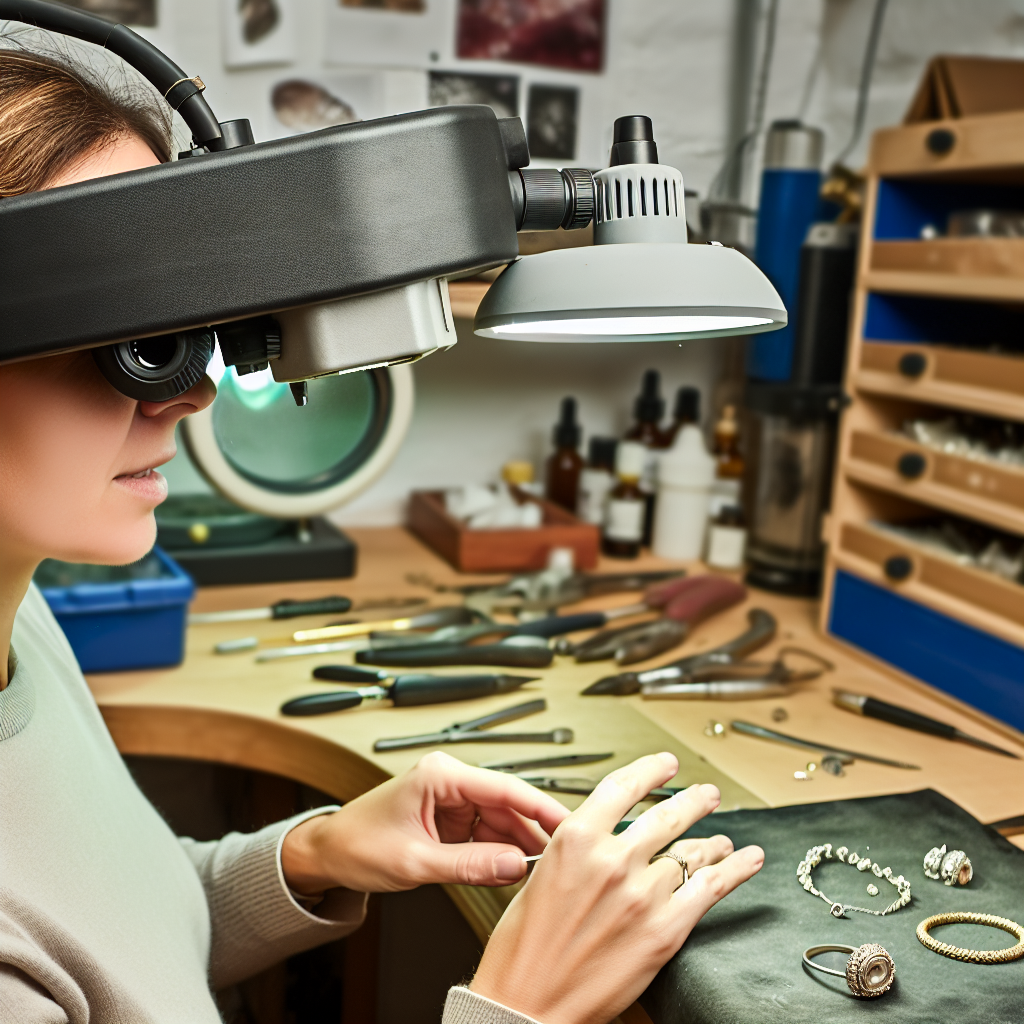
📌 Introduction to the Headband Magnifier
The headband magnifier is one of the most valuable tools for anyone performing precision work. Whether you are a healthcare professional, a passionate watchmaker, a model maker, a jeweler, an art restorer, or a seasoned DIY enthusiast, it frees your hands while providing an enlarged and clear view of every detail. This innovation has transformed the way people work on small parts, offering ergonomics and comfort that allow for long hours of efficient work without constraints. Let's dive into the fascinating world of this hands-free optical solution, which has become an indispensable ally for professions demanding attention to detail.
🔍 What is a headband magnifier?
Much more than a simple magnifying accessory, the headband magnifier stands out for its specific attachment system and optical performance. Unlike classic magnifiers held in the hand or placed on a stand, it attaches directly to the head, often using an adjustable headband or a flexible strap. The optics are positioned in front of the eyes so that the user continuously benefits from adjustable magnification, while maintaining complete freedom of movement. Let's explore its design and how it works in detail.
🔧 Construction and design of the headband magnifier
The secret to the headband magnifier's success lies in its ergonomic design. It most often consists of a lightweight and adjustable headband that can fit all head shapes without exerting uncomfortable pressure, even during prolonged use. The optical lenses, made of high-quality glass or highly transparent optical plastic, benefit from anti-scratch or anti-reflective treatment. Some models feature integrated LED lighting for working even in dimly lit areas.
- Headband or head strap: Adjustable and often padded, they distribute pressure effectively to prevent any discomfort.
- Lens frame: Securely fixed but adjustable, the optics can be raised or tilted as needed.
- Magnifying lenses: Available in various powers (from 1.5x to 20x depending on use), some magnifiers come with several sets of interchangeable optics.
- Lighting system (optional): LEDs allow precise light aiming onto the work area, eliminating shadows and parasitic reflections.
The constant pursuit of comfort and stability guides the design of these devices, which must remain light and balanced to support the user during long sessions without causing neck pain or fatigue.
💡 Operating principles
A headband magnifier works on the principle of a converging lens, which provides an enlarged image of a close object. By positioning the lens in front of the eye, the focal length and thus the perceived magnification are altered.
Professional models offer different magnification levels, adapted to the task at hand: a jeweler may need strong magnification (10x to 20x), while a model maker or art restorer will be content with a more moderate zoom (1.5x to 5x) to benefit from both an overall view and a satisfactory level of detail.
| Usage | Recommended magnification |
|---|---|
| Jewelry, watchmaking | 8x to 20x |
| Manual work, models | 1.7x to 5x |
| Dental, surgery | 2.5x to 6x |
| Reading, fine sewing | 1.5x to 3.5x |
Wearing it on the head, properly adjusted, leaves the hands completely free, which makes all the difference when manipulating tools, instruments, or tiny parts. Thus, it allows for a fast and natural work pace, while benefiting from superior visual control.
🛠️ Different types of headband magnifiers
The market offers a wide selection of headband magnifiers, each designed to meet specific needs, whether in the artistic, medical, or industrial sectors. Technological evolution has led to the emergence of versatile models with advanced features such as LED lighting, interchangeable lenses, and precise ergonomic adjustment. Let's review the main categories to help you identify the headband magnifier best suited to your practice.
🎨 Headband magnifiers for artists
Artists, whether painters, sculptors, or restorers, regularly use headband magnifiers when creating fine details, miniatures, or tiny corrections. It allows them to see every nuance of color, model material with surgical precision, and gain consistency in their gestures. For these applications, the ideal model must be lightweight, offering a wide field of view and moderate magnification to preserve the impression of perspective.
- Model assembly: Gluing, painting, or adding micro-details become more reassuring with perfect visibility.
- Artwork restoration: Detecting and retouching tiny cracks requires both delicacy and optimal visual control.
- Wood and stone carving: Controlling the cut requires mastering every relief, which a headband magnifier makes accessible without fatigue.
Some creators appreciate models with flip-up lenses, which facilitate quick switching between normal and magnified vision, while maintaining stability on the head.
⚕️ Headband magnifiers for medical professionals
In the medical sector, precision is vital. Dentists, surgeons, and dermatologists use a headband magnifier as an extension of their vision to diagnose, treat, or operate under optimal conditions. These models are distinguished by a high-end design, often with integrated coaxial lighting, homogeneous light diffusion, and a fine adjustment system for interpupillary distance.
- Dental care: Each dental organ requires meticulous observation; the field of view must be wide and sharpness perfect.
- Surgery: Micro-sutures and delicate procedures depend on the instrument's ability to reveal details invisible to the naked eye.
- Skin examinations: Appreciating texture, spotting subtle lesions, seeing vascularization... everything becomes more accessible.
The ergonomics of these medical devices are essential to prevent fatigue during long procedures.
🔩 Industrial and professional headband magnifiers
Professionals in industry, electronics, and precision mechanics also rely on headband magnifiers. They are particularly popular for assembling printed circuit boards, quality control of small parts, or repairing delicate technical objects.
- Laboratory technicians: Inspection and handling of components require discretion and acuity.
- Watch repair: Assembling a gear train, fitting hands or tiny springs requires a stable and high-performance magnifier.
Industrial models are characterized by their robustness, precise adjustment, and the ability to adapt optics or lighting according to the task. These are also the ones that sometimes offer the highest magnification powers.
To see the diversity of models, you can consult our complete selection of headband magnifiers adapted to every use.
📈 Advantages of using a headband magnifier
Equipping yourself with a headband magnifier means enjoying a series of major advantages that distinguish this tool from all other magnifying solutions. Here's why it is becoming increasingly popular in laboratories, workshops, offices, and studios dedicated to creation and restoration.
🚀 Improved efficiency
The number one asset of the headband magnifier remains the increased speed of execution thanks to improved visibility. You no longer need to juggle multiple tools or constantly adjust the position of a hand-held magnifier. Immediate magnification, coupled with the stability offered by wearing it on the head, allows for a continuous sequence of gestures and one-handed operation on the area of your choice.
- Time saving: Manipulations are more precise, require fewer corrections, and limit errors.
- Versatility: The magnifier follows your gaze, streamlining task sequences on different parts of the workpiece.
- Increased concentration: With the view perfectly centered, the user can concentrate on their objective in complete safety.
Numerous studies on microsurgery and jewelry show that the use of a headband magnifier significantly reduces intervention times and improves the final quality of creations.
👀 Reduction of eye strain
Prolonged near vision naturally fatigues the eye muscles, causing discomfort, redness, and decreased concentration. Adopting a headband magnifier helps alleviate this strain. With the object to be observed enlarged and clear, the eyes no longer strain and can work relaxed, even during long sessions.
- Optimal working distance: Headband magnifiers are designed for the user to adopt a comfortable posture, thereby reducing the risk of eye strain.
- Wider field of view: Depending on the chosen model, a larger field of view avoids constantly moving the head or squinting.
- Integrated light: Models equipped with an LED source prevent glare and fatigue due to insufficient lighting.
To preserve your visual health, it is advisable to take regular breaks and ensure you properly adjust the distance and orientation of your headband magnifier.
👌 Increased precision
The amplification of the smallest details offered by the headband magnifier changes the game in all expert trades. Errors are detected earlier, gestures are finer and more controlled, and the finish of works significantly improves in quality.
- Observation of micro-details: Even tiny traces or invisible imperfections are perfectly discernible.
- Work on fragile materials: The operator can work gently, without risking damage to the part due to visual uncertainty.
- Quality control: Meticulous inspection guarantees impeccable results in all sectors, from medical to industrial.
To learn more about how magnifiers improve precision in highly specialized fields, discover our dedicated resource: how to correctly use a jeweler's loupe.
🎯 How to choose the right headband magnifier
With a rich and varied market, selecting the ideal headband magnifier can seem complex. However, this step is crucial to ensure optimal comfort and performance adapted to your work habits. Different criteria come into play, from the magnification level offered to the quality of materials, including brand reliability and available options.
🔍 Factors to consider
- Required magnification: Depending on the nature of your activity, estimate the magnification factor: a healthcare professional will generally opt for 2.5x to 5x, while a jeweler might aim for 10x or more.
- Comfort of use: A breathable and adjustable headband, combined with a lightweight structure, prevents the appearance of pressure points on the head. Prioritize models tested for prolonged use.
- Field of view: Wide lenses facilitate overall observation, while small eyepieces target extreme precision. Consider the type of work you do most often.
- Lighting options: Integrated LEDs become indispensable in dimly lit environments and significantly reduce fatigue due to shadows.
- Interchangeable lenses: For maximum versatility, some packs offer several lenses to attach or remove according to your needs.
It is recommended to try the magnifier (when possible) or read reviews from professional users on comfort and durability. The more suited your equipment is to your use, the more satisfaction it will bring you in the long run.
🏷️ Brands and budget
The choice of a headband magnifier also depends on the budget you wish to allocate and the reputation of recognized brands. Market leaders often offer elaborate models, designed to last for years, with quality after-sales service and the possibility of replacing certain elements (lenses, lighting batteries, headbands).
| Brand | Features | Indicative Price |
|---|---|---|
| Heine | High precision, powerful lighting, fine adjustments | €€€ |
| Binocular Magnifiers | Lightweight, interchangeable lenses, comfort | €€ |
| OptiVISOR | Excellent value for money, durability, many accessories | €-€€ |
Be careful not to be swayed solely by price: a low-end model risks being quickly uncomfortable or having mediocre optics. Investing in quality, even on a limited budget, guarantees a much more satisfactory and durable use.
💡 Usage tips for maximum efficiency
To fully benefit from the advantages of your headband magnifier, a few good usage practices are essential. By taking care of your equipment and adjusting it personally, you will gain both efficiency and comfort over time.
🔋 Care and maintenance
- Lens cleaning: Use a soft microfiber cloth and regularly clean the optics with a non-abrasive product to maintain a clear image.
- Fastener check: Frequently inspect the headband, screws, and hinges to ensure they remain in place; tighten as needed.
- Lighting system maintenance: If your magnifier is equipped with LEDs, change the batteries or recharge the battery according to the manufacturer's instructions.
- Careful storage: Always store the magnifier in a protective case away from dust and shocks.
Careful maintenance will allow you to use your headband magnifier intensively for several years, while maintaining optimal viewing quality.
🔧 Ergonomic adjustments
To get the most out of your headband magnifier, it's essential to make ergonomic adjustments:
- Adjust the height and tilt of the lenses for a natural field of vision without excessively straining your neck.
- Ensure the headband exerts symmetrical pressure and does not slip during head movements.
- Take breaks every 30 to 45 minutes to relax your eyes and neck.
- If your magnifier has flip-up lenses, use this function to avoid losing contact with your surroundings.
- Adapt the lighting brightness to your workshop's ambient light, neither too dim nor too dazzling.
By mastering these settings, you will transform your head-mounted magnifier into a true expert tool, perfectly integrated into your professional movements.
🛒 Where to buy your head-mounted magnifier?
Today, head-mounted magnifiers can be found in specialized stores as well as on online sales platforms. To avoid unpleasant surprises, choose reputable and recognized brands, with guarantees and transparent descriptions. Do not hesitate to consult reviews, ask other professionals for advice, or explore the shelves of optical or precision tool stores.
- Specialized sites: They often guarantee a rigorous selection, expert advice, and genuine after-sales service.
- Physical stores: It is sometimes possible to test the comfort of the model before purchase in-store.
- Reputable online retailers: Be sure to check the return policy, availability of spare parts, and authenticity of the product.
Avoid counterfeits and discounted models of questionable origin: the optical quality and robustness of the device are essential to ensure comfort and safety of use. Several reliable platforms offer a wide choice of head-mounted magnifiers adapted to every profession and every budget.
❓ Frequently Asked Questions (FAQ) about head-mounted magnifiers
- What is the difference between a head-mounted magnifier and a classic magnifier?
A head-mounted magnifier is worn on the head, leaving the hands completely free, unlike a classic magnifier which must be held or placed on a stand. It is ideal for long-term work that requires precision.
- Can you wear glasses with a head-mounted magnifier?
Yes, most models are compatible with wearing glasses. However, check the adjustability of the headband and the distance between the optics and your glasses.
- What magnification should I choose depending on my professional activity?
For medical professions or electronics, a magnification of 2.5x to 5x is recommended. Jewelry and watchmaking professions often require higher magnification, around 8x to 20x.
- Does the head-mounted magnifier strain the eyes?
No, quite the opposite. When properly adjusted, it reduces eye strain by providing a clear close-up view without the eye having to strain. However, it is recommended to take regular breaks.
- Can the lenses of the head-mounted magnifier be replaced or interchanged?
Yes, many models offer interchangeable lenses, allowing you to adapt the magnification to the task at hand.
- Is LED lighting essential?
Integrated lighting is very useful for working in poorly lit areas or for precisely targeting your observation area. But in a well-lit space, it remains optional.
🔗 Conclusion and call to action
The head-mounted magnifier stands out as an indispensable tool for all precision enthusiasts and professionals. Its ergonomic design, the comfort of hands-free use, and the exceptional viewing quality it provides make it valuable in a wide range of professions and hobbies. Adopting a head-mounted magnifier means choosing excellence in precision, visual comfort, and efficiency.
To take the plunge, take the time to define your precise needs, compare models, and consider the expertise of suppliers. You will then find the ideal head-mounted magnifier on the market, and you will undoubtedly transform the way you work on small details. Don't wait any longer: equip yourself to see bigger, clearer, further in all your precision projects.