


📌 What is a dental loupe?
🔍 Definition and utility of dental loupes
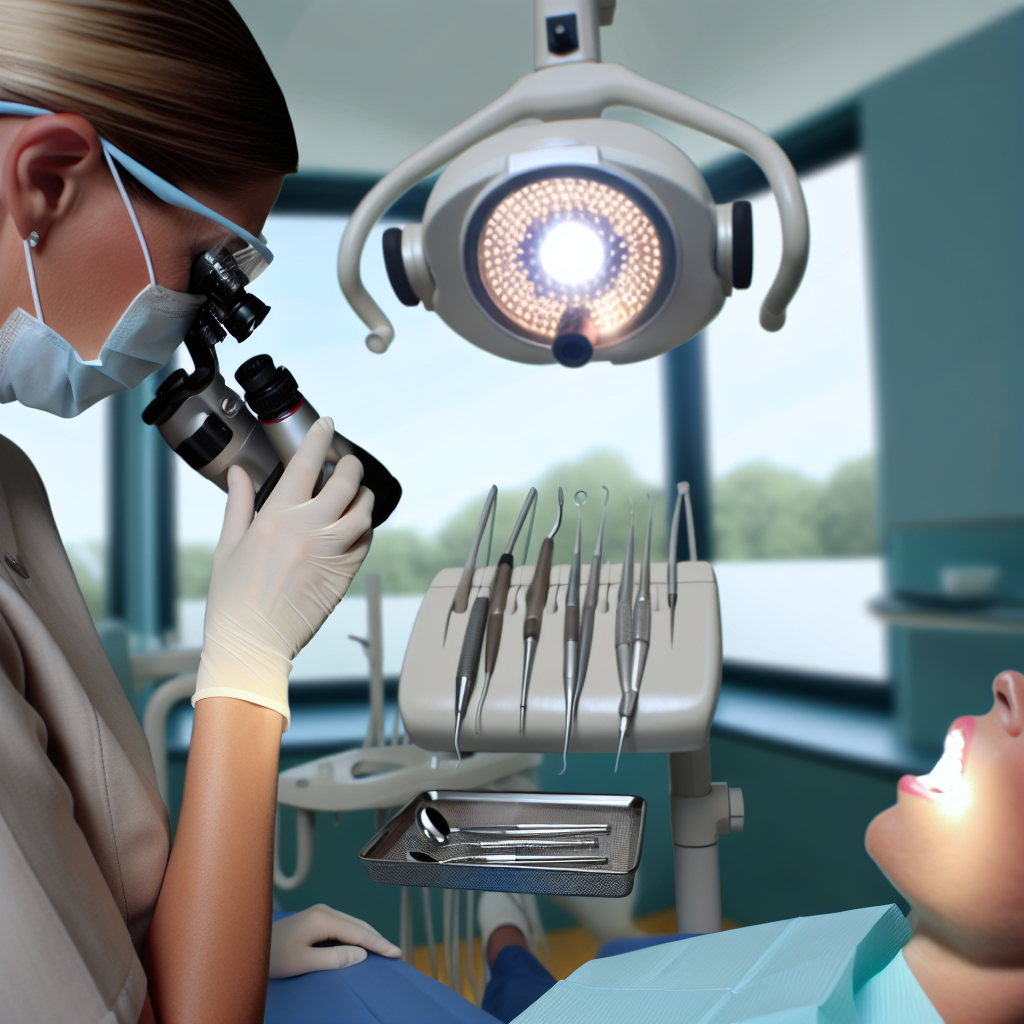
A dental loupe is an optical device designed to provide oral healthcare professionals with an enlarged and precise view of the patient's oral cavity. Primarily used by dentists, prosthetists, oral surgeons, and dental hygienists, it facilitates the meticulous observation of details that are difficult to perceive with the naked eye. Thanks to this tool, practitioners can more reliably locate and diagnose lesions, cavities, fissures, and various dental or gum pathologies.
Dental loupes are typically mounted on eyeglass frames or attached to a headband. They offer variable magnification capabilities, frequently ranging from 2x to 6x, allowing for vision adjustment based on the procedures performed and the user's preferences. By providing a clear and magnified image, these loupes offer significant assistance for performing highly precise technical procedures, thereby optimizing the quality of care provided.
Beyond their utility in performing routine care (scaling, dental restoration, early cavity detection), dental loupes facilitate the control of complex treatment results and contribute to the mastery of aesthetic treatments. They are also increasingly used in oral surgery, where rigor and meticulousness are essential to ensure optimal healing.
- Improved diagnosis: allows for fine analysis of dental tissues and growths.
- Increased safety: detailed vision reduces the risk of unintentional injuries.
- Optimal precision: in prosthetic restoration or endodontic work.
In summary, dental loupes revolutionize the way dental professionals approach care, enabling them to work with a level of detail previously impossible to achieve. They have become an indispensable extension of human vision in modern dental practice.
📏 Types of dental loupes available
There is a wide variety of dental loupes on the market, adapted to each specialty and each type of practitioner. The choice of a model will depend on many factors: intended use, personal preferences, and budget. Here are the main categories found in dental practices:
- Headband loupes: Fixed on a headband worn on the forehead, they offer great stability. Their central positioning guarantees an unobstructed view, and they are very easy to adjust, making them ideal for long procedures or those requiring frequent changes in observation position.
- Eyeglass-mounted loupes: Integrated into specially designed eyeglass frames to support their weight, they ensure excellent ergonomics. They are often lightweight, discreet, and can be worn with corrective lenses (for traditional eyeglass wearers).
- Adjustable binocular loupes: These devices offer the ability to adjust magnification as needed, thanks to a zoom system or interchangeable lenses. Their flexibility makes them popular with practitioners who perform various procedures throughout the day.
- Dental loupes with integrated lighting: Equipped with an LED system, they provide localized and homogeneous lighting directly on the work area, eliminating shadows and thus improving the visibility of fine structures.
A dental loupe can also be distinguished by its field of view (visible surface in magnified vision), its depth of field (sharp zone in the line of sight), the required working distance, or its weight and wearing comfort for long sessions. The choice must therefore take into account the nature of the interventions performed, as well as the practitioner's morphology and ergonomic constraints.
📌 Importance of dental loupes for professionals
🔬 Improved precision in diagnoses
The advent of dental loupes has marked a major evolution in dental care practice, primarily due to the significant improvement in diagnostic precision offered. Oral tissues often present very small pathologies, difficult to perceive with simple direct observation. Thanks to the magnification provided by a dental loupe, the professional can detect early lesions, subtle fissures, micro-fractures, and other anomalies that would otherwise go unnoticed.
Thus, during a comprehensive examination, the magnification capability allows for a more detailed observation of the enamel surface, the cementoenamel junction, or the quality of the gum. This gain in precision makes it possible to make more reliable diagnoses and plan adapted treatment strategies from the earliest stages of pathologies. This promotes prevention, reduces the risk of complications, and improves the quality of care.
- Early detection of cavities and lesions.
- In-depth analysis of existing restorations (fillings, crowns, composites).
- Precise observation of bleeding, ulcerations, or gingival inflammation.
- Optimal control during prosthesis adjustment.
The meticulous use of dental loupes therefore leads to better mastery of diagnoses and more adequate anticipation of treatments, prompting more and more practices to equip themselves with this advanced technological tool.
🔧 Reduction of eye and physical fatigue
Working within the oral cavity for hours requires great concentration and intense strain on the eyes and body. One of the major benefits of dental loupes is the significant reduction in eye strain. By allowing the practitioner to maintain a comfortable working distance while obtaining an enlarged view, it eliminates the need to excessively lean forward or squint.
Furthermore, the posture adopted when using dental loupes is significantly improved. The professional can keep their back straight, neck aligned, and reduce muscle tension accumulated during interventions. Several ergonomic studies confirm a decrease in musculoskeletal disorders among regular users. Neck, lower back, or even headaches related to poor posture become rare.
In summary, the impact of dental loupes on the overall health of the practitioner is far from negligible:
- Less visual fatigue at the end of the day.
- Better endurance during long interventions.
- Prevention of chronic postural disorders.
- Increased productivity due to improved working comfort.
By integrating dental loupes into their daily routine, many professionals have been able to pursue long careers without experiencing the consequences often encountered in the dental sector. This contributes to lasting well-being and a consistent level of performance.
📌 How to choose a dental loupe?
🔗 Factors to consider when choosing a dental loupe
Selecting a dental loupe is a crucial step that requires careful thought, as it determines the quality of examinations and technical procedures performed. To make the right choice, several objective criteria must be taken into account:
- Magnification: It is important to choose a magnification adequate for the primary activity (often between 2.5x and 3.5x for most routine care) without sacrificing field of view or depth of field.
- Field of view: The wider it is, the more of the mouth the practitioner can see, which improves comfort.
- Depth of field: This is the area of sharpness in depth. A good balance prevents the need to constantly change head position, promoting ease and speed of movement.
- Wearing comfort: The lightness, ergonomics of the frame or headband, stability, and the possibility of adapting to the practitioner's corrective eyewear are parameters to evaluate.
- Lighting: Opting for a model with integrated LED greatly improves visibility during intraoral procedures.
- Working distance: It must match the practitioner's morphology to ensure healthy posture and comfortable work.
- Ease of adjustment: Easily adjustable models are preferable for intensive use and varied interventions.
Finally, it is recommended to test several models before final purchase and to opt for those with a good professional reputation. Consulting reviews from other users or seeking advice from specialized suppliers is also wise.
🧪 Comparison of different brands and models
The dental loupe market has grown considerably in recent years, offering a wide diversity of brands, from entry-level equipment to high-end custom devices. Some manufacturers offer customizable models, while others focus on versatility and overall performance.
| Brand/Model | Magnification | Field of View | Weight | Options |
|---|---|---|---|---|
| ExamVision™ | 2.8x / 3.5x | Wide | Light | Custom frame, LED lighting |
| Orascoptics™ | From 2.5x to 5.0x | Variable | Standard | Easy adjustment, LED options |
| Zeiss™ | 2.5x / 3.3x / 4.0x | Wide | Light/Standard | Corrective lenses, evolutive binocular loupes |
| Heine™ | 2.5x to 4.0x | Wide/deep | Light | Headband, fiber optic lighting |
It is also relevant to consult reference pages to compare different models of dental loupes adapted for professional use, or to consider the opinions of colleagues on their experience with specific equipment. Furthermore, some specialized opticians offer personalized trials to optimize the choice.
This overview highlights the importance of carefully evaluating all technical characteristics before making a purchase, to ensure an optimal user experience in the long term.
📌 Advantages of dental loupes
🔖 Improved practitioner posture
The posture of the dentist or oral surgeon during interventions plays a crucial role in preventing musculoskeletal disorders, frequently encountered in practitioners working without optical devices. The use of a dental loupe actively promotes an ergonomic posture and reduces the number of compensatory movements that are harmful in the long term.
Equipped with appropriate loupes, the professional can stand upright, with relaxed shoulders and an aligned back. This arrangement effectively prevents the development of pathologies such as sciatica, neck pain, or lower back pain. It also helps prevent premature fatigue, ensuring the ability to work for long periods calmly.
- Relieves neck and shoulders.
- Reduces back curvature during technical procedures.
- Stabilizes head positioning for greater gestural precision.
- Increases confidence in performing technical procedures.
Several practices that have adopted dental loupes report a significant decrease in microtrauma incidents and absenteeism due to physical reasons. Some practitioners even describe how these tools have allowed them to extend their careers while preserving their quality of life at work.
🚀 Increased efficiency and reduced errors
The use of a dental loupe is not limited to simple visual comfort. It has a direct impact on the practitioner's performance and the perceived quality by the patient. Indeed, an enlarged view and a better-controlled operative field allow for faster work, while limiting the risks of error.
One of the major advantages of dental loupes lies in the speed of execution and the increased quality of the procedures performed. By reducing gestural approximations and the need for corrections or re-treatments, they greatly contribute to patient satisfaction and loyalty.
Here are some examples of improvements observed:
- More precise obturation of carious cavities.
- Better control of prosthetic adaptation (crowns, bridges).
- More controlled periodontal or implant surgery.
- Reduction of secondary interventions linked to initial errors.
- Time savings on the overall duration of treatments.
It should be noted that the adoption of dental loupes is part of a continuous improvement process and their effectiveness is no longer in doubt. For those who wish to delve deeper into the subject by broadening the comparison with other types of specialized loupes, a dedicated article also presents the advantages of a jeweler's loupe for different professional uses.
📌 Care and maintenance of dental loupes
🧹 Tips for cleaning and maintaining dental loupes
To ensure both the longevity and performance of dental loupes, regular and thorough maintenance is essential. Since the oral cavity is an environment rich in bacteria and projections, the lenses and frames must be rigorously cleaned after each use.
- Lens cleaning: Use exclusively microfiber wipes and non-abrasive cleaning solutions. Avoid hot water and aggressive solvents that can alter the anti-reflective coating.
- Disinfection: Use a compatible disinfectant to eliminate microbes or potential splashes, especially after invasive procedures.
- Checking fixings and joints: Occasional visual inspection helps detect any loosening or deformation likely to affect the strength of the material.
- Storage: Store the loupe in its case or a soft, dry compartment to prevent scratches, impacts, or exposure to moisture.
Strict adherence to these rules preserves the precision of the optics and guarantees image quality, which is essential for professional practice.
🔧 How to handle repairs of your dental loupes
Even with meticulous adherence to maintenance tips, a dental loupe may require adjustment or repair (lens crack, loose temple, LED system issue). In such a case, it is advisable to quickly contact the manufacturer's after-sales service or an authorized repairer.
- Never attempt to open or dismantle the optical system yourself, as this could irreversibly compromise the device's precision.
- Some suppliers offer maintenance contracts that include adjustments, calibration, and repairs within a short timeframe.
- Official spare parts guarantee perfect compatibility and optimal restoration of the original optical properties.
It is better to address an anomaly early than to risk rapid degradation of observation quality or prolonged downtime of the equipment.
📌 Training and adaptation to the use of dental loupes
📚 Initial training for the use of dental loupes
The introduction of dental loupes into daily practice requires a short period of acquiring new habits. Many practitioners choose to undergo training to learn, from the outset, the postures and gestures adapted to the use of this new tool.
These trainings are generally offered by manufacturers, learned societies, or during conferences dedicated to modern dentistry. They include practical workshops where each practitioner can practice in realistic conditions, with individualized advice to optimize working distance, optical adjustments, or frame fitting.
The duration of the training varies from a few hours to a full day for the most comprehensive ones. They often conclude with a certification attesting to the proper use of dental loupes and the understanding of associated ergonomic principles. It is an investment that proves profitable very quickly, both in terms of comfort and efficiency at the chair.
🕒 Adaptation time for new users
Each practitioner has their own adaptation pace. Experience shows, however, that most users get used to dental loupes within a few days to a few weeks, depending on the consistency of training and personal motivation.
- During the first few days, there might be a short period of adjustment, linked to the need to reposition one's head or find the correct viewing angle.
- Adaptation is easier if the loupe was chosen based on personalized criteria (working distance, magnification, weight, optical correction).
- Perseverance, curiosity, and regular practice are the keys to quick and effective acclimation.
It is advisable to start with simple procedures before moving on to more precise acts once the loupe is mastered. Feedback indicates a real gain in confidence and efficiency with continued use, with no looking back once the learning period has passed.
📌 Testimonials from professionals using dental loupes
🗣 Experiences of dentists and dental surgeons
Practitioners' testimonials illustrate the concrete benefits of dental loupes in daily practice. Here are a few revealing anecdotes:
- A dental surgeon, after thirty years of practicing "bare-headed," adopted a loupe with an LED light and noted a revolution in his perception of details, better posture, and reduced neck pain. He reported gaining confidence in performing delicate and complex procedures.
- A pediatric dentistry specialist explained that the magnified view helped her identify early cavities in very young patients and intervene less invasively, thus avoiding frequent re-treatments.
- A dental prosthetist mentioned the precision achieved when placing veneers or aesthetic crowns, improving patient satisfaction from the very first placement.
This continuous feedback reinforces the position of the dental loupe as an essential tool in the modern dental surgeon's instrument kit.
📈 Case studies on the effectiveness of dental loupes
Extensive scientific literature has precisely documented the impact of using dental loupes:
- University studies demonstrate greater precision in detecting small cavities, with a lower error rate than observations made with the naked eye.
- Several clinical cases report a significant reduction in musculoskeletal pain among practitioners after several weeks of regular use.
- An average time saving of 10 to 15% in procedure duration has been observed in practices equipped with loupes compared to those that do not use them.
- The rate of re-treatment due to initial quality inadequacy significantly decreases according to practitioners who have integrated the tool into their practice.
In summary, the convergence of user feedback and scientific case studies suggests that the dental loupe should no longer be considered a gadget, but rather a true tool of excellence serving oral health.
📌 FAQ on dental loupes
❓ What is the difference between a dental loupe and an ordinary loupe?
A dental loupe is specifically designed for the needs of dental health professionals: it offers magnification adapted to the size of teeth and the confined space of the mouth, a wide field of view, and ergonomics allowing for long hours of work without discomfort.
❓ What is the ideal magnification for use in a dental practice?
For most routine procedures, a magnification between 2.5x and 3.5x is considered optimal. However, specialized interventions may require higher power.
❓ Can dental loupes be worn with prescription glasses?
Yes, there are loupe models compatible with corrective lenses. Some manufacturers also offer custom frames that include your optical correction.
❓ How long does it take to learn to use a dental loupe effectively?
Acclimation generally takes one to three weeks, depending on the frequency of use and the specificity of the technical procedures performed. Initial training significantly speeds up this process.
❓ How often should I clean and maintain my dental loupe?
Daily cleaning after each use is recommended, as is regular maintenance of the joints and frame to preserve durability and optical quality.
❓ Is investing in a dental loupe profitable in the long term?
Absolutely. The improvement in precision, reduction in fatigue, prevention of pain, and optimization of working time make this tool an investment that quickly pays for itself, both for the practitioner's quality of life and patient satisfaction.
📌 Conclusion: dental loupes, a revolution in dental practice
The widespread adoption of dental loupes in practices marks a major step forward in improving the quality of oral healthcare and the well-being of practitioners. By offering detailed vision, increased working comfort, unparalleled precision, and healthy posture, they have become an indispensable reference in professional equipment. Whether for routine procedures, complex treatments, or advanced surgeries, the dental loupe proves to be an indispensable all