


📌 Why Use a Reading Magnifier?
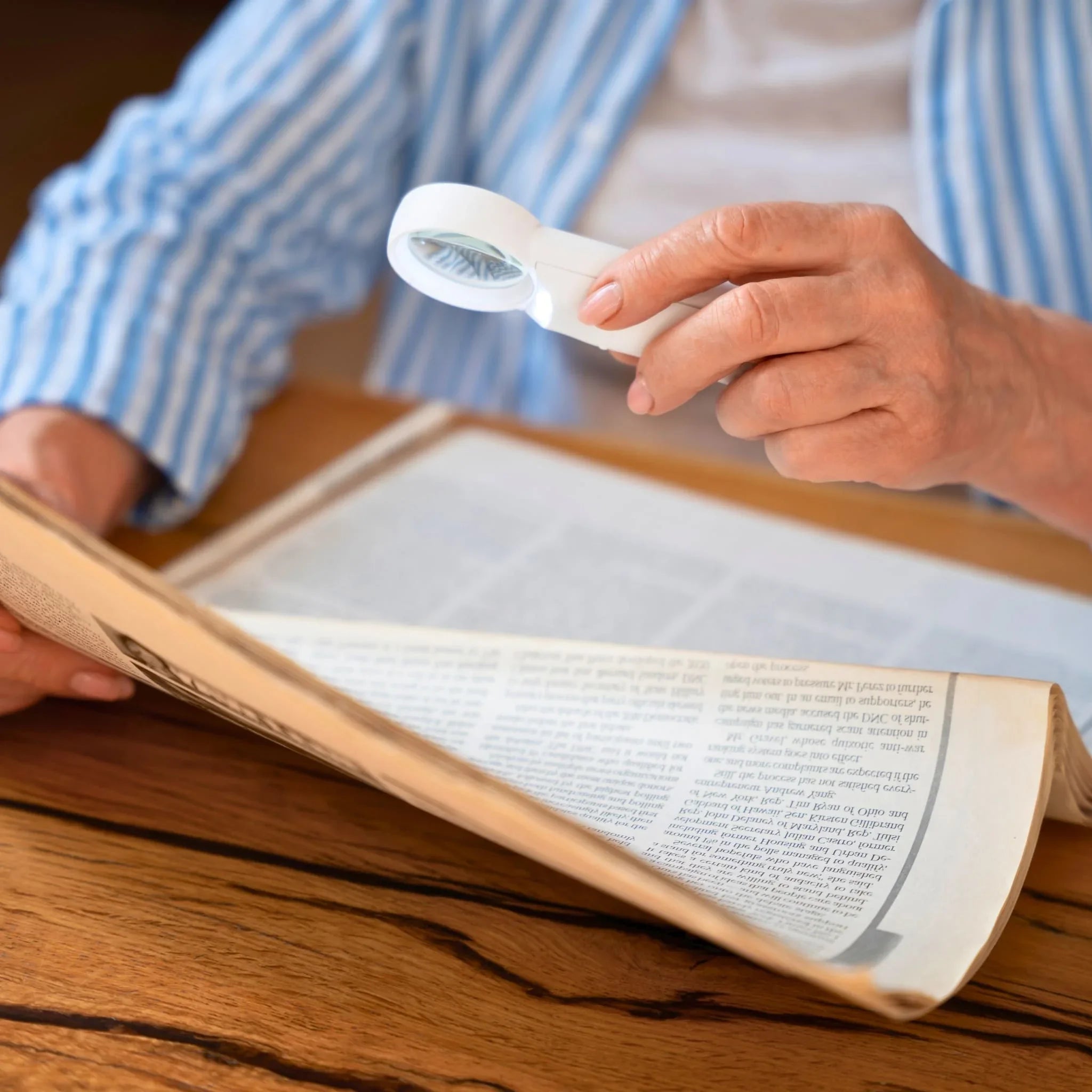
The reading magnifier remains an essential ally for improving daily visual comfort. Its use allows for magnifying characters and details that are sometimes difficult to perceive with the naked eye. For people suffering from age-related visual impairments – such as presbyopia, AMD (age-related macular degeneration), or other conditions – it represents much more than an accessory: it is an essential solution for preserving autonomy. In addition to seniors, many students, professionals, bibliophiles, and collectors appreciate the benefits of the magnifier for reading small print, labels, instructions, maps, and even for checking precise documents.
Another fundamental advantage lies in reducing eye strain. By naturally enlarging areas of interest, the magnifier puts less strain on the eye muscles and improves the distinction of letters and colors. In dimly lit environments, a good reading magnifier (for example, one equipped with LEDs) effectively compensates for lack of light. Thus, the reading experience becomes much more pleasant, less tiring, and above all, faster. This renewed comfort allows everyone to continue their favorite activities, even with temporary or permanent visual limitations.
Far from being limited to reading, the use of a magnifier also extends to many hobbies: insect observation for young naturalists, precision required in sewing, crafts, or philately. The diversity of models allows everyone to find a solution adapted to their specific needs — from portable pocket models to large desktop magnifiers, and even ultra-innovative electronic magnifiers. In 2025, the market offers more modern, high-performance, accessible, and safe tools than ever before to meet all requirements.
Finally, it should be added that the use of a magnifier is encouraged by many ophthalmologists and vision professionals for its educational benefits: it supports visually impaired people in their visual rehabilitation, especially in children and adults. Its ease of use and effectiveness make it a first-choice technical aid, while remaining affordable and not requiring complex training.
📌 Different Types of Reading Magnifiers in 2025
🔹 Classic Reading Magnifiers
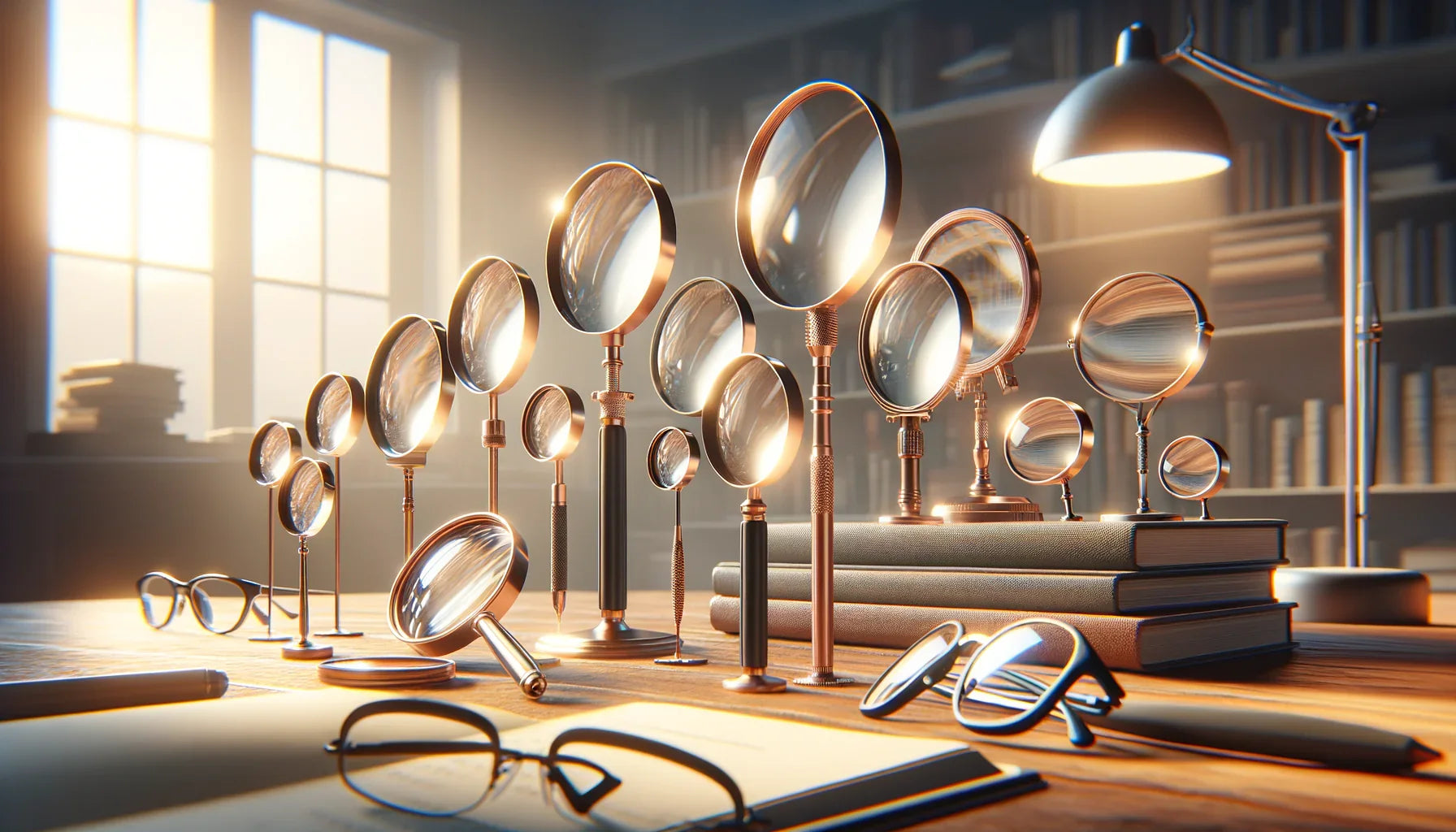
Classic reading magnifiers remain a safe bet in 2025. Generally equipped with an ergonomic handle, they are made with a circular or oval lens, offering a standard magnification of 2x to 5x. Their simplicity of use makes them a preferred option for anyone wishing to examine printed text, a map, or a stamp up close.
- Lightweight and portable: most models weigh less than 100g and fit in a pocket.
- Glass or acrylic optics: lightweight acrylic is used for entry-level models; glass remains reserved for high-end variants for a sharper image and greater scratch resistance.
- Versatility: useful at home, when traveling, or at the office to check instructions, decipher a label, or examine an old photo.
Classic magnifiers lack electronic components, which reduces their cost and makes them accessible to everyone. For occasional reading or as a backup solution, they are a relevant choice, especially since they come in different sizes to adapt to all needs.
🔹 Electronic Magnifiers
In 2025, electronic magnifiers are gaining popularity among those looking for a modern and customizable solution. Equipped with an HD or AMOLED screen and digital cameras, they amplify the projected text or image up to 30x and offer many innovative features:
- Variable magnification with a simple button or touch screen
- Contrast filters: to adapt reading to visual sensitivities (color inversion, sepia, etc.)
- Image capture and saving for later viewing
- HDMI or USB output, allowing content to be projected onto a larger screen
- Integrated LED lighting for optimal readability, even in the dark
More expensive, electronic magnifiers are primarily aimed at regular users, professionals, and anyone suffering from severe visual impairments. Their only drawback lies in an initial learning curve, but they promise unparalleled autonomy and exceptional comfort.
🔹 Magnifiers with Integrated Light
The LED-equipped magnifier has transformed the reading experience for many users. LED lighting virtually eliminates all problems related to insufficient or poorly oriented ambient light. These LEDs are found on:
- Pocket models: the light turns on with a simple press to read a menu, a map, or a prescription
- Desktop magnifiers: powerful and adjustable LEDs for prolonged reading, scrapbooking, or touch-ups on a workbench
- Stand or neck-worn models adapted for creative hobbies
This feature, now indispensable, only slightly increases the final price. It represents the standard for mid-range and high-end models, offering uniformly distributed lighting and relaxed reading, even at night or when traveling. Discover our selection of magnifiers with integrated light.
🔹 Hands-Free Magnifiers
Hands-free magnifiers have quickly become popular with seamstresses, DIY enthusiasts, artists, and readers who want to keep their hands free. There are several categories:
- Stand magnifiers: fixed on a base, ideal for reading or embroidery
- Neck-worn magnifiers: held by a lightweight collar, perfect for sewing or model making
- Clip-on magnifiers: clipped onto a table, a book, or glasses for maximum versatility
Their flexibility and comfort make them irreplaceable for anyone who needs to handle objects while benefiting from precise magnification. They are particularly useful for prolonged or repetitive tasks and attract a growing number of users eager to avoid cramps and the hardship of static postures.
📌 Criteria for Choosing the Best Reading Magnifier
🔹 Magnification Factor
Magnification, expressed by a number followed by "x" (e.g., 2x, 5x), determines the magnifier's ability to enlarge text or an image. Too high a magnification can result in a blurred or shrunken image at the edge, while too low a magnification may not sufficiently compensate for visual impairment.
- Common use: opt for a magnification of 2x to 3.5x
- Reading very fine details (stamps, micro-writing): prefer 5x to 10x
- Electronic magnifiers: variable magnification up to 30x, often continuously adjustable
| Document Type | Recommended Magnification |
|---|---|
| Novel, Newspaper | 2x - 3x |
| Plans, Maps | 3x - 5x |
| Micro-printing, Jewelry | 5x - 10x |
A good rule is to try different magnifications before purchasing, as everyone perceives comfort differently depending on their vision and the size of the characters to be read.
🔹 Magnifier Size and Weight
The magnifier's maneuverability directly influences user comfort. A model that is too heavy or too large will be tiring to hold, especially during long reading sessions. Conversely, a lightweight mini-magnifier is ideal for carrying but covers a smaller area.
- Pocket magnifier: lightweight, discreet, for occasional use
- Stand model: heavier but hands-free and ideal for a workstation
- Electronic magnifier: slightly heavier (150-300g), but compensates thanks to embedded technology
Remember to choose a magnifier adapted to the size of your documents. A sufficient lens surface allows reading several lines at once, minimizing eye movements and increasing user comfort, especially for elderly or visually fatigued individuals.
🔹 Optical Quality
The quality of vision depends on the purity of the material composing the lens. Two main materials exist:
- Glass: heavier but very scratch-resistant, provides an incomparably sharp image
- Acrylic: lighter, unbreakable, more affordable but sometimes less free of optical aberrations
The lens design (biconvex, aspheric, plano-convex) also influences image quality: aspheric lenses reduce distortion at the edges and offer a better experience for prolonged reading. Beware of low-end magnifiers: a blurred or distorted image leads to fatigue and discomfort.
🔹 Additional Features
Modern models offer a range of advanced functions:
- Integrated LED lighting for perfect brightness even at night
- Adjustable magnification on electronic magnifiers
- Adjustable or hands-free stand for creative hobbies
- Contrast filters and color inversion (for specific visual impairments)
- Storage and connection to an external screen on digital models
Evaluate what is truly necessary for your reading types: an occasional reader will find happiness with a simple portable magnifier, while a visually impaired person will benefit from a more elaborate solution.
📌 Advantages and Disadvantages of Digital Magnifiers
In recent years, digital magnifiers have revolutionized the daily lives of visually impaired people and those seeking innovation. They offer a range of new possibilities to make reading and observation much more personalized and interactive. Here is a detailed overview of their advantages and disadvantages in 2025:
-
Advantages:
- Ultra-personalized magnification: simple button press to adapt character size to the degree of vision
- Calibratable display modes: color inversion, high contrast, progressive zoom, detection of key text areas
- Immediate photo capture and document storage for later viewing
- Large screen display: ideal for reading instructions, recipes, manuals, or for remote work
- Improved autonomy: long-lasting batteries, fast charging, and increased lightness
-
Disadvantages:
- High initial cost: quality models often start from €100, potentially reaching several hundred euros
- Learning curve: need to learn how to use an electronic device (touch interface, settings, cables, etc.)
- Energy dependency: need to recharge or plan for spare batteries
- Weight and bulk superior to traditional models
In conclusion, for those seeking the ultimate in comfort and personalization despite a more significant investment, the digital magnifier is the future. To discover this technology, it is possible to rent or try them out at specialized retailers.
📌 Practical Uses of Reading Magnifiers in Daily Life
Far from being limited to simple novels or instructions, the magnifier is now used in a multitude of ways, revealing its versatility. Here are some practical examples:
- Reading small print on medicine labels, food, household products, or tourist guides
- Translation, annotation, or revision of handwritten or very small printed documents
- Academic support: children and adolescents find it easier to reread their notes or correct exercises with a magnifier, without needing a bright lamp or asking an adult for help
- Creative hobbies: embroidery, knitting, model making, fine piece restoration, and crafts
- Collection: philately (stamps), numismatics (coins), postcard reading, or inspection of old banknotes
- Puzzles and board games: checking details or reading small print rules
- Nature observation: insects, plants, rocks, by younger individuals or natural science enthusiasts
The magnifier also finds its place in the professional world: jewelers, watchmakers, archivists, opticians, printers, and scientists are among its loyal users. Specialized models exist for each of these activities. Hands-free models are particularly appreciated for their practicality during activities requiring meticulous manipulation.
Many users testify to the positive change brought by their daily magnifier: increased autonomy, rediscovery of the pleasure of reading, easier execution of precision gestures. A common anecdote among our customers: a lady passionate about knitting was able to resume her creations independently thanks to a stand magnifier with adjustable lighting, which she had not seen for years. A simple tool can thus rekindle a passion, improve self-confidence, and simplify all daily tasks.
📌 Innovators in Magnifier Technology: Trends 2025
The constant evolution of optical technologies is radically transforming the world of reading magnifiers. In 2025, several major trends and innovative solutions are emerging:
- Augmented reality integration: new digital magnifiers superimpose interactive information on the observed text, facilitating the understanding and analysis of technical texts or diagrams.
- Very high-definition lenses: new composite materials combining lightness and optical purity for faithful magnification, without distortion, even on large formats.
- Miniaturization of electronic magnifiers: models are becoming thinner, lighter, and offer ever greater autonomy, expanding the scope of mobile uses.
- Improved connectivity: some electronic magnifiers now synchronize via Bluetooth with mobile applications to store, search, and share enlarged documents.
- Smart LEDs: automatic adjustment of power and light spectrum to avoid fatigue even with prolonged use.